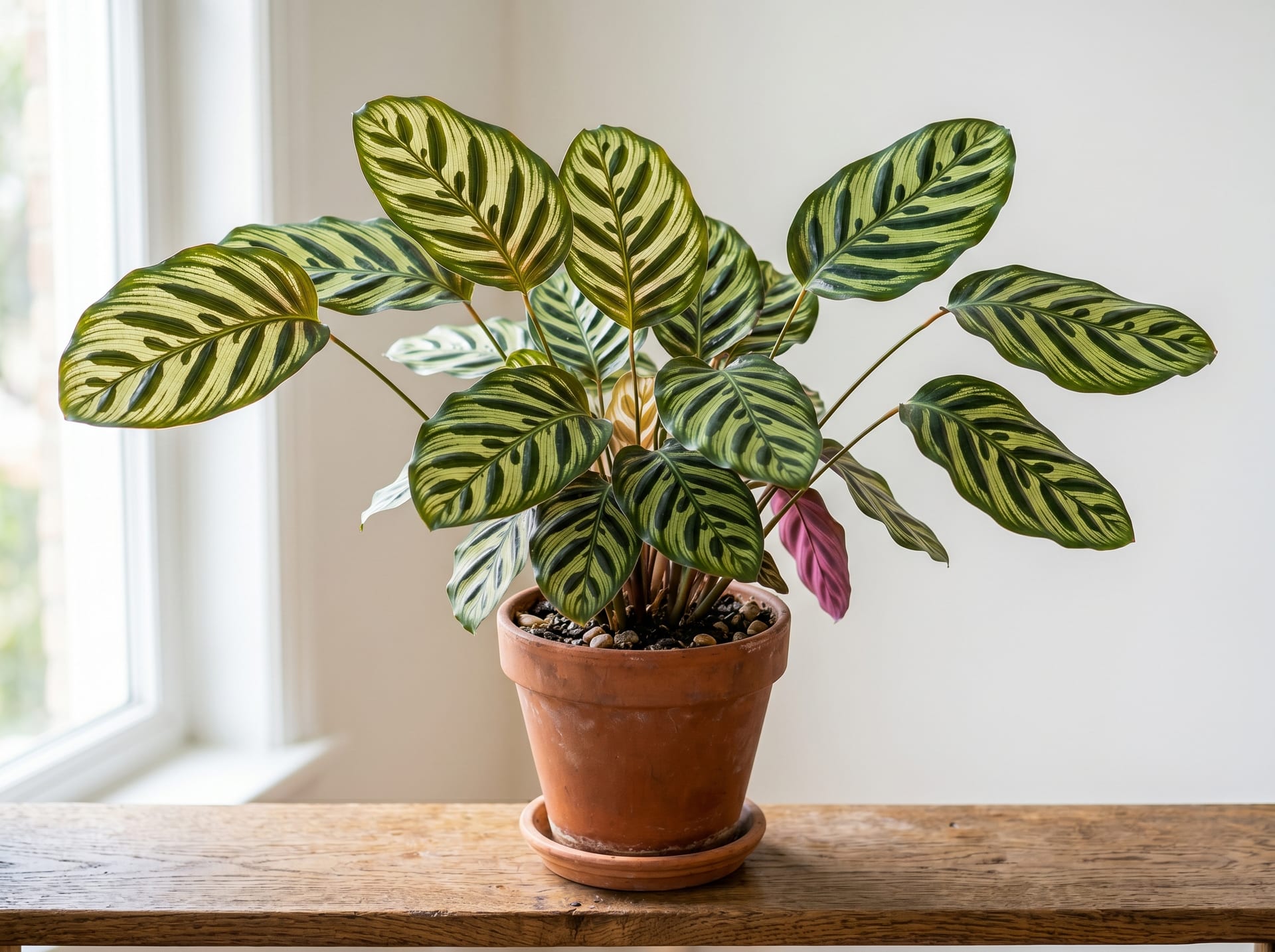
AI-generated image
Calathea makoyana
IntermediateCalathea makoyana
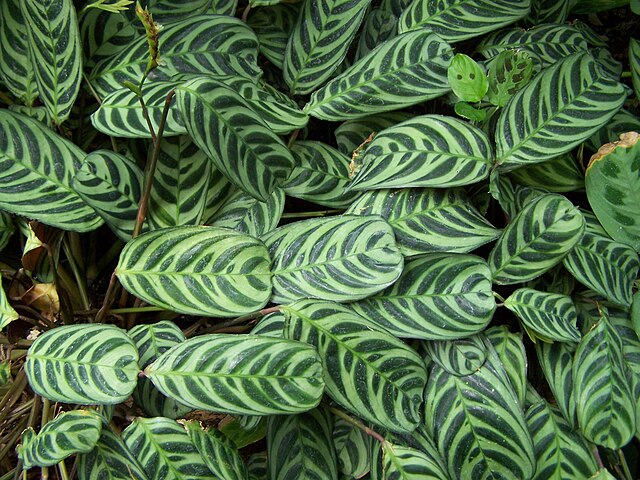
A beautiful Calathea with peacock feather patterns on its leaves, also known as Peacock Plant. Performs nyctinasty, folding leaves at night.
About
Calathea makoyana, the peacock plant, is a perennial in the family Marantaceae, native to Brazil. Its striking oval leaves display an intricate pattern of alternating light and dark green lines radiating from the midrib on the upper surface — an arrangement that closely resembles the elaborate eye pattern of a peacock's feather — while the undersides are purple. Like other marantaceae, it folds its leaves upward at night in a nyctinastic sleeping movement. It thrives in bright indirect light; direct sun bleaches and damages the intricate patterns. Keep the soil consistently slightly moist; the plant is sensitive to both drought (which causes leaf curling) and waterlogging. Sensitive to chlorine in tap water — filtered or rainwater is ideal. High humidity (above 60%) is essential. Though demanding in its requirements, the peacock plant's extraordinary leaf artistry makes the effort thoroughly rewarding.
Basic Info
Origin
Brazil
Lifespan
Perennial
Size
30-60cm
Temperature
18〜30℃
Humidity
60〜80%
Watering & Fertilizer
Liquid fertilizer 1-2x monthly in spring-fall
Growing Tips
Placement
Bright shade optimal. Direct sun burns leaves
Watering
Water when topsoil dries. Leaf misting also effective
Water quality
Sensitive to chlorine. Use filtered or settled water if possible
Notes
Leaves curl when dry. Maintain high humidity
Calathea makoyana FAQ
QWhat is the growing difficulty level for Calathea makoyana?
Intermediate. A variety suitable for intermediate growers. Requires some cultivation experience and knowledge of environment management. Pay careful attention to temperature and humidity control.
QWhat is the ideal temperature for Calathea makoyana?
The ideal temperature for Calathea makoyana is 18〜30℃. Recommended humidity is 60〜80%. Avoid sudden temperature changes and maintain a stable environment.
QWhat is the lifespan of Calathea makoyana?
The average lifespan of Calathea makoyana is Perennial. With proper cultivation environment and nutrient management, you can keep it healthy for a long time.
QHow large does Calathea makoyana get?
The mature size of Calathea makoyana is 30-60cm. This may vary slightly depending on cultivation environment and individual differences.
QHow should I water and fertilize Calathea makoyana?
Calathea makoyana: watering & fertilizer — Liquid fertilizer 1-2x monthly in spring-fall. Aim for appropriate frequency and amount.
QWhat is the typical price for Calathea makoyana?
The price of Calathea makoyana varies significantly by variety, characteristics, size, and lineage. Please check ボタちょく's price guide for the latest market information.
Last updated: June 24, 2026
Growing Specifications
- USDA Zone
- 11–12
Sources: Missouri Botanical Garden Plant Finder - Calathea makoyana
References & Sources
Edited & verified by: BoTachoku Editorial Team
The classifications, regulations, and growing data on this page are created and verified based on the primary information database below.
Taxonomy & Authority
Regulations & Conservation Status
観葉植物。CITES附属書(植物)・特定外来生物・特定動物いずれも非該当を有限文書照合で確認(CITES flora section に当該属の掲載なし。Dracaena spp.掲載は同名のトカゲ属でありシダ植物Dracaenaは非該当)。
Sources: CITES Appendices I/II/III (flora section, grepped via dbca mirror) / CITES Appendices (official) / 環境省 特定外来生物等一覧
Regulations may change. Always verify the latest information with the relevant authorities.
Related Species
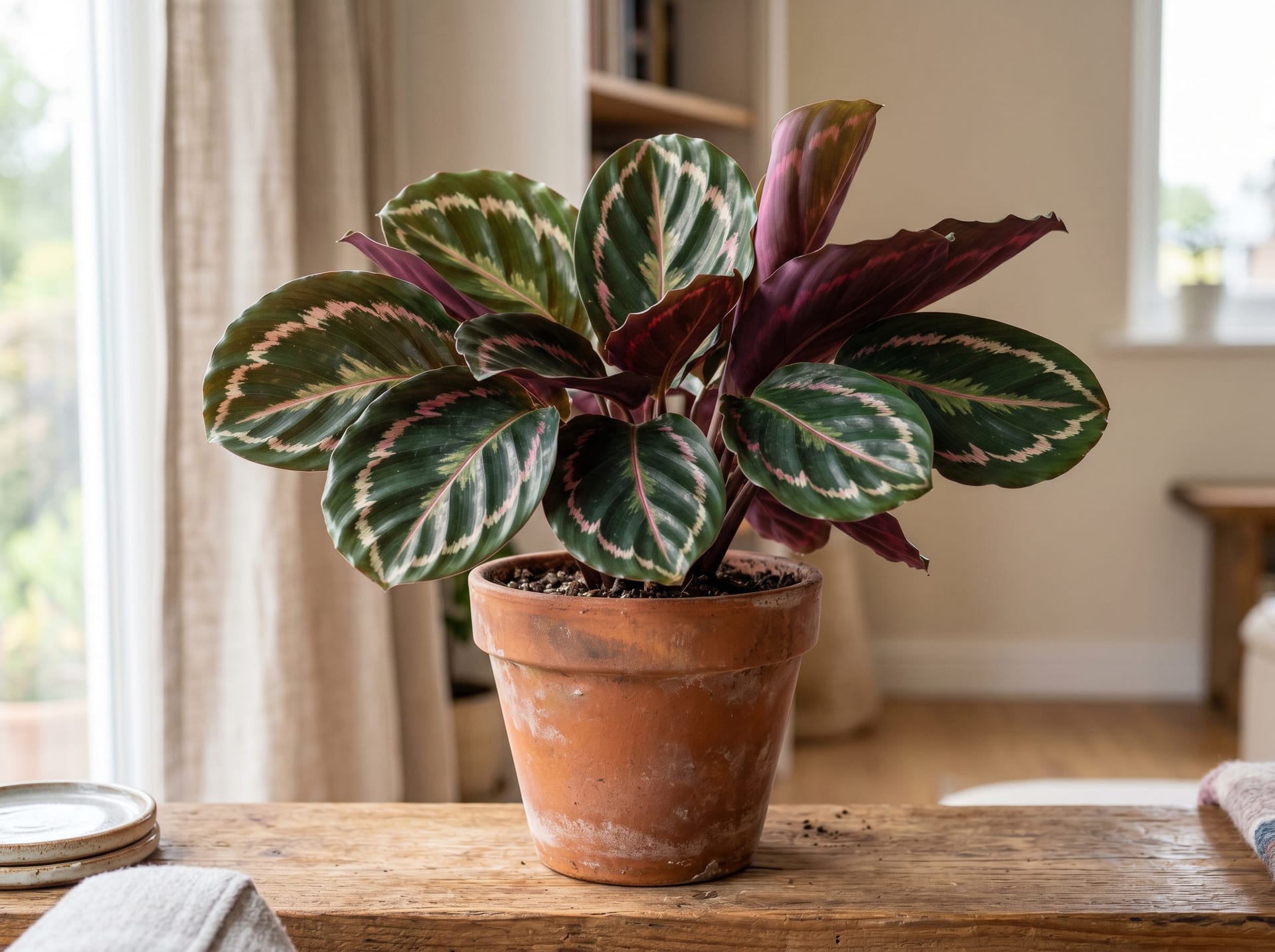
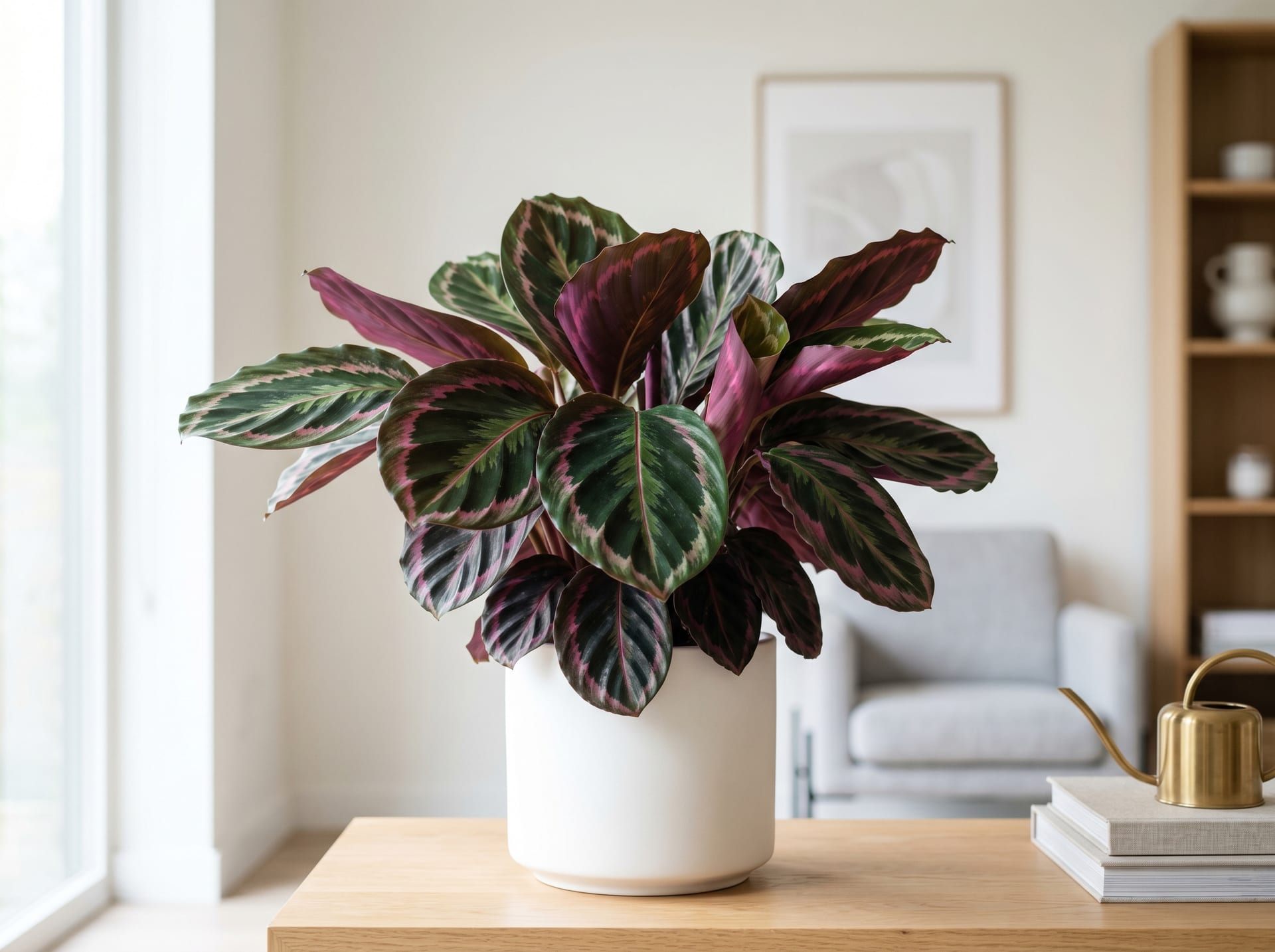
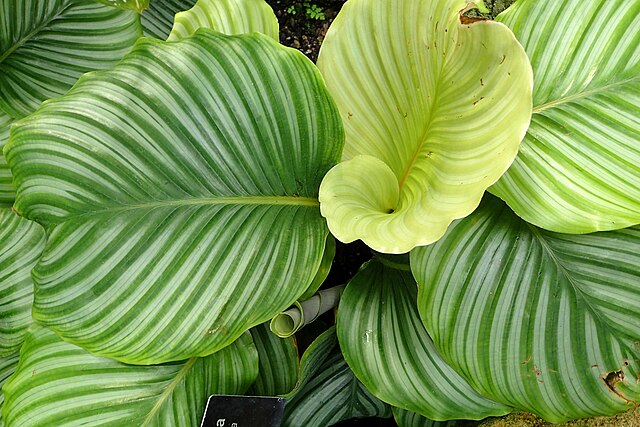
Find listings for this species
Related Articles
Calathea Complete Care Guide | How to Maintain Beautiful Leaf Patterns
Complete guide to Calathea varieties and care methods. Learn humidity control, watering techniques, causes and solutions for leaf curling and browning, and how to choose beginner-friendly varieties.
Why Monstera Fenestration Doesn't Appear Easily: Causes and Solutions
Why Monstera Fenestration Doesn't Appear Easily: Causes and Solutions
Air-Purifying Effects of Houseplants and Effective Placement Methods | Scientific Evidence and Optimal Locations
Explaining the scientific research on whether houseplants truly clean the air. Practical techniques for maximizing air-purifying effects, including placement strategies, plant selection, and tips for multiple plant arrangements.
How to Enjoy Caudiciform Houseplants (Bizarre Plants) | Care for Caudex Plants Including Stephania and Elephant's Foot Plant
A guide to caring for caudiciform houseplants (including Stephania and Elephant's Foot Plant) for indoor enjoyment. Covers summer/winter dormancy cycles, strategic watering, light requirements, and differences from typical caudex plants.