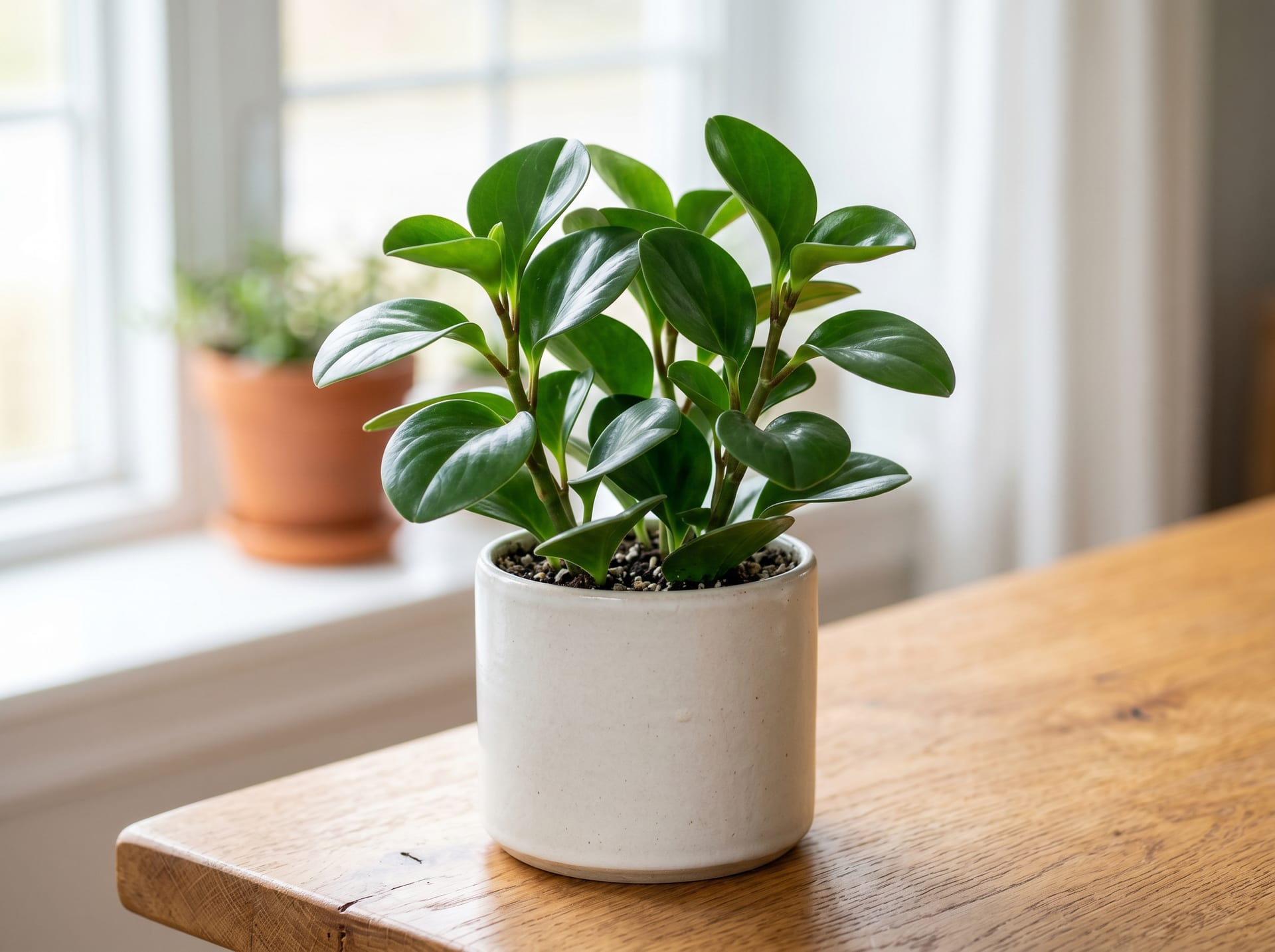
AI-generated image
Baby Rubber Plant
BeginnerPeperomia obtusifolia
Cute compact plant with thick, glossy rounded leaves. Perfect size for desks and shelves. Drought-tolerant but sensitive to overwatering. Variegated varieties popular.
Overview
Peperomia obtusifolia, the baby rubber plant, is a perennial in the family Piperaceae native to Central and South America (from Mexico through the Caribbean and northern South America). A charming small foliage plant with thick, glossy, rounded leaves, it is just the right compact size for a desk or shelf. Beyond the all-green form, variegated types with cream or yellow markings are also popular. Its succulent leaves store water, so it is drought-tolerant but intolerant of overwatering. Water only after the soil has dried well, taking care to avoid root rot. It prefers bright indirect light - direct sun scorches the leaves - but is shade-tolerant and grows in low indoor light. Somewhat cold-sensitive, it is best kept above 10C in winter. Low-maintenance and beginner-friendly.
Source: Wikipedia (CC BY-SA 4.0)
Lifespan of the Baby Rubber Plant
The Baby Rubber Plant lives 10+ years.
Size of the Baby Rubber Plant
The Baby Rubber Plant grows to 15-30cm.
Temperature & humidity for the Baby Rubber Plant
The ideal temperature for the Baby Rubber Plant is 15〜28℃.
Basic Info
Origin
Central and South America (Mexico to the Caribbean and northern South America)
Lifespan
10+ years
Size
15-30cm
Temperature
15〜28℃
Humidity
40〜60%
Watering & Fertilizer
Liquid fertilizer monthly spring-fall
Growing Tips
Light & Placement
Prefers bright indirect light; direct sun causes leaf burn. It is also shade tolerant and grows in low indoor light.
Watering
Wait until soil is fully dry. Overwatering causes root rot
Temperature & Overwintering
Optimal range is 15-28°C. It is somewhat cold-sensitive, so keep it indoors above 10°C in winter.
Soil & Repotting
Being succulent-like and prone to rot when soggy, it needs a free-draining mix. Repot one size up once roots fill the pot.
Fertilizer
Feed liquid fertilizer once a month from spring to autumn. Overfeeding damages roots, so dilute more than the label rate.
Propagation
Easy via leaf or stem cuttings
Baby Rubber Plant FAQ
QWhat is the growing difficulty level for Baby Rubber Plant?
Beginner. A variety suitable for beginners. No special equipment or experience is required—you can grow it without problems by setting up a basic cultivation environment.
QWhat is the ideal temperature for Baby Rubber Plant?
The ideal temperature for Baby Rubber Plant is 15〜28℃. Avoid sudden temperature changes and maintain a stable environment.
QWhat is the lifespan of Baby Rubber Plant?
The average lifespan of Baby Rubber Plant is 10+ years. With proper cultivation environment and nutrient management, you can keep it healthy for a long time.
QHow large does Baby Rubber Plant get?
The mature size of Baby Rubber Plant is 15-30cm. This may vary slightly depending on cultivation environment and individual differences.
QHow should I water and fertilize Baby Rubber Plant?
Baby Rubber Plant: watering & fertilizer — Liquid fertilizer monthly spring-fall. Aim for appropriate frequency and amount.
QWhat is the typical price for Baby Rubber Plant?
The price of Baby Rubber Plant varies significantly by variety, characteristics, size, and lineage. Please check GrowerDirect's price guide for the latest market information.
Last updated: June 24, 2026
Growing Specifications
- USDA Zone
- 10–12
Sources: Missouri Botanical Garden Plant Finder - Peperomia obtusifolia
References & Sources
Edited & verified by: GrowerDirect Editorial Team
The classifications, regulations, and growing data on this page are created and verified based on the primary information database below.
Taxonomy & Authority
Regulations & Conservation Status
Foliage plant. Confirmed by document review to be non-applicable to CITES Appendix (Flora), designated invasive species, or designated animals (the genus does not appear in the CITES flora section; Dracaena spp. listings in CITES refer to a reptile genus of the same name; the plant Dracaena is not applicable).
Sources: CITES Appendices I/II/III (flora section, grepped via dbca mirror) / CITES Appendices (official) / Ministry of the Environment List of Specified Invasive Alien Species
Regulations may change. Always verify the latest information with the relevant authorities.
Related Species
Find listings for this species
Related Articles
Complete Guide to Growing Peperomia
This article explains the key points of growing Peperomia, from its characteristic compact form to placement, watering, soil, and propagation methods.
Optimizing Foliage Plant Leaf Shine | Humidity Management to Achieve Gloss and Plant Health
Environmental management techniques to bring out glossy shine on foliage plant leaves. Techniques to achieve healthy and beautiful leaf expression through optimizing light, humidity, and water quality.
Why New Leaves on Foliage Plants Are Smaller — Practical Solutions for Light, Humidity, and Nutrition
We analyze the causes behind stunted growth and smaller new leaves on foliage plants. From light environment and humidity management to fertilization strategy and root health, we explain each factor based on empirical data and introduce methods to restore new leaf size.
Spider Mite and Scale Insect Control: Practical Pest Prevention
Learn to identify spider mites and scale insects on houseplants and recognize damage signs, master practical spider mite control methods, discover effective scale insect elimination techniques, create pest-resistant environments with seasonal management, understand pesticide safety precautions, and discover early detection and prevention strategies.
🩺 Common diseases
Can't find the plant you're looking for?
Post your wishes for free and growers with matching plants will contact you with introductions.