Complete Guide to Growing Peperomia
This article explains the key points of growing Peperomia, from its characteristic compact form to placement, watering, soil, and propagation methods.
Key Takeaways
This article explains the key points of growing Peperomia, from its characteristic compact form to placement, watering, soil, and propagation methods.
Related Species
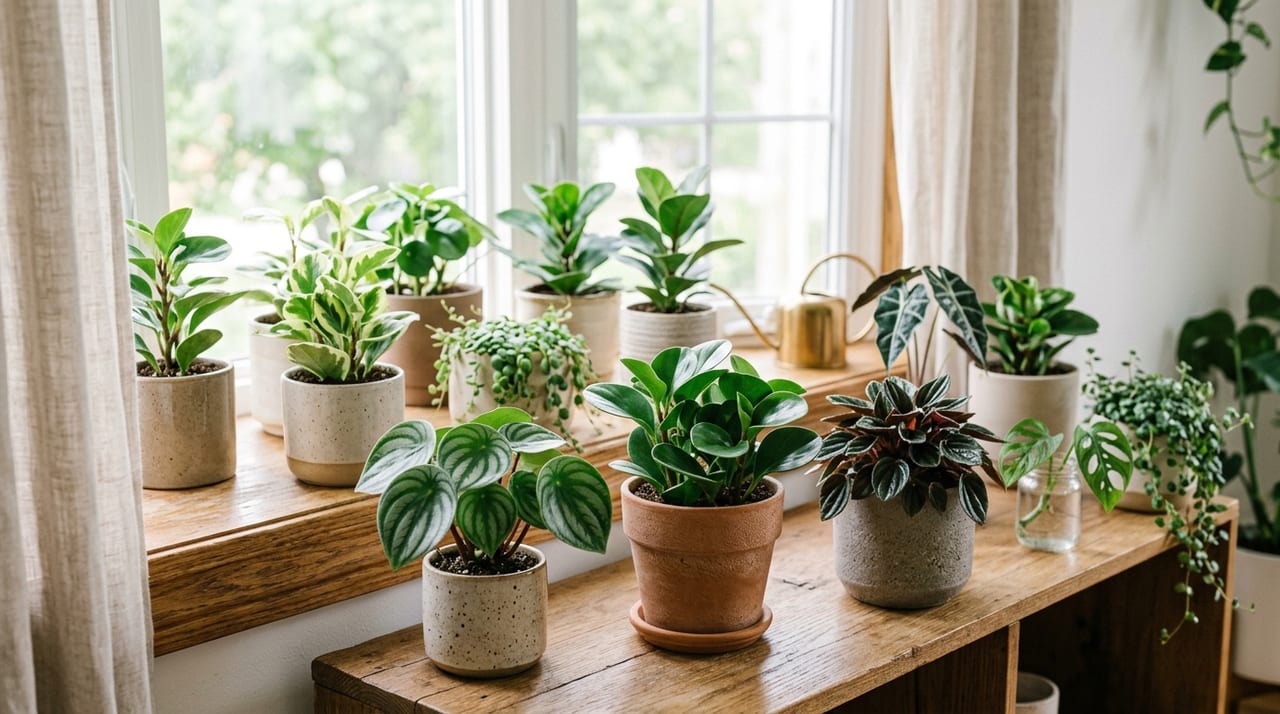
Peperomia is a plant in the Piperaceae family widely distributed in tropical and subtropical regions, particularly in Central and South America, and is a foliage plant prized for its compact form and diverse leaf shapes. There is tremendous variety—from species with rounded, fleshy leaves to those with elongated leaves and variegated cultivars—and because it is small and easy to handle, it has become a standard choice for indoor gardening. Many species have the characteristics of epiphytic plants that naturally grow on tree branches and in crevices of rocks, and this ecology contributes to their drought tolerance and distinctive form. The fact that they can be enjoyed even in limited spaces such as on desks or shelves is also one of the reasons they are chosen by many plant enthusiasts.
Peperomia's Basic Characteristics
The Peperomia genus includes hundreds of known species, with Peperomia obtusifolia and watermelon peperomia being commonly cultivated varieties.
| Type | Characteristics |
|---|---|
| Peperomia obtusifolia | Has rounded, thick leaves with variation ranging from solid green to variegated forms |
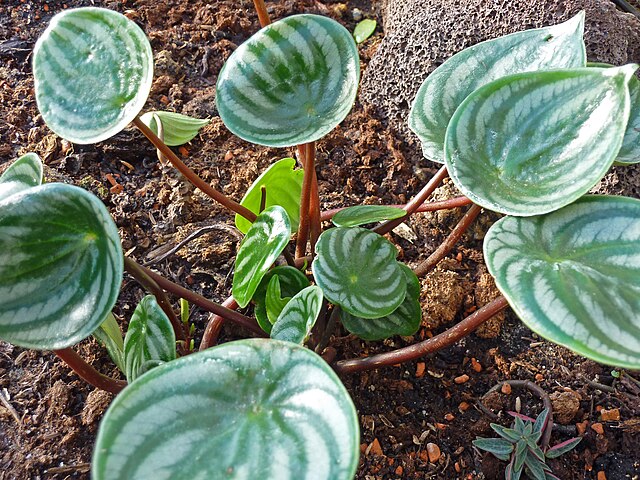
| Watermelon peperomia | Named for its leaf markings that resemble watermelon rind stripes; the compact form and distinctive leaf pattern are its main ornamental features |
Both have succulent stems and can tolerate some dryness, making them easy to handle even for those growing foliage plants for the first time. Because they do not grow very tall, they can also be enjoyed in mixed plantings combined with other foliage plants.
Placement and Light Management
Peperomia prefers bright, partially shaded to brightly shaded light conditions, and management near a window with sheer curtains—places where you can avoid direct sunlight while maintaining adequate brightness—is ideal. When light levels or environmental conditions are not appropriate, the following effects may occur.
- Prolonged exposure to strong direct sunlight can scorch and damage leaves
- Managing in extremely dark locations can result in poor leaf color and luster, as well as leggy growth
- Placing in locations where air conditioner drafts blow directly can make the plant susceptible to drying and temperature fluctuations
Maintaining moderate brightness is key to healthy growth. Because the sun's angle and duration of sunlight change with the seasons, fine-tuning the plant's location between summer and winter makes it easier to maintain a stable condition year-round. It is also important to choose a location where air conditioner drafts do not blow directly.
Watering and Soil Management
Peperomia stores water in its succulent stems and leaves, so care must be taken not to overwater. Water should be given only after the soil surface has dried thoroughly, and management that keeps the soil constantly moist should be avoided as it is likely to cause root rot. Particularly in winter when temperatures drop and growth slows, the basic approach is to reduce watering frequency further and maintain the plant on the drier side.
Regarding soil, the following points should be met.
- Use well-draining foliage plant potting soil as the base
- Add perlite or pumice
- Always choose a pot with drainage holes in the bottom
Since many species have epiphytic characteristics, special attention should be paid to root rot caused by excessive moisture. During seasons when the air tends to be dry, lightly misting the leaves helps maintain leaf firmness.
Propagation Tips
Peperomia can be propagated relatively easily by stem cuttings or leaf cuttings.
- Stem cuttings involve cutting several nodes of healthy stems and inserting them into well-draining soil to encourage rooting
- With leaf cuttings, depending on the species, a single leaf inserted into soil may produce a new plant
- Water propagation—rooting in water and then transplanting to soil—is also widely practiced as an easy propagation method to try indoors
Until roots form, keep the cuttings in bright, partial shade, avoiding direct sunlight and preventing excessive drying to increase success rates. Once the plant is established and the roots become crowded in the pot, repotting to a larger pot or dividing the plant helps maintain its healthy condition.
Daily Management and Observation Tips
Peperomia is relatively hardy and easy to manage, but ongoing daily observation helps maintain it in better health. The following signs can be read from the condition of the leaves.
- Whether leaves have firmness and luster is a useful indicator of the plant's water status
- Wilting leaves are often a sign of underwatering
- When leaves turn yellow and drop, this is often a sign of overwatering
Additionally, pests such as scale insects may appear in poorly ventilated environments, so it is reassuring to develop a habit of regularly checking the undersides of leaves and the bases of stems. The ease of placement on shelves or around desks by taking advantage of its compact form is also one of the reasons Peperomia is popular in indoor gardening.
Summary
Peperomia is an easy-to-manage foliage plant that allows you to enjoy its compact form and rich variety of leaf shapes. Because it prefers bright partial shade and can be managed with careful attention to avoiding overwatering, it is relatively easy to grow even for beginners. Since different species have different leaf shapes and patterns—like Peperomia obtusifolia and watermelon peperomia—collecting multiple varieties is one of the pleasures of growing Peperomia. We publish an online catalog of foliage plants including Peperomia grown by GrowerDirect growers on our site, so please take a look if you are interested.