Source: Wikimedia Commons
Lacy Tree Philodendron
BeginnerThaumatophyllum bipinnatifidum
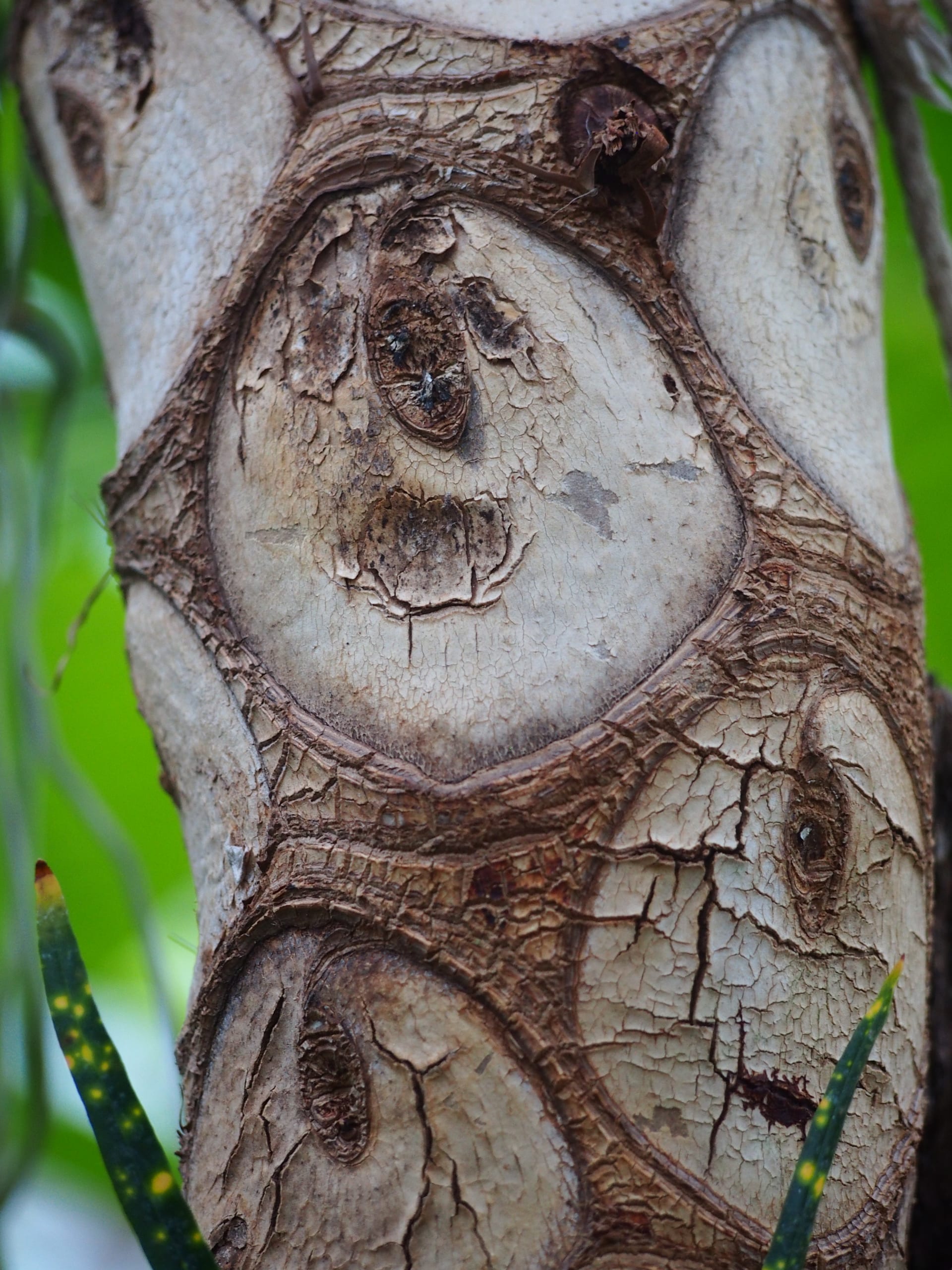
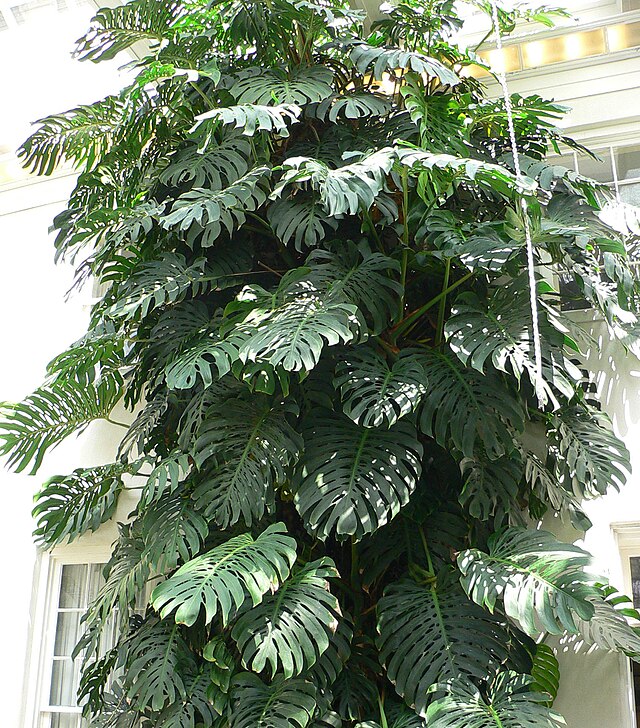
A large philodendron that spreads big, glossy, deeply lobed leaves from a thick trunk. Old leaf scars remain on the trunk like eyes, and stout aerial roots grow down from it. In pots it reaches 1.2-3 m.
About
Selloum, now Thaumatophyllum bipinnatifidum, is an aroid native to Brazil, Bolivia, Paraguay and northeastern Argentina. Long known as Philodendron selloum or P. bipinnatifidum, it has recently been moved to the genus Thaumatophyllum. Its large, heart-shaped leaves on long petioles are deeply pinnately lobed and can reach 1.5 m. Young plants have rounded, unlobed leaves that develop lobes as they grow. The trunk becomes thick and woody, marked with eye-like leaf scars from which stout aerial roots emerge. It was introduced to the Koishikawa Botanical Garden in Tokyo in the early Showa era. Some Japanese references separate hitodekazura (selloum) from the more finely lobed oo-hitodekazura, but current taxonomy treats them as one species. The similarly lobed Xanadu stays much smaller and more compact. It is a staple large potted plant in Japan, sold in great numbers by garden centres and online.
Source: Wikipedia (CC BY-SA 4.0)
Size of the Lacy Tree Philodendron
The Lacy Tree Philodendron grows to 1.2-3 m tall and 1.8-3 m wide in containers; leaves can reach 1.5 m.
Basic Info
Origin
Brazil, Bolivia, Paraguay and northeastern Argentina
Lifespan
Perennial (long-lived)
Size
1.2-3 m tall and 1.8-3 m wide in containers; leaves can reach 1.5 m
Temperature
15〜30℃
Humidity
50〜70%
Watering & Fertilizer
Slow-release fertiliser in the growing season
Growing Tips
Light & Placement
Prefers high light but tolerates low light. Low light and overwatering produce smaller leaves with fewer lobes. Strong summer sun can scorch.
Watering
Likes moisture but rots if waterlogged, and does not tolerate drought; water well when the surface dries.
Temperature & Overwintering
Bring indoors before temperatures drop below about 16°C. It survives winter if kept frost-free and is relatively cold-tolerant for a philodendron.
Soil & Repotting
Use an organically rich, free-draining mix. It is sensitive to salt build-up, so flush the pot through from time to time.
Propagation
Propagate from seed or trunk cuttings.
Pests & Cautions
Aphids, mealybugs, scale, thrips and spider mites are occasional problems. As an aroid it contains insoluble calcium oxalate; chewing causes intense mouth and lip pain, swelling, drooling, vomiting and difficulty swallowing, and the sap can irritate skin. Keep it away from pets and small children and wear gloves when handling.
Lacy Tree Philodendron FAQ
QWhat is the growing difficulty level for Lacy Tree Philodendron?
Beginner. A variety suitable for beginners. No special equipment or experience is required—you can grow it without problems by setting up a basic cultivation environment.
QHow large does Lacy Tree Philodendron get?
The mature size of Lacy Tree Philodendron is 1.2-3 m tall and 1.8-3 m wide in containers; leaves can reach 1.5 m. This may vary slightly depending on cultivation environment and individual differences.
QHow should I water and fertilize Lacy Tree Philodendron?
Lacy Tree Philodendron: watering & fertilizer — Slow-release fertiliser in the growing season. Aim for appropriate frequency and amount.
QWhat is the typical price for Lacy Tree Philodendron?
The price of Lacy Tree Philodendron varies significantly by variety, characteristics, size, and lineage. Please check GrowerDirect's price guide for the latest market information.
Last updated: September 23, 2026
References & Sources
Edited & verified by: GrowerDirect Editorial Team
The classifications, regulations, and growing data on this page are created and verified based on the primary information database below.
Primary sources
- Wikipedia
- Species+ (CITES listing check)
- Ministry of the Environment: List of Invasive Alien Species
- NC State Extension Plant Toolbox - Thaumatophyllum bipinnatifidum
- Wikipedia - Thaumatophyllum bipinnatifidum
- Wikipedia (Japanese) - Philodendron selloum
- ASPCA Toxic and Non-Toxic Plants - Lacy Tree Philodendron
- GBIF
Taxonomy & Authority
Regulations & Conservation Status
Not listed in the CITES Appendices. Not a designated invasive alien species in Japan, nor a nationally rare species under the Act on Conservation of Endangered Species.
Sources: Species+ (CITES listing check) / Ministry of the Environment: List of Invasive Alien Species
Regulations may change. Always verify the latest information with the relevant authorities.
Related Species

Find listings for this species
Related Articles
Philodendron Care Complete Guide | Characteristics of Popular Varieties and Cultivation Tips
A detailed explanation of how to care for Philodendrons, a popular foliage plant in the Araceae family. We introduce the characteristics of popular varieties, watering and light management methods, soil care, and tips for propagation.
Philodendron Types and Growing Guide | Comprehensive Guide to Rapidly Rising Popular Varieties
Comprehensive explanation of popular Philodendron varieties and growing methods. Features variety comparisons (Birkin, Pink Princess, Gloriosum, etc.), propagation techniques, pest and disease control, and tips for identifying plants at purchase.
Growing Philodendron Pink Princess from Seed | From Sowing to Mature Plant, Pink Variegation Development Conditions and Artificial Pollination
Explaining how to grow Pink Princess Philodendron from seed, the conditions for pink variegation development, and the procedure for artificial pollination.
Why New Leaves on Foliage Plants Are Smaller — Practical Solutions for Light, Humidity, and Nutrition
We analyze the causes behind stunted growth and smaller new leaves on foliage plants. From light environment and humidity management to fertilization strategy and root health, we explain each factor based on empirical data and introduce methods to restore new leaf size.
🩺 Common diseases
Can't find the plant you're looking for?
Post your wishes for free and growers with matching plants will contact you with introductions.