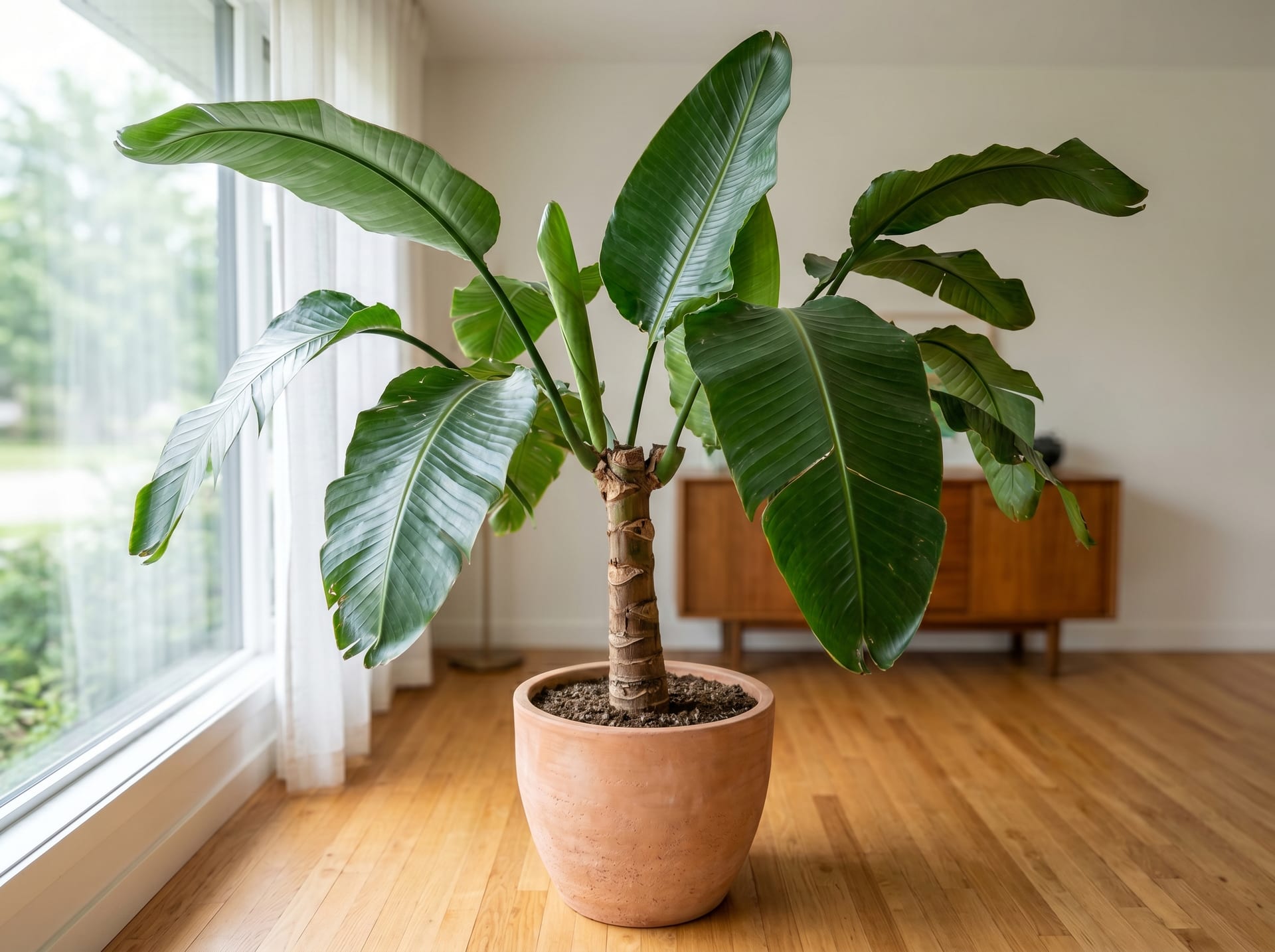
AI-generated image
Giant Bird of Paradise
BeginnerStrelitzia nicolai
A large houseplant with big banana-like leaves creating tropical atmosphere. A staple of resort hotels.
Overview
Strelitzia nicolai, the white bird-of-paradise or giant bird-of-paradise, is a large perennial native to the eastern coast of South Africa. Related to S. reginae but considerably larger, it produces paddle-shaped, banana-like leaves that can reach over 1 m in length, and bears white-and-deep-blue flowers resembling the head of a tropical bird. In the wild it reaches 5–10 m; in containers indoors it grows to 1–3 m, making it one of the most impactful large houseplants available. It prefers bright light and tolerates direct sun, though adequate indoor light is important for producing its characteristically large leaves. Water thoroughly during the growing season (spring to autumn), reduce in winter, and allow partial drying between waterings. Moderately drought-tolerant once established. Repot when root-bound, though slight root-binding may encourage flowering. Its dramatic tropical foliage makes it a centrepiece plant for large interior spaces.
Lifespan of the Giant Bird of Paradise
The Giant Bird of Paradise lives Perennial (10+ years).
Size of the Giant Bird of Paradise
The Giant Bird of Paradise grows to 100-300cm.
Temperature & humidity for the Giant Bird of Paradise
The ideal temperature for the Giant Bird of Paradise is 18〜29℃.
Basic Info
Origin
Eastern South Africa (KwaZulu-Natal and neighbouring regions)
Lifespan
Perennial (10+ years)
Size
100-300cm
Temperature
10〜30℃
Humidity
50〜70%
Growing Tips
Light & Placement
A large plant reaching 1-3 m even in a pot, so allow plenty of space. The more sun it gets, the larger the leaves it produces.
Notes
Prefers bright light but tolerates shade
Watering
Water thoroughly once the soil dries
Temperature & Overwintering
Native to South Africa, so watch out for winter cold. Reduce watering in winter and keep it in a bright, warm spot indoors.
Soil & Repotting
Use a free-draining mix and repot when the pot becomes too small. It tends to flower more readily when slightly root-bound.
Pests & Cautions
Splitting of the large leaves is natural, not a disease. It is fairly drought tolerant and becomes robust once established.
Giant Bird of Paradise FAQ
QWhat is the growing difficulty level for Giant Bird of Paradise?
Beginner. A variety suitable for beginners. No special equipment or experience is required—you can grow it without problems by setting up a basic cultivation environment.
QWhat is the ideal temperature for Giant Bird of Paradise?
The ideal temperature for Giant Bird of Paradise is 18〜29℃. Avoid sudden temperature changes and maintain a stable environment.
QWhat is the lifespan of Giant Bird of Paradise?
The average lifespan of Giant Bird of Paradise is Perennial (10+ years). With proper cultivation environment and nutrient management, you can keep it healthy for a long time.
QHow large does Giant Bird of Paradise get?
The mature size of Giant Bird of Paradise is 100-300cm. This may vary slightly depending on cultivation environment and individual differences.
QWhat is the typical price for Giant Bird of Paradise?
The price of Giant Bird of Paradise varies significantly by variety, characteristics, size, and lineage. Please check GrowerDirect's price guide for the latest market information.
Last updated: October 2, 2026
Growing Specifications
- USDA Zone
- 10–11
References & Sources
Edited & verified by: GrowerDirect Editorial Team
The classifications, regulations, and growing data on this page are created and verified based on the primary information database below.
Taxonomy & Authority
Regulations & Conservation Status
It is not listed in the appendices of CITES (the Washington Convention). It is also not a designated invasive species.
Sources: CITES Appendices (official) / Ministry of the Environment List of Specified Invasive Alien Species
Regulations may change. Always verify the latest information with the relevant authorities.
Related Species
Find listings for this species
Related Articles
How to Grow Strelitzia (Bird of Paradise) | Care and Growing Large Plants of Reginae and Nicolai
Explaining the differences between Strelitzia Reginae and Nicolai (Augusta), lighting, watering, cold hardiness, and tips for nurturing Bird of Paradise into large plants, including division of thick roots.
Optimizing Foliage Plant Leaf Shine | Humidity Management to Achieve Gloss and Plant Health
Environmental management techniques to bring out glossy shine on foliage plant leaves. Techniques to achieve healthy and beautiful leaf expression through optimizing light, humidity, and water quality.
Why New Leaves on Foliage Plants Are Smaller — Practical Solutions for Light, Humidity, and Nutrition
We analyze the causes behind stunted growth and smaller new leaves on foliage plants. From light environment and humidity management to fertilization strategy and root health, we explain each factor and introduce methods to restore new leaf size.
Spider Mite and Scale Insect Control: Practical Pest Prevention
Learn to identify spider mites and scale insects on houseplants and recognize damage signs, master practical spider mite control methods, discover effective scale insect elimination techniques, create pest-resistant environments with seasonal management, understand pesticide safety precautions, and discover early detection and prevention strategies.
🩺 Common diseases
Can't find the plant you're looking for?
Post your wishes for free and growers with matching plants will contact you with introductions.