How to Grow Strelitzia (Bird of Paradise) | Care and Growing Large Plants of Reginae and Nicolai
Explaining the differences between Strelitzia Reginae and Nicolai (Augusta), lighting, watering, cold hardiness, and tips for nurturing Bird of Paradise into large plants, including division of thick roots.
Key Takeaways
Explaining the differences between Strelitzia Reginae and Nicolai (Augusta), lighting, watering, cold hardiness, and tips for nurturing Bird of Paradise into large plants, including division of thick roots.
Related Species
What Kind of Plant Is Strelitzia
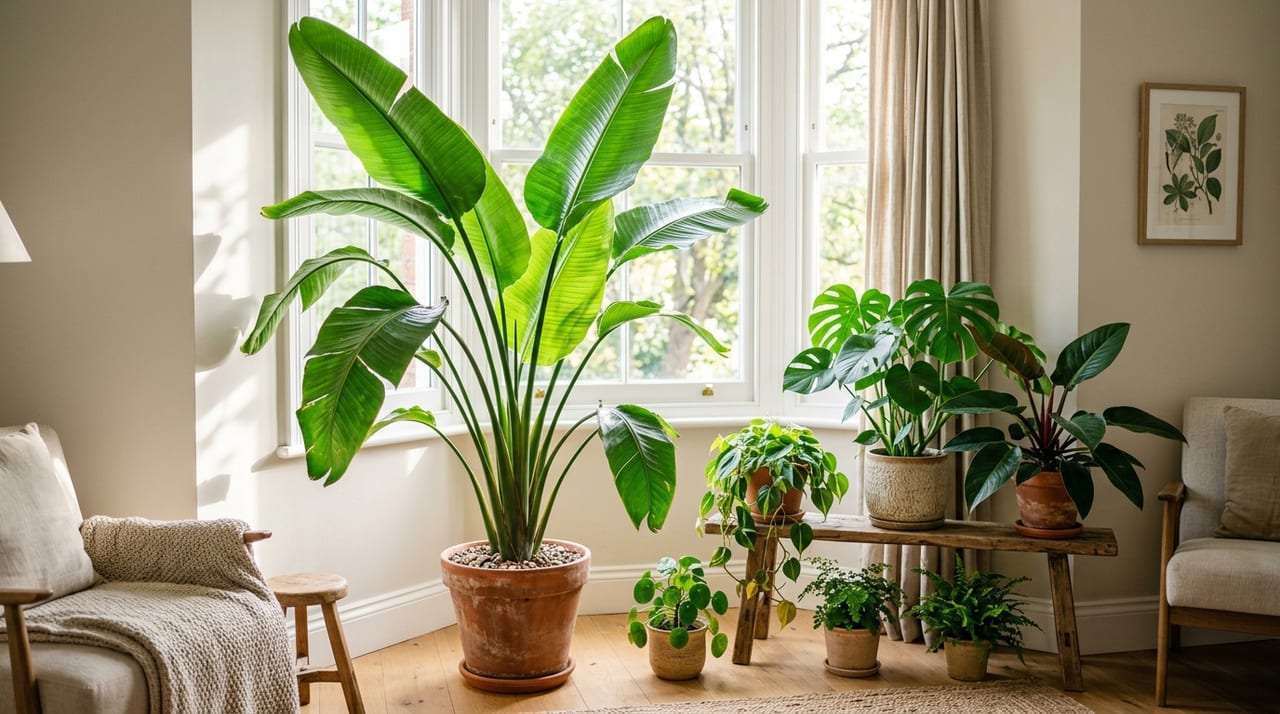
Strelitzia is a plant of the banana family (Musaceae) native to South Africa, and is also known as "Bird of Paradise" due to its distinctive flower shape that resembles a bird's beak. There are two main species of Strelitzia in circulation as foliage plants. One is Strelitzia reginae (also called Reginae), a small-growing species with vibrant orange and blue-purple flowers, and the other is Strelitzia nicolai (commonly called Augusta), which produces white flowers and grows as large as a tree. Reginae is appreciated as a cultivar with a compact form and showy flowers, while Nicolai is appreciated as a large foliage plant with dynamic leaf forms, each enjoying different appeals. Both have large, thick leaves similar to banana leaves, and are frequently incorporated into living rooms and offices as distinctive statement trees. The scientific name Strelitzia is said to be named after Charlotte of the Mecklenburg-Strelitz family, who was Queen of the United Kingdom. Due to its dignified appearance, it is frequently chosen as a gift for business opening and housewarming celebrations.
Lighting and Placement
Since Strelitzia is native to the bright environment of South Africa, it loves sunlight. When growing it indoors, the basic rule is to place it in a location with as much daylight as possible, such as a bright windowsill filtered through sheer curtains. Insufficient light tends to cause the leaves to become leggy and the overall vigor of the plant to weaken. If possible, from spring through autumn, place it outdoors or on a balcony, gradually acclimating it to direct sunlight, so the plant will develop a compact and robust form. However, suddenly exposing a plant not acclimated to intense direct summer sunlight can cause leaf scorch. When moving it outdoors, it is safe to gradually acclimate it from bright indirect light. In winter, when daylight hours are shorter, selecting the brightest location indoors and ensuring as much light as possible will influence growth in the following season. Regularly rotating the pot gradually will prevent leaves from growing one-sided and make it easier to maintain a balanced plant form.
Here is a summary of placement tips:
- Indoors: Place in a location with as much daylight as possible, such as a bright windowsill filtered through sheer curtains
- Spring through autumn: Place outdoors or on a balcony, gradually acclimating to direct sunlight so the plant develops a compact and robust form
- When moving outdoors: Gradually acclimate from bright indirect light to avoid sudden leaf scorch from intense direct summer sunlight
- Winter: When daylight hours are shorter, select the brightest location indoors and ensure as much light as possible
- Pot direction: Regularly rotate the pot gradually to prevent leaves from growing one-sided
Watering and Cold Hardiness
The basic rule for watering is to water thoroughly once the soil surface becomes dry, ensuring water drains from the bottom, then remove any water that accumulates in the saucer. Strelitzia has thick roots that store moisture and is tolerant of some dryness, but prolonged wet conditions easily lead to root rot. Therefore, practice regulated watering with clear wet and dry periods. Choose a well-draining potting mix and place pumice stone or similar material at the bottom of the pot to ensure good drainage, which helps prevent problems caused by overly wet soil. Regarding cold hardiness, both Reginae and Nicolai are plants that prefer warm climates and are not very cold-hardy. In most regions of Japan, plants are damaged by frost or freezing temperatures in winter, so they must be brought indoors to a warm location for management. Nicolai in particular grows large, so whether you can secure indoor space for winter survival is a point to consider before starting cultivation. During the growing season from spring through autumn, applying diluted liquid fertilizer once or twice a month can promote leaf development and plant establishment.
Characteristics of Thick Roots and Propagation by Division
Strelitzia has extremely thick, strong roots that grow densely throughout the pot. Due to the strength of these roots, when the pot becomes filled with roots, the pot itself can crack or roots may protrude from the bottom. Repotting to a larger container is needed every few years. The best time for repotting and division is early summer when temperatures stabilize. Offset plants emerging from the base can be carefully separated while retaining roots on each, allowing them to become independent new plants. Division requires some physical effort due to handling thick roots, but it is a practical propagation method that produces flowering-sized plants more quickly than growing from seed. After repotting, allowing the plant to recover for several weeks in a location without excessive direct sunlight until the roots adapt to the new soil will ensure smooth subsequent growth.
Flowering Conditions and Differences in Enjoyment
The small-growing Reginae will flower in a few years if conditions are suitable, producing vibrant orange and blue-purple flowers near the base of the plant. Flowering requires sufficient light and a reasonably mature plant age. Young seedlings often do not produce flower buds readily. Nicolai, on the other hand, grows large and is primarily treated as a foliage plant for leaf appeal. Producing white flowers requires ample space and many years, so it tends to be chosen more for enjoying the bold leaf silhouette than for growing flowers indoors. Which species to choose should be determined by the amount of available space and your preference for enjoying flowers versus enjoying foliage. The flowers of Reginae, which are frequently available as cut flowers, have a unique blooming pattern where flowers emerge one after another from a beak-like spathe, and their long vase life is one of their charms.
Here is a summary of the differences:
| Item | Reginae | Nicolai (Augusta) |
|---|---|---|
| Flower color | Orange and blue-purple | White |
| Plant form | Small and compact | Large, tree-like growth |
| Time to flowering | A few years if conditions are suitable (requires sufficient light and a reasonably mature plant age) | Requires ample space and many years |
| Primary appeal | Flowers (available as cut flowers) | Bold leaf silhouette |
Summary
Strelitzia is an impressive foliage plant that is easy to grow for beginners if you provide adequate but not excessive light and water, and protect it from the cold in winter. Considering the characteristics of both the compact, flowering Reginae and the large, foliage-focused Nicolai, choose a plant that suits your space and lifestyle. Because growth is gradual, you can slowly savor seasonal leaf development and plant fullness, which is one of the charms of enjoying Strelitzia over the long term. You can check plants of interest in our online catalog, where they are displayed with detailed photos of their size and leaf condition. Please send any questions through our contact form.