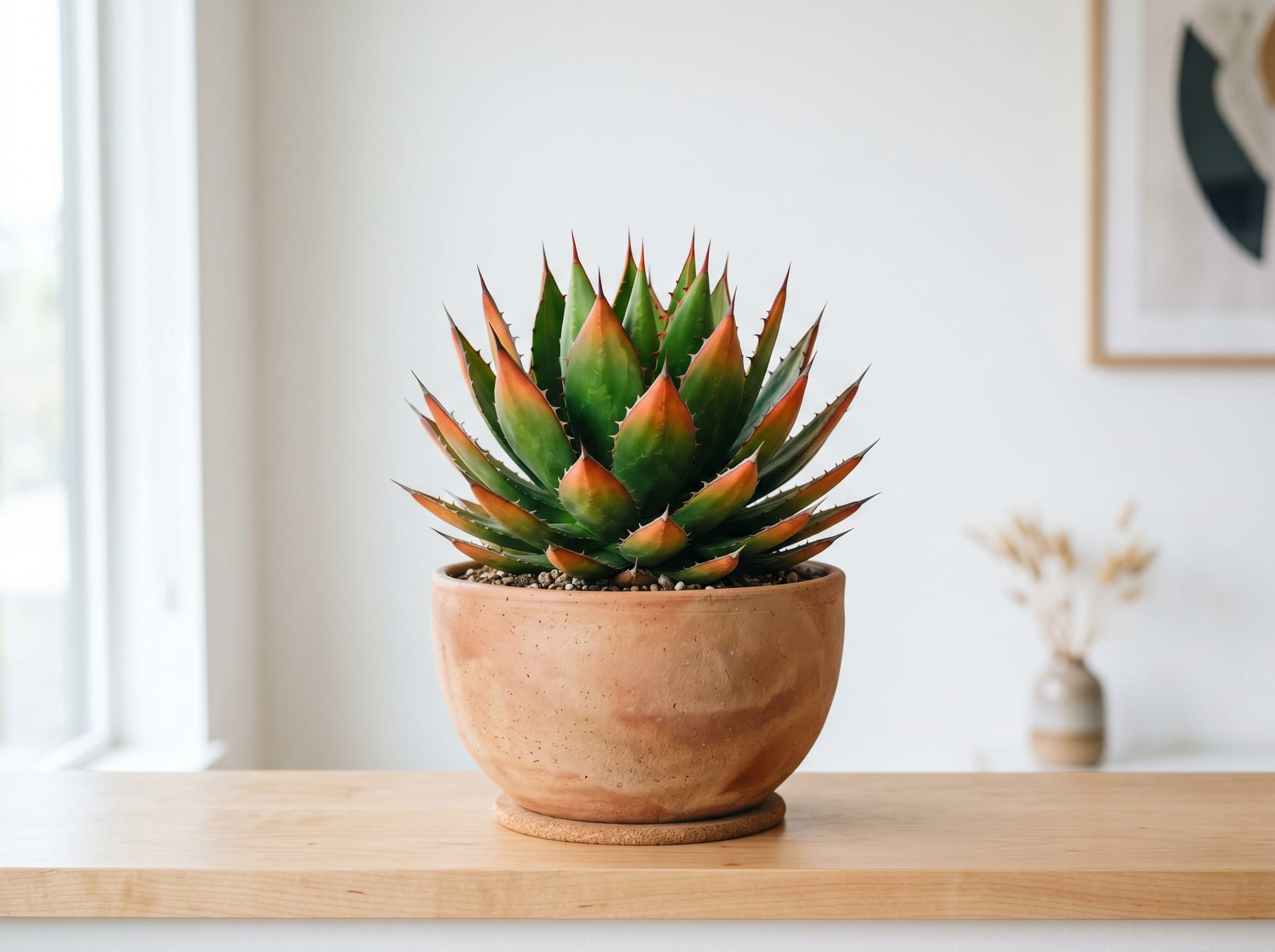
火球龙舌兰
Agave 'Fireball' is a compact rosette agave known for its vibrant reddish leaf tips and rounded, symmetrical form. It combines good drought and cold tolerance, making it an approachable choice for beginners. Its small yet striking appearance suits both indoor and outdoor settings.
- 价格范围
- ¥6,000〜¥6,000
前3笔销售免佣金!在2026年8月31日前注册生产者账户 → 前3笔成交的手续费免费!
栽培者 招募中!
在BoTachoku上销售,直接面向全国客户销售吗?
ボタちょく的 6 项透明性承诺
在龙舌兰出品中,栽培者将明确显示以下信息。确保品种、产地、光照需求、栽培难度的透明性。
- 品种明示
- 实物照片
- 色泽
- 产地明示
- 光照需求
- 难度明示
Browse all 15 varieties
龙舌兰分类正在招募认证栽培者
栽培者正在陆续注册,即将上架。设置上架通知,不错过新商品。
「接收上架通知」需免费注册会员即可设置。当有符合您保存条件的新商品上架时,我们会通过邮件和站内通知提醒您。
已注册的栽培者(抢先看)
关于火球龙舌兰
Fireball is a compact agave cultivar derived from Agave univittata or closely related species, taking its name from the striking red-orange coloration that develops at the leaf tips. Selected and refined from wild Mexican agave populations, it has become a sought-after variety among succulent collectors worldwide. Mature plants typically reach only 25–30 cm in height, making them well-suited to balconies, windowsills, and limited growing spaces. The leaves are deep green with finely serrated margins and rigid terminal spines; under ample sunlight, the reddish hue intensifies and spreads from the tips toward the center of the rosette. Hardy against drought and heat with modest care requirements, Fireball appeals equally to beginners looking for a low-maintenance plant and to seasoned growers who appreciate its tight symmetry and vivid coloration.
开始养护火球龙舌兰前需要了解的7件事
1Small Plant, Wide Roots
While Fireball stays compact at 15–30 cm tall, its roots tend to spread laterally. Choose a pot at least 20 cm wide to prevent root binding. In-ground planting benefits from spacing plants at least 50 cm apart.
2Water Only When Dry
Overwatering is the leading cause of root rot. During the growing season (spring–autumn), water only after the soil dries out completely. In winter, reduce watering to once or twice a month. Well-draining soil and pots with drainage holes are essential.
3Mind the Leaf Spines
The leaf tips carry sharp terminal spines that can cause injury during handling. Always wear thick leather gloves when repotting or moving the plant. Keep it out of reach of children and pets, and consider placement so the spines face away from high-traffic areas.
4Sunlight Is Essential
To maintain Fireball's signature reddish coloration, aim for at least 6 hours of direct sunlight daily. Insufficient light causes leaves to revert to green and triggers etiolation (stretching). For indoor growers, a south-facing window or supplemental grow light is recommended.
5Cold-Hardy, but Frost-Sensitive
Fireball tolerates temperatures down to around -5°C, but direct frost exposure damages the leaves. Protect outdoor plants with frost cloth or move them under eaves to avoid rain and frost. Potted specimens are best brought indoors during winter for added safety.
6Blooms Once in a Lifetime
Agaves bloom only once in their lifetime and die after flowering (monocarpic). However, most plants produce offshoots (pups) at the base before blooming, allowing the lineage to continue. Once you notice a flowering spike, separate any pups promptly and grow them on separately.
7Drainage Is Non-Negotiable
Commercial cactus and succulent mix works well for Fireball. Improve drainage further by blending in 20–30% pumice or perlite, which significantly reduces root rot risk. For garden planting, avoid clay-heavy soils and amend with sand or pumice as needed.
火球龙舌兰的常见问题
- Q.Can Fireball agave be grown indoors?
- A.Yes, but insufficient light causes the leaf color to fade and the rosette to stretch. Place it at a bright south-facing window or use a supplemental grow light to maintain healthy, compact growth indoors.
- Q.How do I propagate Fireball from offshoots?
- A.Detach offshoots from the base using a sharp, clean knife or pruning shears. Allow the cut end to callous for 2–3 days before planting in fresh, well-draining succulent mix. Keep watering minimal until roots establish.
- Q.How can I keep the red coloration vibrant?
- A.At least 6 hours of direct sun daily is the most effective approach. Slightly reduced watering can also enhance coloration by introducing mild stress. Avoid over-fertilizing, as excess nutrients tend to dilute leaf color; limit feeding to once or twice a year.
- Q.How often should Fireball be repotted?
- A.Repot approximately every 2–3 years, or when roots begin emerging from the drainage holes. Spring (April–May), when growth is most active, is the ideal time. Use a pot one size larger and fresh well-draining succulent mix.
- Q.What pests and diseases should I watch for?
- A.Root rot from overwatering and scale insects are the primary concerns. Prevent root rot through strict drainage management, and remove scale insects with an alcohol-dampened cotton swab or an appropriate insecticidal spray. Good air circulation helps prevent both problems.