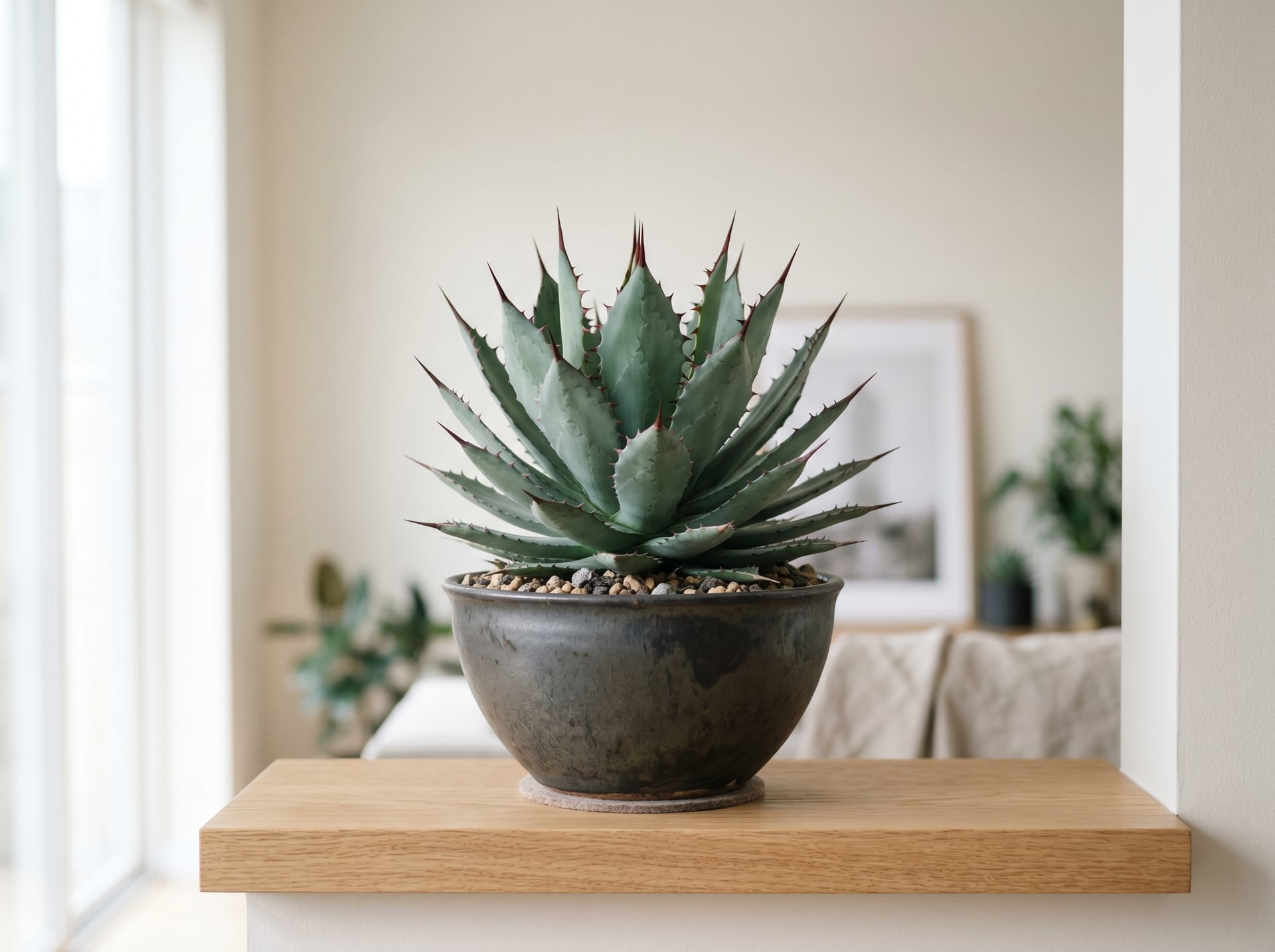
巨刺龙舌兰
Agave macrocantha is a small-to-medium Mexican agave prized for its striking contrast of blue-gray leaves and vivid dark-red terminal spines. Its compact form and strong drought tolerance make it easy to grow in containers or in the ground, appealing to beginners and serious collectors alike.
- 价格范围
- ¥6,000〜¥6,000
前3笔销售免佣金!在2026年8月31日前注册生产者账户 → 前3笔成交的手续费免费!
栽培者 招募中!
在BoTachoku上销售,直接面向全国客户销售吗?
ボタちょく的 6 项透明性承诺
在龙舌兰出品中,栽培者将明确显示以下信息。确保品种、产地、光照需求、栽培难度的透明性。
- 品种明示
- 实物照片
- 色泽
- 产地明示
- 光照需求
- 难度明示
Browse all 15 varieties
龙舌兰分类正在招募认证栽培者
栽培者正在陆续注册,即将上架。设置上架通知,不错过新商品。
「接收上架通知」需免费注册会员即可设置。当有符合您保存条件的新商品上架时,我们会通过邮件和站内通知提醒您。
已注册的栽培者(抢先看)
关于巨刺龙舌兰
Agave macrocantha is a medium-sized agave native to the rocky, arid slopes of Oaxaca and Puebla in Mexico. Its species name derives from the Greek for "large spine," a fitting tribute to the striking dark reddish-brown to near-black terminal spines that tip each leaf. The leaves themselves are a distinctive blue-gray-green, forming a tidy, architectural rosette that reaches roughly 50–70 cm in diameter at maturity. Fine serrations line the leaf margins, adding to its sculpted, geometric appeal. In cultivation, macrocantha is prized for its exceptional drought tolerance and low maintenance requirements, provided it has excellent drainage. Its compact size and bold color contrast make it equally at home as a solo specimen in a decorative pot or nestled among rocks in a xeriscape or succulent garden. Growth is deliberately slow, but this means each year brings a slightly fuller, more impressive plant—a quality that devoted growers find deeply rewarding over the long term.
开始养护巨刺龙舌兰前需要了解的5件事
1Spines Are Seriously Sharp
The terminal spines of macrocantha are extremely hard and sharp, capable of causing deep puncture wounds on accidental contact. Always wear thick leather gloves when repotting or handling the plant. Avoid placing it where children or pets can easily brush against it.
2Less Water Is Almost Always Better
Root rot from overwatering is the primary killer of macrocantha. During the growing season (spring through autumn), water only after the soil has completely dried out, and reduce to once or twice a month in winter. A well-draining cactus and succulent mix is essential.
3Strong Light Drives Healthy Growth
In its native rocky habitat, macrocantha receives intense direct sunlight. Indoors, even a south-facing window often provides insufficient light, leading to etiolation (stretching). Outdoor cultivation or supplemental grow lighting is ideal for maintaining its compact, attractive form.
4Expect Slow, Steady Growth
Macrocantha grows slowly, taking several years to reach a display-worthy size. This also means you can enjoy the same plant in the same pot for many years. Avoid over-fertilizing in an attempt to speed growth, as this can cause stretching and increase disease susceptibility.
5Cold Hardiness Has Limits
Macrocantha can tolerate brief dips to around -5°C, but frost and prolonged freezing temperatures will damage the leaves. In heavy-snowfall regions or northern Japan, bring it indoors for winter. Container growing makes this easy, making the plant manageable even in cooler climates.
巨刺龙舌兰的常见问题
- Q.Can macrocantha be grown indoors?
- A.It can be grown indoors if light is sufficient, but standard window light is often too weak, leading to etiolation. Place it at a bright south-facing window and supplement with a grow light if needed for best results.
- Q.How often should I water macrocantha?
- A.During the growing season (spring to autumn), water thoroughly once every one to two weeks after the soil has fully dried. Reduce to once or twice a month in winter to prevent root rot. Always water deeply until it drains from the bottom, and never let the pot sit in standing water.
- Q.What soil conditions are best for planting in the ground?
- A.Excellent drainage is critical—clay-heavy soils will cause root rot. A lean, sandy mix amended with pumice or coarse grit is ideal. When planting in the ground, add a layer of gravel or pumice at the bottom of the planting hole to further improve drainage.
- Q.What is the most common cause of death in macrocantha?
- A.Overwatering leading to root rot is by far the most common cause. Poor-draining soil and leaving water in saucers are closely related culprits. If the base of the leaves turns dark and feels soft, this signals root rot and requires immediate action such as repotting into fresh, dry soil.