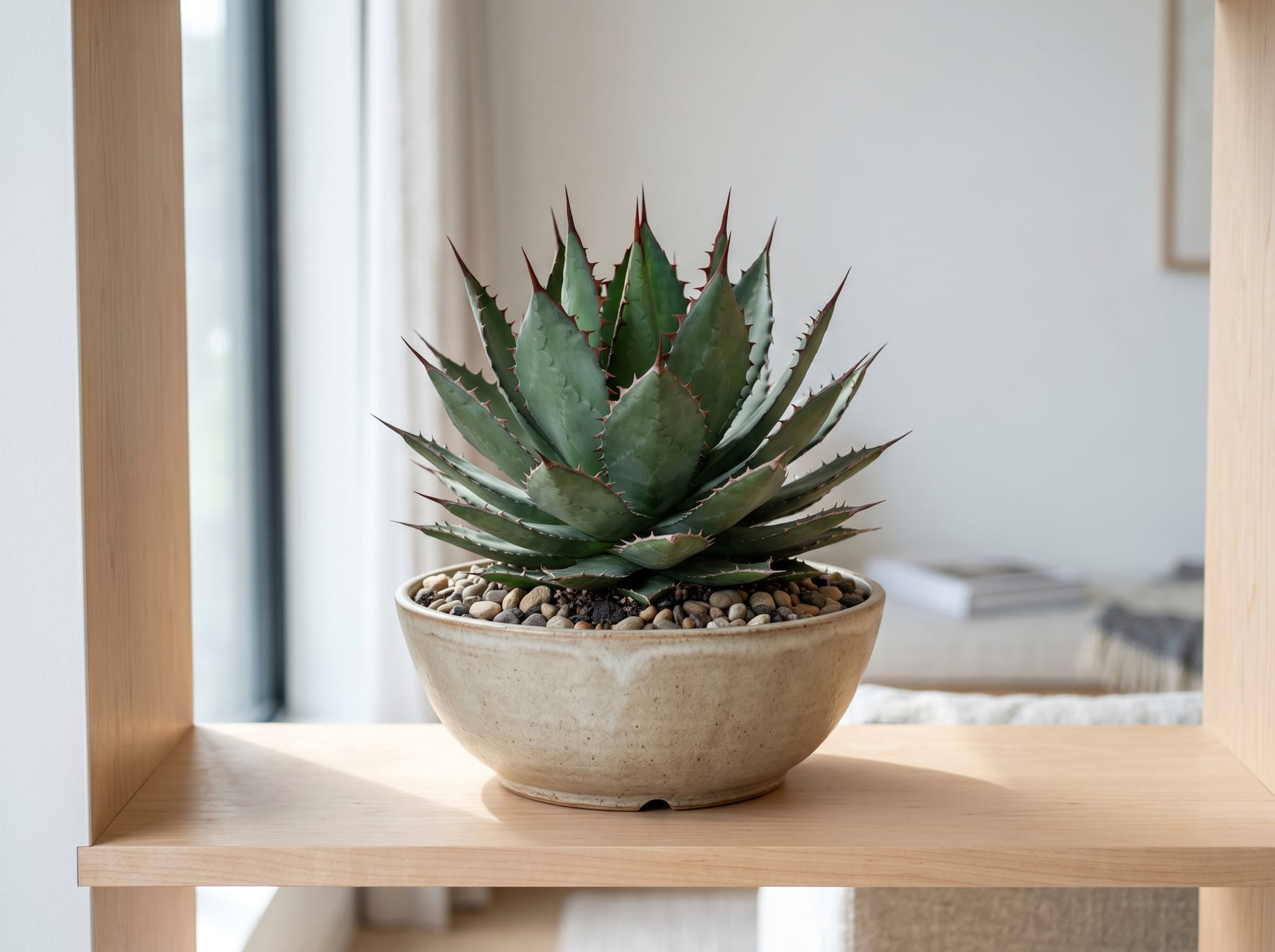
怒龙舌兰
Native to Mexico. Dark green fleshy leaves lined with sharp black teeth give a wild appearance. More cold-hardy than Titanota and adapts well to Japan's climate. Somewhat slow-growing.
View 怒龙舌兰 encyclopedia →- 价格范围
- ¥6,000〜¥6,000
前3笔销售免佣金!在2026年8月31日前注册生产者账户 → 前3笔成交的手续费免费!
栽培者 招募中!
在BoTachoku上销售,直接面向全国客户销售吗?
ボタちょく的 6 项透明性承诺
在龙舌兰出品中,栽培者将明确显示以下信息。确保品种、产地、光照需求、栽培难度的透明性。
- 品种明示
- 实物照片
- 色泽
- 产地明示
- 光照需求
- 难度明示
Browse all 15 varieties
龙舌兰分类正在招募认证栽培者
栽培者正在陆续注册,即将上架。设置上架通知,不错过新商品。
「接收上架通知」需免费注册会员即可设置。当有符合您保存条件的新商品上架时,我们会通过邮件和站内通知提醒您。
已注册的栽培者(抢先看)
怒龙舌兰的基本数据
- 养护难度
- 适合中级者
- 体型
- 30-60cm rosette
- 适宜温度
- 0〜40℃(適温10〜35℃)
- 浇水
- Water: when dry in spring/fall / reduce in summer / monthly in winter
- Soil
- Mix of Akadama, Kanuma, and pumice. Prioritize drainage
- Light
- Direct sunlight ideal. Slightly more shade tolerant than Titanota
- Cold Hardiness
- Tolerates brief -5°C. Frost protection recommended
- Notes
- Teeth are extremely sharp — thick gloves essential when repotting
关于怒龙舌兰
Agave horrida is a succulent native to the central highlands of Mexico that has captivated gardeners with its fierce beauty since it was introduced to Europe in the nineteenth century. Its thick, slightly glossy dark-green leaves form a radial rosette adorned with neat rows of sharp black-brown marginal teeth, and a long, rigid terminal spine — an appearance that fully justifies the Latin epithet horrida, meaning "dreadful." Mature plants reach roughly 60–80 cm in diameter, and when they finally flower after many years, the entire rosette dies — a monocarpic strategy that makes each bloom a once-in-a-lifetime spectacle. Sharing traits with titanota, horrida's highland origins grant it somewhat greater cold tolerance, making outdoor cultivation in much of Japan more manageable. Its unhurried pace of growth only deepens the bond between grower and plant, and it remains a treasured long-term companion for agave collectors worldwide.
开始养护怒龙舌兰前需要了解的7件事
1Loves Full Sun
Agave horrida thrives in bright, direct sunlight — an outdoor spot or south-facing windowsill works best. Insufficient light causes etiolation and dulls the characteristic dark serrations. Outdoor placement from spring through autumn is ideal.
2Water Sparingly
Its thick leaves store moisture, making overwatering the leading cause of root rot. Water thoroughly only after the soil has fully dried out in spring–autumn; reduce to once or twice a month in winter. When in doubt, lean toward drier conditions.
3Relatively Cold-Hardy
Among agaves, horrida is notably cold-tolerant and can handle brief exposure down to around 0–3°C. However, prolonged frost or snow can cause damage, so in colder regions it is advisable to bring plants under cover or indoors during winter.
4Handle With Care
The terminal spine and marginal teeth are extremely sharp and can cause injury if handled carelessly. Always wear thick gloves when repotting or moving the plant, and place it out of reach of children and pets.
5Well-Draining Soil Essential
A mix of commercial succulent/cactus soil blended with 20–30% pumice or akadama works well. Avoid clay-heavy or moisture-retentive soils, which increase the risk of root rot. Always place drainage stones at the bottom of the pot.
6Slow Growth, Rare Repotting
Agave horrida grows slowly, and repotting every 2–4 years is typically sufficient. Repot when roots begin to escape the drainage holes or when the soil has noticeably degraded. Spring (March–May) is the best time to repot with minimal stress to the plant.
7Minimal Fertilizing Needed
Agave horrida naturally thrives in low-nutrient conditions, and excess fertilizer can result in soft, weak growth. Apply a slow-release balanced fertilizer at half the recommended dose once or twice during the growing season (spring–summer). No fertilizer is needed in winter.
怒龙舌兰的常见问题
- Q.What is the difference between horrida and titanota?
- A.Both are highly popular agaves, but horrida generally offers greater cold hardiness and tends to have finer, more evenly spaced marginal teeth. Titanota often features thicker, whitish teeth and has an enormous number of named varieties and clones.
- Q.Can horrida be grown entirely indoors?
- A.It is possible to grow horrida entirely indoors, but low light often causes etiolation. Place it on the sunniest windowsill available, and move it outdoors in spring through autumn if possible. Supplemental grow lighting can also help maintain a compact form.
- Q.Does horrida produce offsets easily?
- A.Horrida tends to produce fewer offsets than many other agaves. When they do appear, they emerge near the base of the mother plant, and patience of several years is often required. Detach offsets once they reach at least 5 cm in diameter for the best chance of successful establishment.
- Q.Will the plant die after it flowers?
- A.Yes, horrida is monocarpic — the mother plant dies after flowering. Flowering typically takes more than ten to thirty years, making it a once-in-a-lifetime event. Preserving any offsets before the plant blooms allows you to continue the lineage.
- Q.What should I look for when buying a plant?
- A.Check that the leaves are symmetrically arranged and that the leaf color is even with no yellowing or soft rot. An unusually wobbly base may indicate root rot. Since tooth shape varies among clones, examine the form carefully and choose one that matches your aesthetic preference.
怒龙舌兰种植的实用工具
Learn more about 怒龙舌兰 in the encyclopedia
View 怒龙舌兰 encyclopedia entry →
Care difficulty, size, origin and light needs — all basics covered.