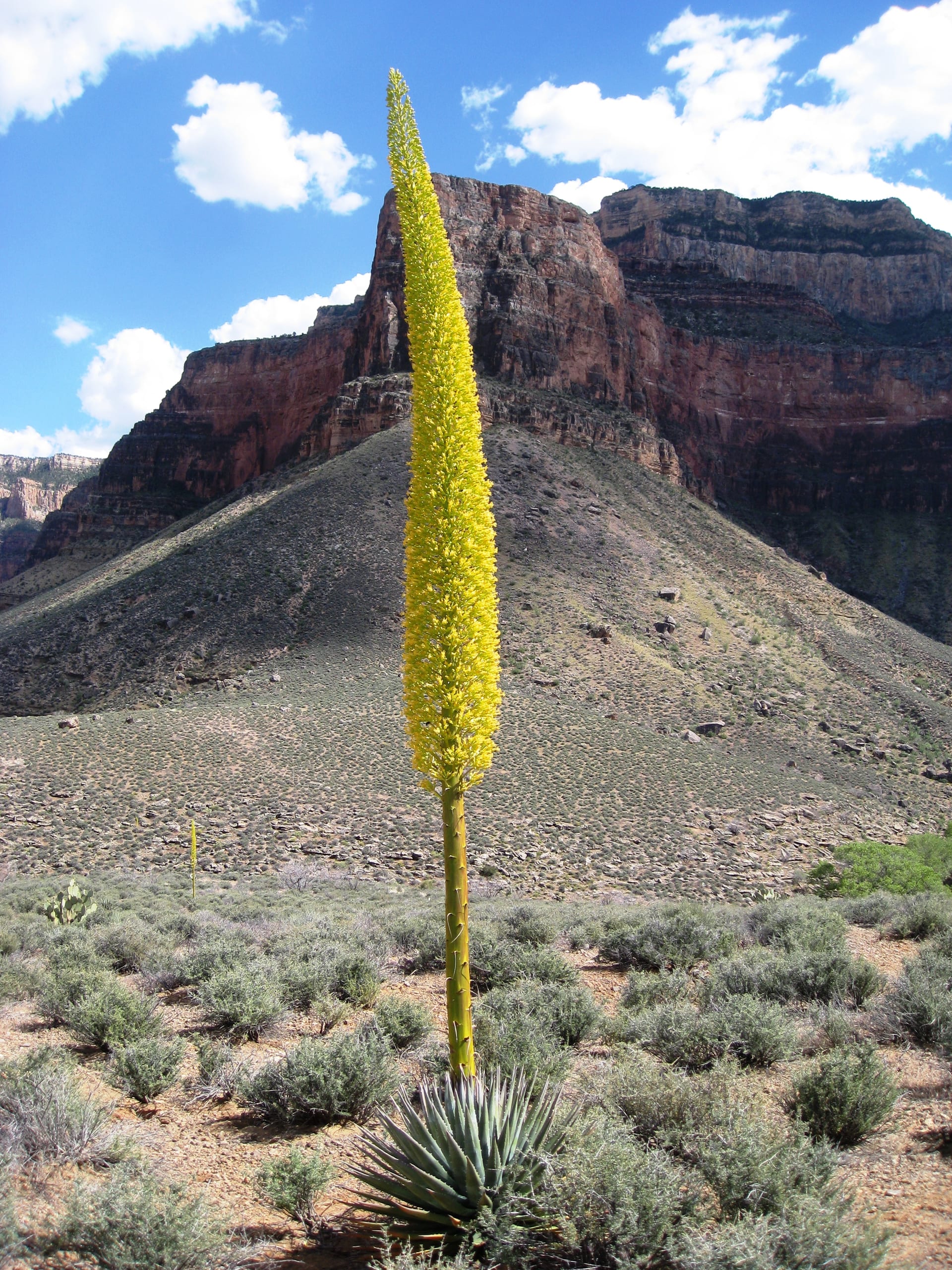
 © J Brew / CC BY-SA 2.0
犹他龙舌兰开巴本亚种
Agave utahensis subsp. kaibabensis is the largest-growing form within the utahensis group, producing broad leaves 3 to 5.5 cm wide that build into an imposing rosette nearly a meter across. It grows natively on rocky outcrops around the Grand Canyon in Arizona, and its sheer size sets it apart at a glance from the smaller utahensis varieties. As a perennial, each rosette flowers only once and then dies back, but offsets forming around the base carry the plant forward into new growth. It's a rewarding choice for growers who want to watch a genuinely large agave take shape over time.
View 犹他龙舌兰开巴本亚种 encyclopedia →成交手续费0%!2026年9月30日前注册,前 2 株免佣金!
生产者 招募中!
在GrowerDirect上销售,直接面向全国客户销售吗?
GrowerDirect的 6 项透明性承诺
在龙舌兰出品中,生产者将明确显示以下信息。确保品种、产地、光照需求、栽培难度的透明性。
- 品种明示
- 实物照片
- 色泽
- 产地明示
- 光照需求
- 难度明示
查看全部141个品种
龙舌兰分类正在招募认证生产者
生产者正在陆续注册,即将上架。设置上架通知,不错过新商品。
「接收上架通知」需免费注册会员即可设置。当有符合您保存条件的新商品上架时,我们会通过邮件和站内通知提醒您。
已注册的生产者(抢先看)
犹他龙舌兰开巴本亚种的基本数据
- 养护难度
- 适合中级者
- 寿命
- 多年生草本。开花的莲座状叶丛枯死后,由子株进行更新。
- 体型
- 莲座状叶丛高30~60cm,宽40~100cm。
- 浇水
- 不需要大量施肥(生长期施少量缓效性肥料即可)。
- 光照与摆放位置
- 置于充足光照、通风良好的地方。植株会长得很大,花盆摆放位置应留有充足空间。
- 浇水
- 犹他龙舌兰的相关类型怕闷热。夏季应优先保证通风,待土壤完全干燥后再浇水。
- 温度与越冬
- 野生地海拔700~2,500m的岩地。因耐寒温度具体资料缺乏,冬季应在避雨、光线充足的地方进行干燥管理。
- 土壤与换盆
- 由于是岩地植物,需用含轻石和沙子较多、排水性良好的土壤。
- 注意事项
- 可通过叶宽(3~5.5cm)和株体大小与小型变种群区分。叶先端的刺粗壮且锐利。
关于犹他龙舌兰开巴本亚种
Agave utahensis subsp. kaibabensis is the largest form of the utahensis group, forming broad-leaved rosettes nearly a meter wide. Native to Grand Canyon rock outcrops, it suits intermediate growers aiming for a substantial specimen.
开始养护犹他龙舌兰开巴本亚种前需要了解的7件事
1Sun and Airflow
Since this subspecies grows naturally on open rock faces, give it as much sun and airflow as possible year-round when kept outdoors. Insufficient light tends to make the leaves stretch out, softening the compact, broad-leaved form that defines this variety.
2Water Deeply, Then Let It Dry
Coming from an arid, rocky habitat, it does best with thorough watering only after the soil has fully dried out. Cut back on watering frequency as temperatures drop to help prevent root rot.
3Fast-Draining Soil
Use a well-draining succulent or cactus mix so water doesn't linger around the roots. Soil high in organic matter holds too much moisture and raises the risk of root rot.
4Pot Size and Repotting
Because mature rosettes reach 40 to 100 cm across, repot into a slightly larger pot during the growing season once roots fill the current one, leaving room for future growth. Hold off on watering for several days to a week after repotting to let disturbed roots settle.
5Care During Cold Months
Growth slows when temperatures drop, so space out waterings further and keep the soil on the dry side. In locations with prolonged rain or hard frost, moving the plant under eaves or indoors can help reduce stress on the plant.
6Choosing a Good Plant
Look for a plant with broad, thick leaves and a tightly formed rosette center, which shows off this subspecies' characteristic presence. Check that the leaf tips and base are free of damage or discoloration and that the plant is firmly rooted, not loose at the base.
7Plan for Its Mature Size
A full-grown rosette reaches roughly 30 to 60 cm tall and 40 to 100 cm wide, so it's worth planning placement and space around its size in a few years rather than just how it looks now.
犹他龙舌兰开巴本亚种的常见问题
- Q.Is this agave suitable for beginners?
- A.It's generally considered an intermediate-level plant, so some prior experience managing watering and sun exposure for succulents helps. With basic knowledge of succulent care, growers can build up experience with it gradually.
- Q.How large does it eventually grow?
- A.The rosette reaches roughly 30 to 60 cm tall and 40 to 100 cm wide, making it one of the larger forms within the utahensis group. Its broad, 3 to 5.5 cm wide leaves give it a rosette that can approach a meter across.
- Q.What happens to the plant after it flowers?
- A.It's a perennial, but each individual rosette dies back after flowering. Offsets that form around the base continue the plant, so the clump carries on across generations.
- Q.Can it be planted directly in the ground outdoors?
- A.Since it favors a well-draining environment similar to its native rocky habitat, in-ground planting calls for fast-draining soil and a spot with plenty of direct sun. It's also worth leaving enough surrounding space, since the rosette can eventually spread close to a meter wide.
- Q.How is it different from other utahensis varieties?
- A.This subspecies grows notably larger than other forms of utahensis, with broader leaves and a bigger rosette. Its size alone makes it visually distinct from the smaller utahensis varieties.
犹他龙舌兰开巴本亚种种植的实用工具
在图鉴中详细了解犹他龙舌兰开巴本亚种
查看犹他龙舌兰开巴本亚种的图鉴条目 →
收录栽培难度、尺寸、原产地、日照等基础数据。