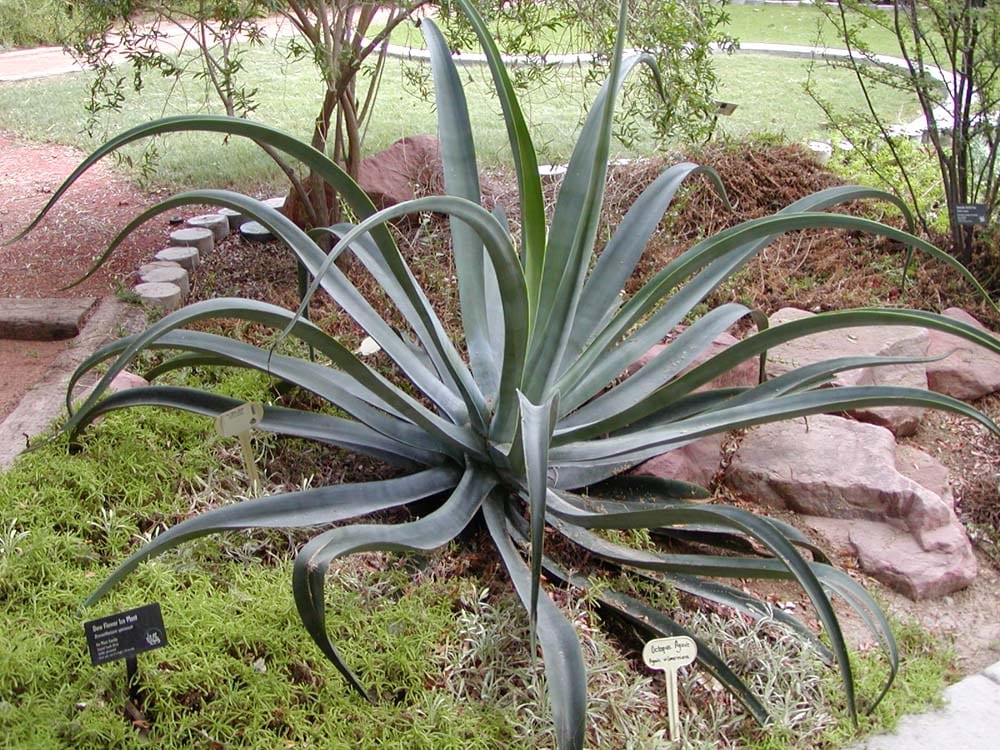
 © Stan Shebs / CC BY-SA 3.0
章鱼龙舌兰
Agave vilmoriniana, commonly known as the octopus agave, is a striking large agave whose long, slender green leaves curve and cascade toward the ground in a graceful, tentacle-like sweep. It lacks the prominent teeth of many agaves, but the leaf edges carry fine serrations that can be sharp, so wear gloves when handling it. Rather than producing offsets at the base like most agaves, this species reproduces via bulbils that form along its flower stalk after blooming. Mature plants reach roughly 1.2 meters in both height and spread, giving them an imposing presence. It's considered beginner-friendly, making it an approachable choice for those new to growing agaves.
View 章鱼龙舌兰 encyclopedia →成交手续费0%!2026年9月30日前注册,前 2 株免佣金!
生产者 招募中!
在GrowerDirect上销售,直接面向全国客户销售吗?
GrowerDirect的 6 项透明性承诺
在龙舌兰出品中,生产者将明确显示以下信息。确保品种、产地、光照需求、栽培难度的透明性。
- 品种明示
- 实物照片
- 色泽
- 产地明示
- 光照需求
- 难度明示
查看全部141个品种
龙舌兰分类正在招募认证生产者
生产者正在陆续注册,即将上架。设置上架通知,不错过新商品。
「接收上架通知」需免费注册会员即可设置。当有符合您保存条件的新商品上架时,我们会通过邮件和站内通知提醒您。
已注册的生产者(抢先看)
章鱼龙舌兰的基本数据
- 养护难度
- 适合新手
- 寿命
- 开花后母株枯死,不产生子株(在花茎上长出珠芽)
- 体型
- 高度和宽度均约1.2米
- 浇水
- 不需要大量施肥(生长期用少量缓效肥料即可)
- 光照和摆放位置
- 在阳光充足的地方养护。由于叶片展开很大,即使是盆栽也要在通道旁或其他地方留出充足空间。
- 浇水
- 抗旱性强。待用土干燥后再浇水,冬季减少浇水。
- 温度和越冬
- 美国生产者称其可耐受约-4℃的低温。盆栽应避免强霜冻来越冬。
- 用土和换盆
- 使用排水良好的用土。由于不产生子株,繁殖需用花茎上的珠芽。
- 注意事项
- 开花后母株枯死,无子株更新。叶边虽然锯齿不明显,但有时可能很锐利。
关于章鱼龙舌兰
Agave vilmoriniana is a large, beginner-friendly agave whose slender leaves curve toward the ground like octopus tentacles. It lacks prominent teeth, though the edges can still be sharp, and it propagates via bulbils rather than offsets after flowering.
开始养护章鱼龙舌兰前需要了解的7件事
1Light and Airflow
Agave vilmoriniana thrives in full sun, so place it where it gets plenty of direct light if grown outdoors. Good air circulation helps prevent excess moisture buildup and keeps the plant healthy. Because its leaves arch and spread widely as they grow, give it plenty of surrounding space.
2Water Sparingly
Its fleshy leaves store water, so let the soil dry out completely before watering again. Overwatering can lead to root rot, so avoid letting water pool in the saucer. Water even less often during winter, when growth slows down.
3Use Well-Draining Soil
A commercial succulent or cactus soil mix works well for this plant. Adding pumice or akadama soil improves aeration and reduces the risk of root rot. Placing drainage material at the bottom of the pot further improves water flow.
4Repot Before It Outgrows Its Pot
During active growth, roots can fill the pot quickly, so repot into a slightly larger container once roots start showing at the drainage holes. Spring to early summer, when temperatures are stable, is the best time to repot. Since mature plants reach about 1.2 meters in height and spread, plan ahead for a larger pot or a spot in the garden.
5Protect It in Winter
This agave tolerates some cold, but frost and freezing temperatures should be avoided. If grown outdoors, moving it indoors or under eaves during winter is a good precaution. Cut back on watering further once growth slows for the season.
6Choosing a Healthy Plant
Look for a plant with firm, plump leaves that curve gracefully from the base, a sign of good health. Check that the leaf tips and edges are free of damage or discoloration, and that the base feels stable rather than loose. The teeth aren't prominent, but the leaf edges have fine serrations that can be sharp, so wear gloves when choosing, moving, or repotting it.
7Flowering Marks the End
Once this agave flowers, the mother plant will die, and unlike many agaves, it won't leave offsets behind. Instead, small bulbils form along the flower stalk, which can be collected and grown into new plants. Flowering typically takes many years to occur, so enjoy watching the plant's form develop in the meantime.
章鱼龙舌兰的常见问题
- Q.Why is it called the "octopus agave"?
- A.The name comes from its long, slender leaves that curve and cascade toward the ground, resembling octopus tentacles. This is reflected in its English name, "octopus agave."
- Q.Is it true that its leaves have no teeth?
- A.It's true that the leaf margins lack the prominent teeth of many other agaves. However, the edges carry fine serrations that can be sharp, so wear gloves when touching or tending the plant.
- Q.Does it produce offsets (pups)?
- A.No, this species doesn't produce offsets at the base like most agaves. Instead, it forms bulbils along its flower stalk after blooming, a different way of propagating.
- Q.Is it difficult to grow?
- A.It's generally considered beginner-friendly and grows well as long as you provide enough light and well-draining soil. The key is to avoid excess moisture and let it dry out between waterings.
- Q.How large does it get?
- A.Mature plants reach roughly 1.2 meters in both height and spread. Since its leaves arch and spread out as they grow, make sure to give it enough surrounding space.
章鱼龙舌兰种植的实用工具
在图鉴中详细了解章鱼龙舌兰
查看章鱼龙舌兰的图鉴条目 →
收录栽培难度、尺寸、原产地、日照等基础数据。