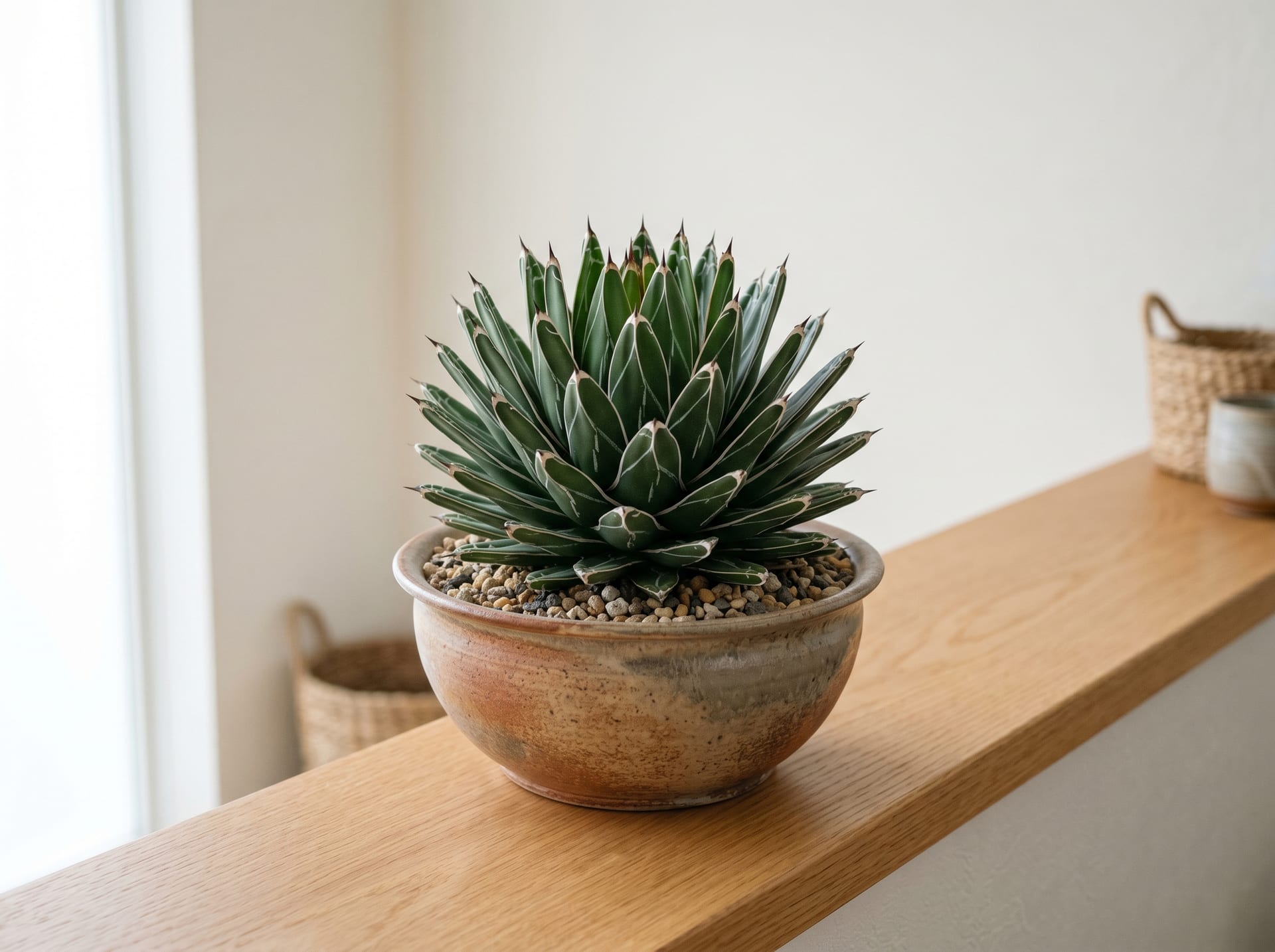
笹之雪
Agave victoriae-reginae, known as Queen Victoria Agave or "Sasa-no-Yuki" in Japanese, features a compact rosette of dark green leaves adorned with striking white markings, earning it the nickname "Queen of Agaves." It is an extremely slow-growing plant that can take decades to reach maturity. Its tidy size makes it suitable for both indoor and outdoor cultivation, and it is well-suited for beginners.
- 价格范围
- ¥6,000〜¥6,000
前3笔销售免佣金!在2026年8月31日前注册生产者账户 → 前3笔成交的手续费免费!
栽培者 招募中!
在BoTachoku上销售,直接面向全国客户销售吗?
ボタちょく的 6 项透明性承诺
在龙舌兰出品中,栽培者将明确显示以下信息。确保品种、产地、光照需求、栽培难度的透明性。
- 品种明示
- 实物照片
- 色泽
- 产地明示
- 光照需求
- 难度明示
Browse all 15 varieties
已注册的栽培者(抢先看)
关于笹之雪
Native to the arid highlands of northern Mexico, Agave victoriae-reginae was named in honor of Queen Victoria of Britain — a tribute befitting its regal bearing. Its thick, dark green leaves are dramatically traced with crisp white margins and lines, creating a geometric elegance that has captivated collectors for generations. The plant stays compact, typically 30 to 50 cm in diameter, making it ideal for pot culture both indoors and out. Remarkably tough and drought-tolerant, it asks only for well-draining soil and a restrained hand with watering. Like all agaves, it is monocarpic: after decades of slow, steady growth it flowers once and then gives way to offsets that carry on its lineage. This unhurried life cycle — and the quiet daily pleasure of watching it unfold — is a large part of what makes Sasanoyuki so treasured among serious plant enthusiasts.
笹之雪的价格行情
最低价
¥6,000
平均价格
¥6,000
最高价
¥6,000
根据当前 1 个刊登计算
按都道府县查找笹之雪
笹之雪精选生产者
查看所有笹之雪生产者(1个)→开始养护笹之雪前需要了解的7件事
1Extremely Slow Growth
Sasa-no-Yuki adds only a few new leaves per year, making it one of the slowest-growing agaves. It can take several decades to reach full maturity, so cultivating this plant requires a long-term commitment. Larger specimens command higher prices accordingly.
2Minimal Watering Required
Like most succulents, Sasa-no-Yuki is highly susceptible to overwatering. During the growing season (spring to autumn), water only after the soil has completely dried out, and reduce watering to once a month or less in winter. Well-draining soil and pots with drainage holes are essential to prevent fatal root rot.
3Needs Full Sun and Airflow
This agave thrives in bright, direct sunlight for at least 4 to 6 hours daily. Outdoors, a sheltered spot under eaves that protects it from excess rain is ideal. Indoors, place it near a south-facing window. Poor air circulation can encourage pests and fungal issues.
4Relatively Cold Hardy
Among agaves, Sasa-no-Yuki is relatively cold hardy and can tolerate brief exposure to temperatures around 0°C. However, prolonged frost, snow, or cold combined with moisture can cause damage. Moving the plant indoors or to a sheltered, frost-free location during winter is the safest approach.
5Beware of Sharp Leaf Tips
The leaf tips of Sasa-no-Yuki are tipped with very sharp terminal spines that can cause injury if touched bare-handed. Always wear thick gloves when repotting or moving the plant. Consider placing it out of reach of small children and pets.
6Blooms Only Once in Its Lifetime
Sasa-no-Yuki is monocarpic, meaning it blooms only once after several decades and then dies. Flowering is a sign of full maturity, and if offsets (pups) have been produced, the plant's lineage can be continued. Many enthusiasts make it a personal goal to witness this rare once-in-a-lifetime bloom.
7Soil and Pot Selection Are Key
Mix commercial cactus or succulent soil with 20 to 30 percent pumice or perlite to improve drainage and reduce root rot risk. Terracotta pots are particularly recommended as they allow excess moisture to evaporate through the walls. Repot only when roots become pot-bound, as frequent repotting is unnecessary and can stress the plant.
笹之雪的常见问题
- Q.Can it be grown on an indoor windowsill?
- A.Yes, provided the windowsill receives direct sun — a south- or east-facing window is ideal. Insufficient light causes the plant to etiolate and lose its compact, symmetrical form, so choose the brightest spot available.
- Q.How often does it need to be repotted?
- A.Because growth is so slow, repotting every two to four years is usually sufficient. Do so when roots begin emerging from the drainage holes or when the soil has degraded and drains poorly — move up just one pot size at a time.
- Q.Why are the leaves turning yellow?
- A.The most common cause is overwatering leading to root rot. Check whether you are watering before the soil fully dries out. If root rot is suspected, unpot the plant, trim any damaged roots, and replant in fresh, well-draining soil.
- Q.Does the plant always die after flowering?
- A.Yes, as a monocarpic plant the parent rosette dies after flowering. However, offsets frequently appear around the base before or shortly after the flower stalk emerges, and these can be separated and potted up to continue the plant's lineage.
- Q.Can it overwinter outdoors?
- A.In mild climates (central Japan and warmer) outdoor overwintering is often possible. However, direct frost contact damages leaves, so in colder or snowy regions it is safer to move the plant indoors or under a frost-free eave for the winter months.