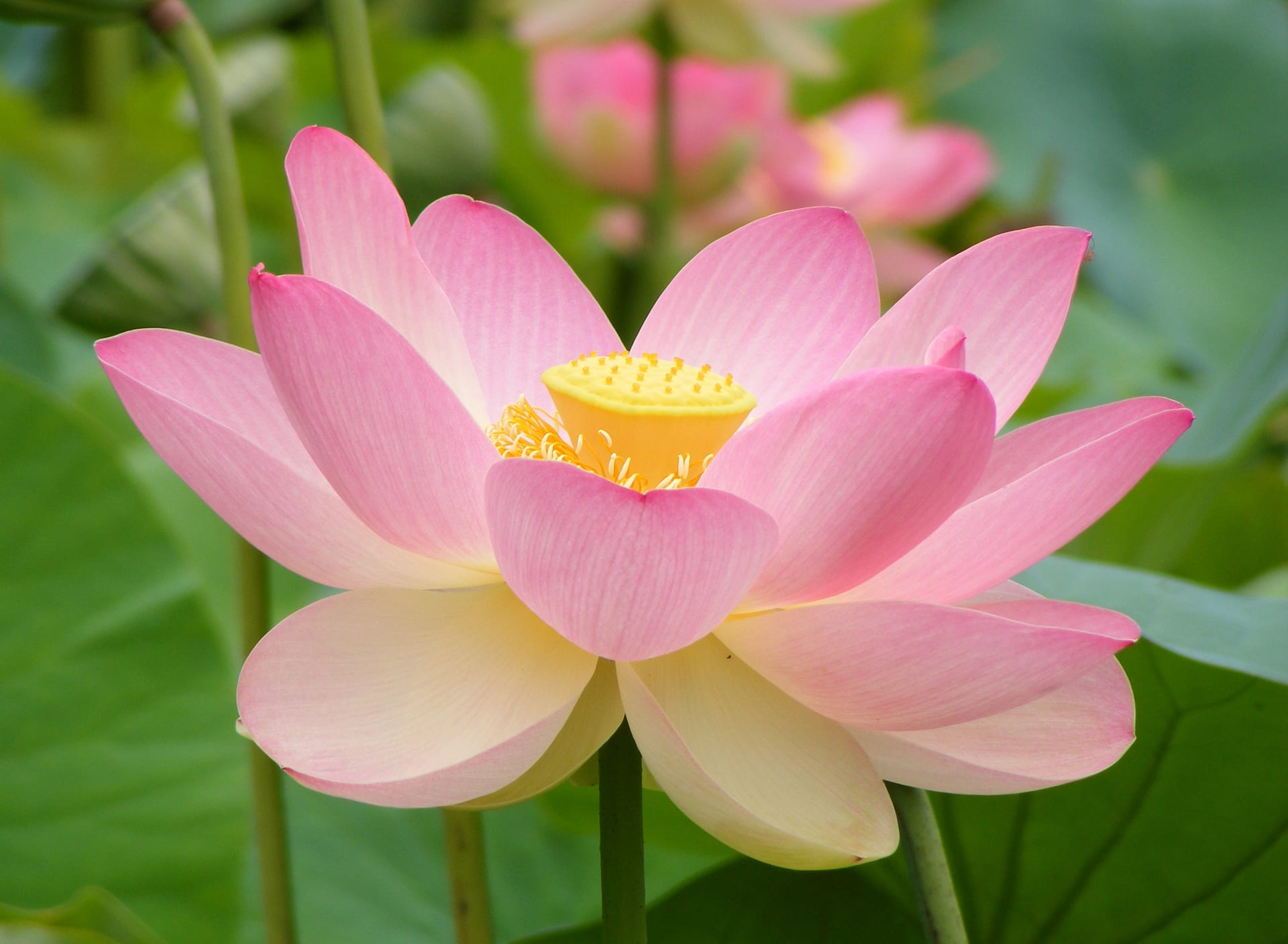
 © Peripitus / CC BY-SA 4.0
荷花
The sacred lotus is an aquatic plant that lifts its round, water-repellent leaves above the surface and produces large white or pink blooms in summer. Water beads roll playfully across the leaves, adding to its appeal, and its underground rhizome is the same lotus root used in cooking. As a perennial, it can be divided and repotted to keep flowering year after year. Plants typically reach 50-100cm in height with leaves 40-50cm across, though compact varieties exist that fit in a bowl-sized container, making them suitable for growing in a pot or tub even without a garden. It takes a bit of know-how to grow well, but once you learn its seasonal care, it rewards you with blooms every year.
View 荷花 encyclopedia →成交手续费0%!2026年9月30日前注册,前 2 株免佣金!
生产者 招募中!
在GrowerDirect上销售,直接面向全国客户销售吗?
GrowerDirect的 6 项透明性承诺
在水草出品中,生产者将明确展示以下信息。保证品种、产地、光照需求和栽培难度的透明性。
- 品种明确
- 实拍照片
- 色泽
- 产地明确
- 光照需求
- 难度明确
查看全部134个品种
荷花的基本数据
- 养护难度
- 适合中级者
- 寿命
- 多年生草本。通过换盆可长期维持。
- 体型
- 株高50~100厘米,叶的直径40~50厘米(小型品种更小)
- 浇水
- 基肥使用缓释肥料,4~9月每月追肥约1次
- 光照
- 在全天受光良好的地方栽培。光照不足时难以开花。
- CO2·肥料
- 作为基肥,将缓效性复合肥料混入土壤中,4~9月每月追肥约1次。
- 水温·水质
- 保持持续灌溉的状态。耐热性强,耐寒性一般。冬季也不要断水,防止地下茎冻结。
- 底质·定植
- 使用粘质肥沃的土壤。田土最适宜,如无田土可将腐叶土混入赤玉土中,比例为1~2成。栽种于缸、桶或盆中,换盆在生长开始的3月进行。
- 修剪·繁殖方法
- 3月将带有新芽的块茎切成3~4节进行分株。播种的最佳时期为4~5月。
- 注意事项
- 荷花属中有经过品种登记的品种,登记品种不得在未获许可的情况下繁殖、销售或转让。以品种名进行交易时需在农林水产省品种登记数据库中确认。6~8月易发生腐烂病。不要将其丢弃或种植于池塘或河流中。
关于荷花
Sacred lotus is a perennial aquatic plant that raises water-repellent leaves above the surface and produces large white or pink flowers in summer. Its rhizome is the lotus root used in cooking, and compact varieties can be grown in a bowl or small pot.
开始养护荷花前需要了解的7件事
1Sunny Spot Matters
Lotus plants love sun, so keep them outdoors in a spot that gets good sun all day. With too little light, they flower poorly. A balcony works fine as long as it gets plenty of sun.
2Never Let It Dry Out
Since lotus is grown submerged in a pot or tub of water, check the water level often and top it up as needed. Evaporation speeds up in summer, so daily checks are important during the hottest months.
3Use Heavy Clay Soil
Lotus prefers heavy, clay-based paddy soil rather than fast-draining potting mix. Light soil tends to cloud the water and makes it harder for the roots to stay anchored.
4Repot During Dormancy
Because the rhizomes fill a container quickly, repotting and dividing during the dormant season keeps growth healthy. Doing this every few years helps maintain good flowering.
5Summer Is Bloom Season
Flowers appear mainly in summer, with large white or pink blooms opening and closing over several days. Each individual flower lasts only a few days, but the plant keeps producing new blooms throughout the season.
6Leaves Die Back in Winter
In winter the above-ground leaves die back and the plant goes dormant, though the rhizome stays alive underground. Keeping the water a bit deeper helps protect it from freezing.
7Choosing a Healthy Rhizome and Checking the Variety
When choosing a plant, look for a thick, firm rhizome without damage or dried-out patches, which establishes more reliably. It also helps to check that the growing tip looks healthy and alive. Some lotus cultivars are registered under Japan's Plant Variety Protection and Seed Act, and registered varieties may not be propagated for sale or transfer without the breeder's permission. If you buy or sell by variety name, or plan to give away divisions, check the Ministry of Agriculture, Forestry and Fisheries' plant variety registration database first. Also, never plant or dump lotus in ponds, rivers or waterways; dry out unwanted plants before disposing of them with household waste.
荷花的常见问题
- Q.Can beginners grow sacred lotus?
- A.Lotus is considered better suited to growers with some experience, since it requires learning water-level management and proper soil selection. That said, once you grasp the basics, it can flower reliably every year. Starting with a compact variety is a good way to begin.
- Q.Can I grow it without a garden?
- A.Compact varieties that fit in a bowl-sized container make it possible to grow lotus on a balcony in a pot or tub, even without a garden. As long as you can provide plenty of sunlight, it can still thrive.
- Q.How long do the flowers last?
- A.Each individual flower lasts only a few days before its petals fall, but the plant keeps producing new blooms throughout summer. This means you can enjoy flowers across the whole season rather than just once.
- Q.How often does it need repotting?
- A.Because the rhizomes grow vigorously, repotting during the dormant season every few years is generally needed. If the container becomes too full of rhizome, flowering tends to decline.
- Q.Is the rhizome (lotus root) edible?
- A.The rhizome of sacred lotus is the same part known as lotus root. However, if you're considering eating a plant grown for ornamental purposes, you should check how it was fertilized and cared for before doing so.
荷花种植的实用工具
在图鉴中详细了解荷花
查看荷花的图鉴条目 →
收录栽培难度、尺寸、原产地、日照等基础数据。