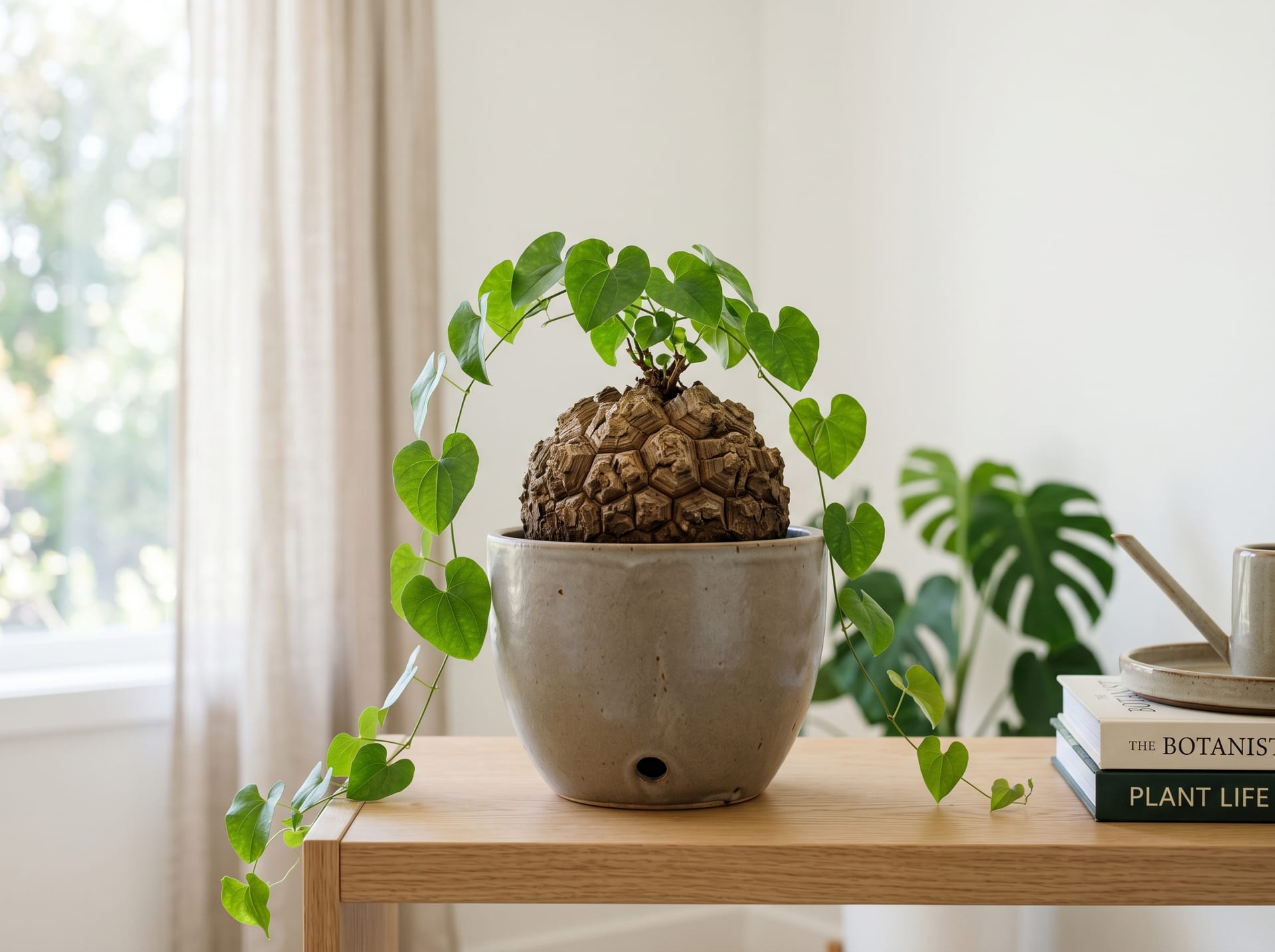
薯蓣(龟甲龙)
Dioscorea elephantipes, commonly known as the Elephant's Foot or Tortoise Plant, is a striking caudex plant prized for its geometric, tortoise-shell-patterned trunk. As a winter-growing succulent, it produces heart-shaped leaves on vining stems from autumn through spring, then goes dormant in summer. It grows slowly, but the caudex develops deeper, more dramatic fissures over time — rewarding patient growers with an increasingly sculptural specimen.
前3笔销售免佣金!在2026年8月31日前注册生产者账户 → 前3笔成交的手续费免费!
栽培者 招募中!
在BoTachoku上销售,直接面向全国客户销售吗?
ボタちょく的 6 项透明性承诺
栽培者在块根植物上架时会明示以下信息。确保品种、产地、光照需求、栽培难度的透明性。
- 品种明示
- 实物照片
- 色泽
- 产地明示
- 光照需求
- 难度明示
Browse all 14 varieties
块根植物分类正在招募认证栽培者
栽培者正在陆续注册,即将上架。设置上架通知,不错过新商品。
「接收上架通知」需免费注册会员即可设置。当有符合您保存条件的新商品上架时,我们会通过邮件和站内通知提醒您。
已注册的栽培者(抢先看)
关于薯蓣(龟甲龙)
Dioscorea elephantipes, a member of the Dioscoreaceae family native to South Africa, earns its common names — Tortoise Plant and Elephant's Foot — from the deeply fissured, cork-like caudex that closely resembles a tortoise shell. In its natural habitat, it grows among rocky outcrops in semi-arid regions, storing water and nutrients in a large caudex that sits partially exposed above the ground, allowing it to endure long dry seasons. The caudex is smooth in young seedlings but develops increasingly pronounced geometric cracking over the years, sometimes exceeding 30 centimetres in diameter after decades of growth. As a winter grower, it sends out slender vines bearing heart-shaped leaves in autumn, carrying out photosynthesis through the cooler months before the vines die back in early summer as the plant enters dormancy. This distinctive seasonal rhythm — active in winter, resting in summer — is one of its most appealing characteristics. Care is straightforward in principle: water generously during the growing season and withhold water almost entirely during dormancy. The slow pace of growth makes a well-developed specimen all the more rewarding, and the plant's sculptural presence sets it apart from virtually any other houseplant.
开始养护薯蓣(龟甲龙)前需要了解的7件事
1Winter-Growing Cycle
Dioscorea elephantipes actively grows from autumn through spring and goes fully dormant in summer. Leaf drop in summer is normal, not a sign of death — withhold almost all water during dormancy and keep the plant in a cool, well-ventilated spot.
2Watering Basics
During the growing season, water thoroughly once the soil dries out completely. In summer dormancy, withhold water almost entirely — a very light misting once a month is sufficient, or only water if the caudex shows severe wrinkling.
3Light and Placement
A bright, sunny windowsill or outdoor position is ideal. During the growing season it thrives in direct sun. In summer, provide shade and good airflow to keep the dormant caudex healthy without overheating.
4Soil and Pot Selection
Excellent drainage is essential — mix succulent soil with 20–30% pumice or perlite to prevent root rot. Terracotta or unglazed ceramic pots provide good airflow; choose a pot size where the caudex sits just at or slightly above the rim for visual impact.
5Caudex Exposure
The patterned caudex is the main attraction, so consider repotting to expose the upper half above the soil surface. However, exposed caudex can sunburn if moved to full sun too quickly — acclimate gradually to avoid damage.
6Slow Growth, Long Reward
Growth is very slow — the caudex can take many years to reach even 10 cm. Apply a diluted liquid fertilizer once or twice a month during the growing season, being careful not to over-fertilize as this encourages weak, leggy growth.
7Vines and Support
In the growing season, vines with heart-shaped leaves can grow 2–3 meters or more. Training them onto a trellis or support keeps the plant tidy, ensures good light exposure for the leaves, and makes the overall display more manageable.
薯蓣(龟甲龙)的常见问题
- Q.All the leaves have fallen off in summer — is my plant dead?
- A.Leaf drop in summer is completely normal dormancy behavior for this plant. As long as the caudex feels firm and solid, your plant is healthy. Once temperatures cool in autumn, new vines will emerge on their own.
- Q.Does it need water during dormancy?
- A.Water is generally not needed during dormancy, or only in very small amounts. Give a minimal drink only if the caudex begins to shrivel significantly. Excess moisture during this period is the main cause of root rot, so err on the dry side.
- Q.When does the tortoise-shell pattern start to develop?
- A.Seedlings start with a nearly smooth caudex surface. Shallow fissures may begin forming as early as two to three years in, but a well-defined tortoise-shell pattern often takes five to ten or more years to develop properly.
- Q.Can it be grown indoors?
- A.Yes, it can be grown indoors near a bright window. Insufficient light tends to cause the vines to become leggy and weak, so place it in the brightest spot available. During the growing season, good airflow — such as an open window — helps keep the plant vigorous.
- Q.The caudex has started to feel soft — is something wrong?
- A.A soft caudex can be a sign of root rot. Remove the plant from its pot promptly to inspect the roots, cut away any rotten sections, allow the wounds to dry, and replant in fresh, well-draining soil. This problem most often occurs when the plant is kept too wet during summer dormancy.