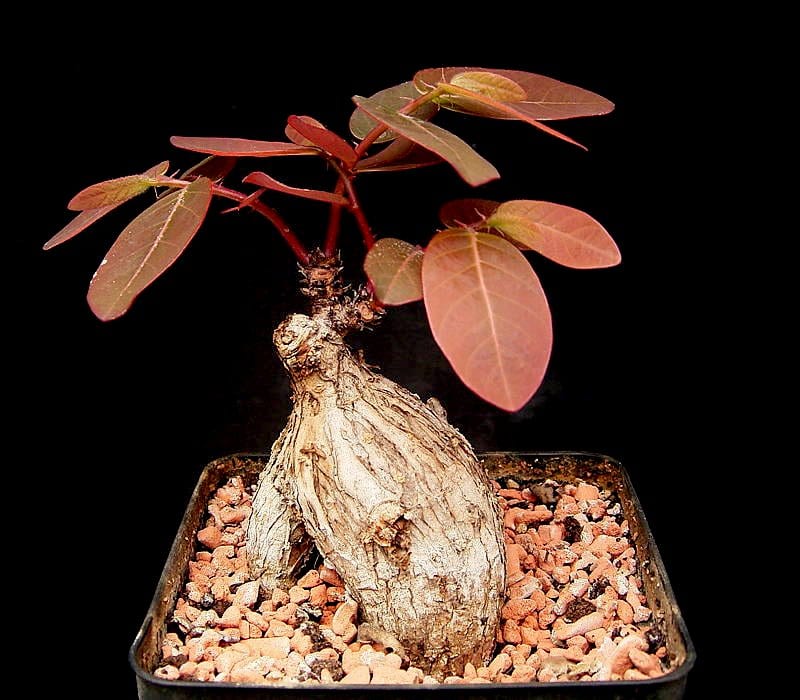
 © Frank Vincentz / CC BY-SA 3.0
妙叶下珠
Phyllanthus mirabilis is a small tree native to Thailand, valued for its twisting branches and glossy, pinnate foliage. When grown in dry conditions, even young plants develop a swollen, caudex-like base over time. One of its most charming traits is its leaf movement: the small leaflets fold shut in pairs each evening, like a butterfly closing its wings, then reopen again in the morning. In the wild it can reach 8 meters in height with a trunk up to 30cm across, but container culture keeps it compact and manageable. This is considered an intermediate-level plant to grow, and with patience, a caudex can thicken past 10cm in diameter over several decades, becoming a striking centerpiece with real presence.
View 妙叶下珠 encyclopedia →成交手续费0%!2026年9月30日前注册,前 2 株免佣金!
生产者 招募中!
在GrowerDirect上销售,直接面向全国客户销售吗?
GrowerDirect的 6 项透明性承诺
生产者在块根植物上架时会明示以下信息。确保品种、产地、光照需求、栽培难度的透明性。
- 品种明示
- 实物照片
- 色泽
- 产地明示
- 光照需求
- 难度明示
查看全部145个品种
块根植物分类正在招募认证生产者
生产者正在陆续注册,即将上架。设置上架通知,不错过新商品。
「接收上架通知」需免费注册会员即可设置。当有符合您保存条件的新商品上架时,我们会通过邮件和站内通知提醒您。
已注册的生产者(抢先看)
妙叶下珠的基本数据
- 养护难度
- 适合中级者
- 寿命
- 长寿命(直径超过10厘米的块根为经过数十年的老株)
- 体型
- 原产地高度可达8米、树干直径可达30厘米。盆栽可保持较小体型
- 浇水
- 生长期适度施肥
- 光照和位置
- 不需要强烈阳光。在明亮的半阴环境下管理。
- 浇水
- 若用土排水良好,生长期可充分浇水。浇至盆底流出水,之后待土稍干再浇。
- 温度和越冬
- 冬季落叶。冬季浇水减少至每月一次左右,当气温降至10℃前后时停止浇水。
- 用土和换盆
- 种植在肥沃且排水良好的用土中。为了保持块根的外观,不应地植,应在盆中像盆景一样培养。
- 繁殖方法
- 可通过种子、枝插或根插进行繁殖。
- 病虫害和注意事项
- 枝叶过于密集时会导致湿度过高,应保持株之间的间隔,确保通风良好。
关于妙叶下珠
Phyllanthus mirabilis is a Thai caudiciform plant with twisting branches and glossy pinnate leaves that fold shut each evening. An intermediate-level species whose caudex thickens gradually over many years.
开始养护妙叶下珠前需要了解的7件事
1Bright Partial Shade
Phyllanthus mirabilis doesn't need strong sun; keep it in bright partial shade. Crowded foliage traps moisture, so space plants apart for good airflow.
2Water With Clear Wet-Dry Cycles
During active growth, water thoroughly once the soil surface dries out, letting the caudex store moisture. As the plant slows down and enters dormancy, cut back on watering to keep the roots on the drier side and avoid rot.
3Choose a Fast-Draining Mix
A caudiciform-specific potting mix, or a blend of akadama and pumice, works well for good drainage. Since excess moisture can damage the caudex, make sure the pot itself drains freely too.
4Repot During Active Growth
Once roots fill the pot, move up to a slightly larger container during a period of active growth. Handle the roots gently, and plant shallowly so the caudex isn't buried too deep in the soil.
5Bring It Indoors in Winter
As a native of tropical Thailand, this plant is sensitive to cold. When temperatures drop, move it to a bright spot indoors, keep it warm, and water more sparingly while it rests.
6Watch the Leaves Open and Close
Each evening, the leaflets fold together in pairs like a butterfly closing its wings, then reopen in the morning. This daily rhythm is one of the plant's most distinctive features and can also hint at how much light and warmth it's getting.
7Picking a Healthy Plant
Look for a specimen with a firm, unblemished caudex at the base. Since this species is considered suited to intermediate growers, first-time caudiciform keepers may want to research its care before bringing one home.
妙叶下珠的常见问题
- Q.How long does it take for the caudex to swell?
- A.Caudex growth is a slow process — a base more than 10cm across usually belongs to a plant that's been growing for several decades. It's a plant to enjoy patiently over the long term rather than rush.
- Q.Is this a good plant for beginners?
- A.This species is generally considered suited to intermediate growers rather than complete beginners. Some prior experience with watering and placement for caudiciform plants will make it easier to care for.
- Q.Why do the leaves close in the evening?
- A.It's a natural trait of this species — the paired leaflets fold together each evening, much like a butterfly closing its wings, and reopen again the next morning. It's simply part of the plant's daily rhythm and one of its most charming characteristics.
- Q.How large does this plant get?
- A.In its native habitat it can grow into a tree up to 8 meters tall with a trunk around 30cm across. In a pot, however, its size can be kept much more compact.
- Q.How often should it be repotted?
- A.Repot when the roots have filled the current pot, choosing a time during active growth. It doesn't need frequent repotting — just check root growth periodically and repot as needed.
妙叶下珠种植的实用工具
在图鉴中详细了解妙叶下珠
查看妙叶下珠的图鉴条目 →
收录栽培难度、尺寸、原产地、日照等基础数据。