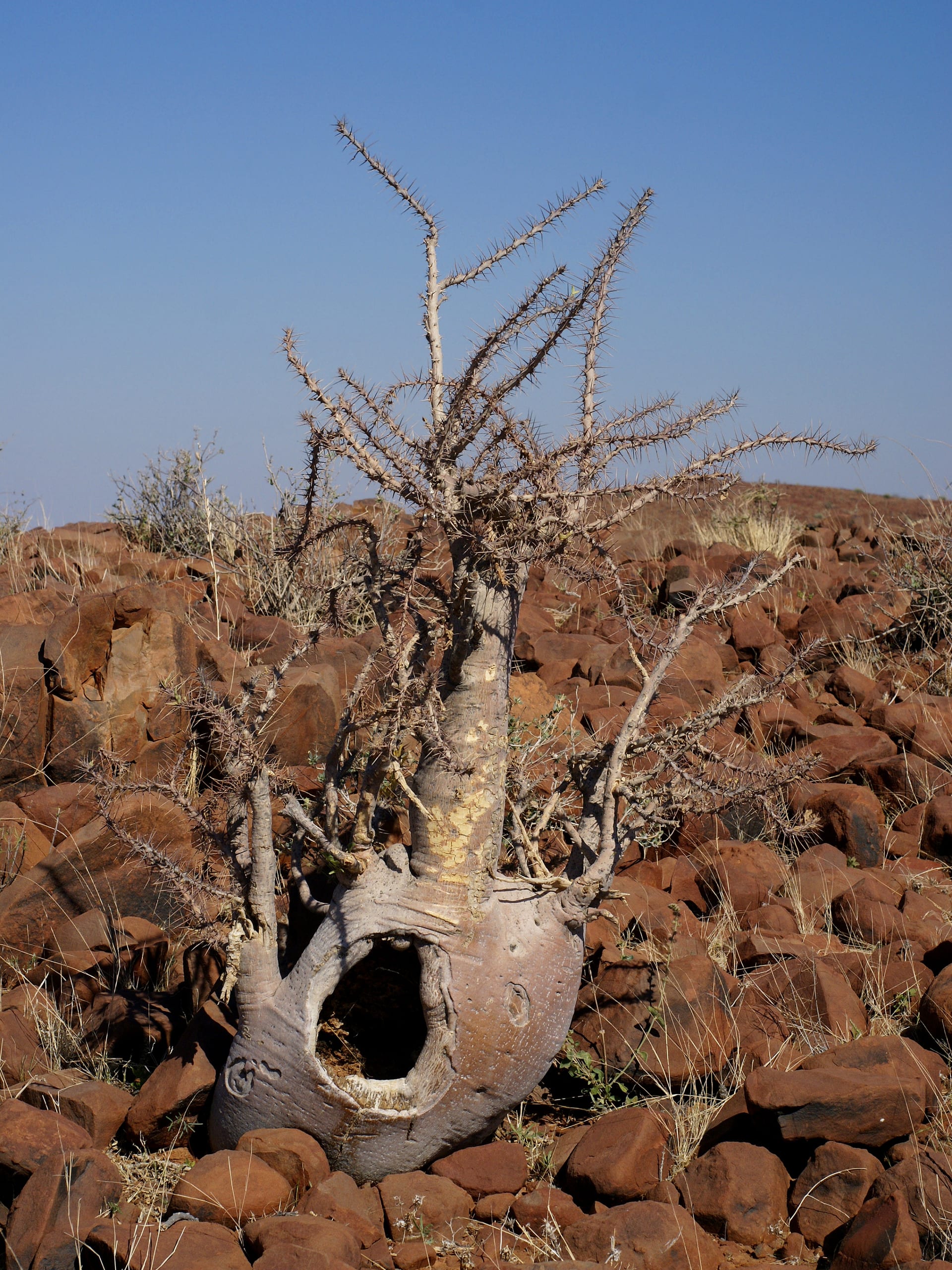
 © Hans Hillewaert / CC BY-SA 4.0
象脚树(Pachypodium lealii)
Pachypodium lealii, known as the Bottle Tree, is a caudex-forming succulent tree native to the arid regions of Namibia and Angola. In the wild it grows into a striking tree three to six meters tall, occasionally reaching eight, with a swollen, bottle-shaped trunk that can exceed 40 centimeters across. During the dry season it drops its leaves and produces fragrant white flowers tinged with reddish-purple on the outside, blooming right at the tips of its bare branches. Watching the trunk slowly thicken over the years is part of its appeal, but it is considered a plant for experienced growers rather than beginners.
View 象脚树(Pachypodium lealii) encyclopedia →成交手续费0%!2026年9月30日前注册,前 2 株免佣金!
生产者 招募中!
在GrowerDirect上销售,直接面向全国客户销售吗?
GrowerDirect的 6 项透明性承诺
生产者在块根植物上架时会明示以下信息。确保品种、产地、光照需求、栽培难度的透明性。
- 品种明示
- 实物照片
- 色泽
- 产地明示
- 光照需求
- 难度明示
查看全部145个品种
块根植物分类正在招募认证生产者
生产者正在陆续注册,即将上架。设置上架通知,不错过新商品。
「接收上架通知」需免费注册会员即可设置。当有符合您保存条件的新商品上架时,我们会通过邮件和站内通知提醒您。
已注册的生产者(抢先看)
象脚树(Pachypodium lealii)的基本数据
- 养护难度
- 适合高级者
- 寿命
- 长寿命的木本植物(寿命数据较少)
- 体型
- 自生地中高度3〜6米(罕见8米),茎干直径40厘米以上
- 浇水
- 生长期适度浇水
- 日照和养护位置
- 在日光充足至明亮的半遮阴处培养。冬季要避免雨淋。
- 浇水
- 在南部非洲象脚树中栽种最为困难,条件不佳时容易腐烂。生长期适度浇水,其他时期极少量或断水。
- 温度和越冬
- 能耐轻微霜冻,但如果长期处于寒冷潮湿的状态,冬季容易腐烂。冬季要保持干燥并避免霜冻。
- 培养土和换盆
- 使用排水性非常好的培养土,确保根部不会持续处于潮湿状态。
- 繁殖方法
- 新鲜种子可通过播种轻易繁殖。发芽后要注意不要浇水过多。为了避免根腐,也可以嫁接到盖亚依象脚树或拉梅莱伊象脚树的砧木上。
- 病虫害和注意事项
- 树液毒性非常强,曾被用作箭毒,进入眼睛可能导致失明。象脚树属树液有毒且有锐利的刺。换盆或移动时要使用厚手套或用报纸多层包裹茎干来拿起。
关于象脚树(Pachypodium lealii)
Pachypodium lealii (Bottle Tree) is a caudex succulent from Namibia and Angola, growing 3-6m tall with a bottle-shaped trunk and fragrant white dry-season flowers. Best suited to experienced growers.
开始养护象脚树(Pachypodium lealii)前需要了解的7件事
1Light and Placement
Pachypodium lealii thrives in strong sunlight, so give it the brightest, most well-ventilated spot available. If grown outdoors, watch for sudden temperature swings and take care during the hottest part of summer.
2Water with Care
Pachypodium lealii is considered the most difficult of the southern African pachypodiums and rots easily under poor conditions. Water moderately during the growing season and give very little or none at other times. Cold, wet conditions in winter easily cause rot, so keep it dry and frost-free.
3Well-Draining Soil
Choose a fast-draining mix formulated for succulents or caudex plants to help prevent root rot. Mixing extra pumice or perlite into a commercial succulent soil further improves drainage.
4Repotting Timing
Repot in spring to early summer when growth is most active. Move to a slightly larger pot once roots become crowded, handling the root ball gently to avoid damage.
5Dormancy and Leaf Drop
It is normal for the plant to shed its leaves as it enters dormancy during the dry season, and this is not a sign of trouble. Keep watering minimal while it is leafless and let it rest in a stable environment.
6Choosing a Plant
When selecting a plant, look for a firm trunk without damage or excessive wrinkling. A well-formed, swollen base at the trunk's foot suggests healthy potential for further thickening over time.
7Beware the Sap and Spines
P. lealii's sap is extremely toxic, once used as arrow poison, and can cause blindness if it gets in the eyes. It also has sharp spines, so wear thick gloves or wrap the trunk in several layers of newspaper when repotting or moving it. Its trunk takes many years to thicken, so approach it with patience.
象脚树(Pachypodium lealii)的常见问题
- Q.Is Pachypodium lealii suitable for beginners?
- A.Pachypodium lealii is generally considered a plant for experienced growers. Its watering and placement needs require some care, so it suits those who already have experience with succulents or caudex plants.
- Q.How large does it grow?
- A.In its native habitat, Pachypodium lealii can grow three to six meters tall, occasionally reaching around eight meters. Its trunk can exceed 40 centimeters in diameter as it develops over many years.
- Q.When and how does it flower?
- A.It blooms at the tips of its bare branches during the dry season, after the leaves have dropped. The flowers are white with a subtle reddish-purple tinge on the outside and are known for their pleasant fragrance.
- Q.How often should I water it?
- A.During the growing season, water thoroughly once the soil surface has dried. Once the plant enters dormancy, reduce watering significantly and keep it on the drier side.
- Q.When is the best time to repot?
- A.The best time to repot is spring through early summer, when growth is most active. Once you notice roots becoming crowded in the pot, move the plant to a slightly larger one with care.
象脚树(Pachypodium lealii)种植的实用工具
在图鉴中详细了解象脚树(Pachypodium lealii)
查看象脚树(Pachypodium lealii)的图鉴条目 →
收录栽培难度、尺寸、原产地、日照等基础数据。