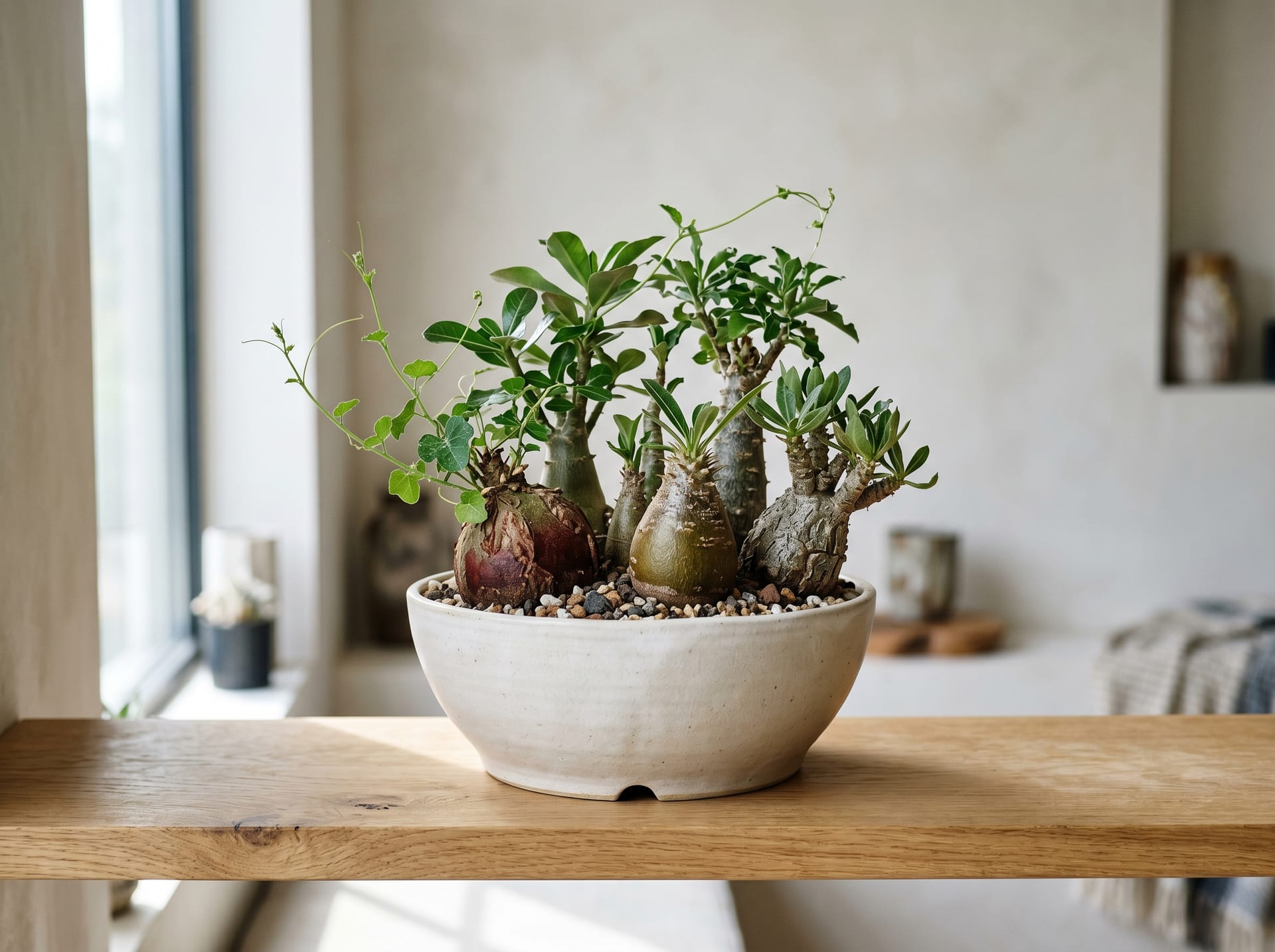
其他块根植物
The "other caudiciform plants" category encompasses a wide variety of caudex-forming species found around the world beyond well-known genera like Pachypodium and Adenium, each storing water and nutrients in swollen stems or roots as a unique survival strategy. Their diverse shapes and textures make them endlessly fascinating for collectors. Many species tolerate drought well, making them approachable even for beginners.
前3笔销售免佣金!在2026年8月31日前注册生产者账户 → 前3笔成交的手续费免费!
栽培者 招募中!
在BoTachoku上销售,直接面向全国客户销售吗?
ボタちょく的 6 项透明性承诺
栽培者在块根植物上架时会明示以下信息。确保品种、产地、光照需求、栽培难度的透明性。
- 品种明示
- 实物照片
- 色泽
- 产地明示
- 光照需求
- 难度明示
Browse all 14 varieties
已注册的栽培者(抢先看)
关于其他块根植物
The "Other Caudiciform Plants" category brings together a remarkably diverse array of caudex-forming species adapted to arid regions across Africa, Madagascar, Central and South America, and Southeast Asia. Genera such as Geophila, Operculicarya, Dorstenia, and Ceropegia represent different families yet share a defining trait: an enlarged stem or root system that acts as a water reservoir, enabling the plant to survive prolonged dry seasons. The resulting forms range from squat bottle shapes and flattened rock-like bases to slender vining stems — each one a small sculpture shaped by its environment. Cultivation is relatively straightforward for most species once you master bright light and a dry-down watering routine, making them suitable for busy owners and beginners alike. For enthusiasts, the hunt for rare species and habitat-collected specimens adds another layer of depth, turning a single shelf into a curated collection of living curiosities from around the world.
其他块根植物精选生产者
查看所有其他块根植物生产者(1个)→开始养护其他块根植物前需要了解的7件事
1Check Each Plant's Origin
Caudiciform plants originate from diverse regions including southern Africa, Madagascar, Central America, and the Arabian Peninsula, each requiring different climate conditions. Before purchasing, research the plant's origin to ensure it suits your home environment. Even within the broad category, optimal temperature ranges and rainfall patterns vary significantly.
2Dry Out During Dormancy
Many caudiciform plants enter a dormant period in winter or summer, and continued watering during this time can cause root rot. The timing of dormancy varies by species, so it is important to understand the specific cycle of each plant beforehand. During dormancy, stop watering entirely or limit it to a very small amount once a month.
3Use Fast-Draining Soil
Caudiciform plants dislike excess moisture, so a well-draining mix of cactus/succulent soil blended with pumice or perlite works best. Avoid standard potting soil without amendment, as it retains too much water. Placing a layer of pumice at the bottom of the pot creates a drainage layer that helps reduce the risk of root rot.
4Provide Ample Direct Sunlight
Most caudiciform plants thrive in strong sunlight, and insufficient light causes etiolation, preventing the characteristic caudex shape from developing properly. Outdoors, a spot with direct sun from spring through autumn is ideal; indoors, consider supplementing with a grow light. However, gradually acclimate plants to intense summer sun to prevent leaf scorch.
5Watch Minimum Temps in Winter
Most caudiciform plants stop growing below 10°C, and some species suffer damage or die below 5°C. In winter, bring them indoors to a bright windowsill away from direct heating vents. Confirm the minimum cold tolerance of each species at the time of purchase, and consider using a small greenhouse or seedling heat mat if needed.
6Grow Slowly — Think Long-Term
Many caudiciform plants grow very slowly, and it can take years or even decades for the caudex to reach an impressive size. Overusing fertilizer in an attempt to speed growth can cause etiolation or root damage; applying diluted liquid fertilizer once or twice a month during the growing season is generally sufficient. Embracing the slow pace as part of the plant's character is key to long-term enjoyment.
7Rarity Means Wide Price Range
Many caudiciform plants are rare in the trade, and prices vary widely depending on species, caudex size, shape, and age — ranging from a few hundred yen for seedlings to tens of thousands for mature specimens. Choose based on your purpose, whether that is growing from scratch, display, or collecting. Some imported plants are subject to CITES regulations, so always verify the seller's credibility and ensure proper documentation is provided.
其他块根植物的常见问题
- Q.Can beginners grow these plants?
- A.Many species in this category are drought-tolerant and straightforward to care for, making them beginner-friendly. Starting with widely available and easy-to-grow species such as Operculicarya pachypus is a good approach. Master the basics of light and watering, and you can enjoy them for many years.
- Q.Can they be grown indoors?
- A.Indoor cultivation is possible, but most species need strong light, so a bright south-facing window is ideal. In lower-light environments, supplementing with a grow light is recommended. Avoid placing plants directly in the airflow from air conditioners, as this can cause excessive drying.
- Q.How should I care for them in winter?
- A.Many species drop their leaves and go dormant in winter, which is completely normal. When temperatures drop below 10–15°C (50–59°F), bring them indoors and reduce watering to almost nothing, or at most once a month. Frost can be fatal, so make sure the plants are never exposed to freezing temperatures.
- Q.Is a soft caudex a problem?
- A.A soft caudex is usually caused by either root rot or dehydration. If it feels slightly soft just after dormancy, it may simply be dehydrated — proper watering can help it recover. However, if the softness is accompanied by discoloration or an unpleasant odor, root rot is likely. In that case, remove the rotted sections and let the plant dry out before taking further action.
- Q.What are the benefits of buying from a breeder?
- A.Buying from a specialist breeder means you get clear information on the plant's origin and cultivation history, and you can confirm its health before purchase. You also gain access to rare species and domestically propagated seedlings that are hard to find on the general market. Another major advantage is the ability to get aftercare advice directly from someone with hands-on experience.