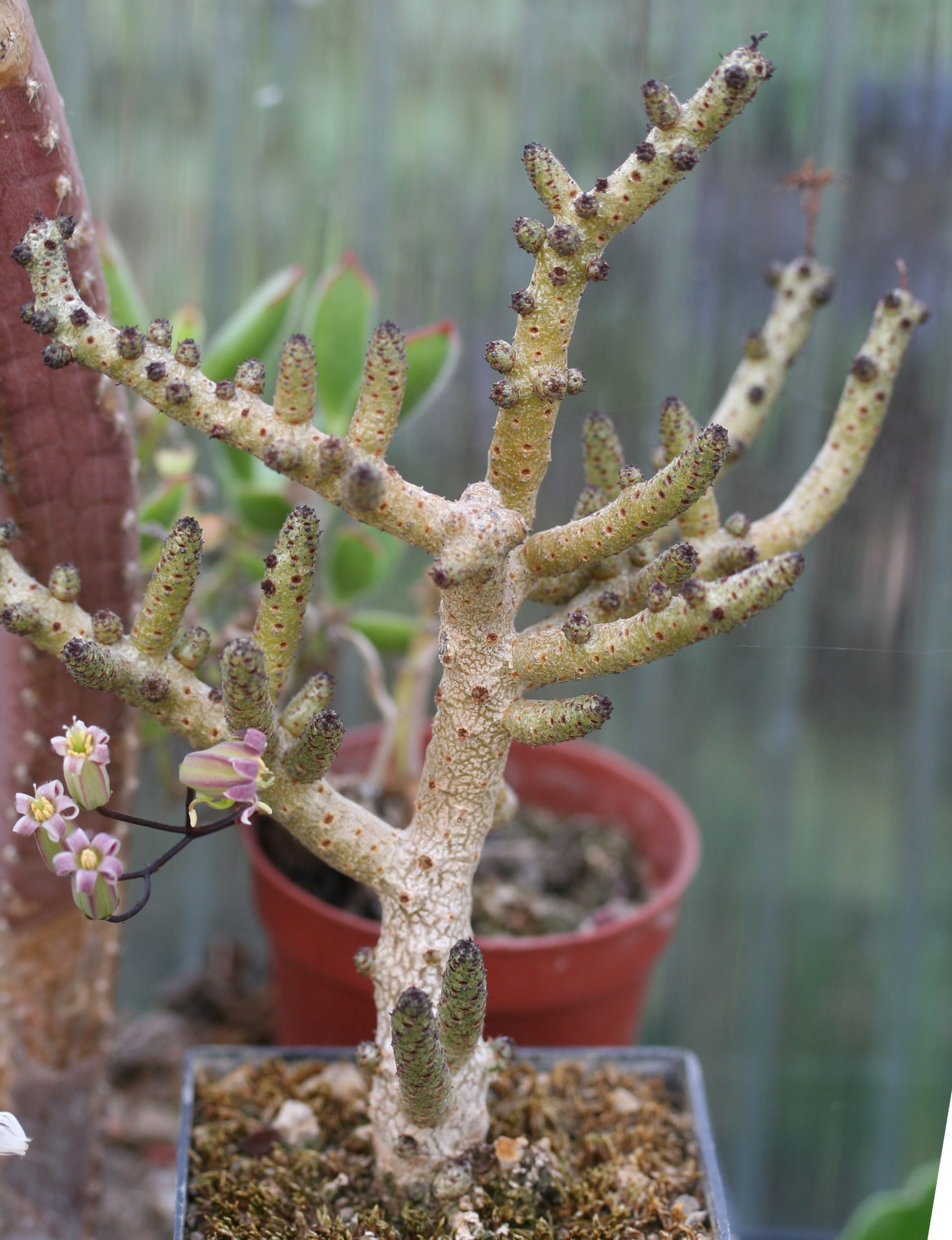
 © Michael Wolf (Webseite) / CC BY-SA 3.0
提乐科顿·布克霍尔兹亚努斯(Tylecodon buchholzianus)
Tylecodon buchholzianus is a small, winter-growing caudiciform succulent native to South Africa. From a slightly swollen base, it sends up numerous slender, pale branches in a bonsai-like silhouette that only grows more characterful with age. Unusually, it carries very few leaves — most photosynthesis happens through the green bark of its stems instead. Growth is slow, so shaping this quirky little plant is a long-term project, but that unhurried pace is part of its appeal for collectors who enjoy watching a caudex mature over the years. It suits growers with some succulent experience more than absolute beginners.
View 提乐科顿·布克霍尔兹亚努斯(Tylecodon buchholzianus) encyclopedia →成交手续费0%!2026年9月30日前注册,前 2 株免佣金!
生产者 招募中!
在GrowerDirect上销售,直接面向全国客户销售吗?
GrowerDirect的 6 项透明性承诺
生产者在块根植物上架时会明示以下信息。确保品种、产地、光照需求、栽培难度的透明性。
- 品种明示
- 实物照片
- 色泽
- 产地明示
- 光照需求
- 难度明示
查看全部146个品种
已注册的生产者(抢先看)
提乐科顿·布克霍尔兹亚努斯(Tylecodon buchholzianus)的基本数据
- 养护难度
- 适合中级者
- 寿命
- 生长缓慢,寿命长(关于寿命的资料很少)
- 体型
- 高度20厘米(有时30厘米),宽度约27厘米
- 浇水
- 换盆时混入缓效肥料
- 光照·放置位置
- 在明亮的地方培育。
- 浇水
- 冬型植物。生育期当根球几乎干燥时浇水。生长在秋季开始,春初温暖的日子里生势增强。
- 休眠期管理
- 夏季完全休眠,根据植株大小减少浇水或停止浇水进行休眠。
- 温度·越冬
- 冬季最低温度5℃,最好保持8℃以上。温度过低易导致叶片脱落。
- 土壤·换盆
- 栽植于排水性良好的仙人掌专用土中,每2~3年混入缓效肥料后换盆一次。
- 修剪·整姿
- 通常会长成紧凑的小型株,若徒长,则在生育期进行修剪可使其恢复紧凑的株形,根部也容易增粗。即使进行强剪,一旦开始生长也能快速恢复。
- 繁殖方法
- 晚秋时用扦插法相对容易繁殖。落下的叶片有时会长出根,但很难萌发芽。
关于提乐科顿·布克霍尔兹亚努斯(Tylecodon buchholzianus)
A small winter-growing Tylecodon with slender pale branches rising bonsai-like from a swollen base. Unusual for photosynthesizing mainly through bark rather than leaves; slow-growing and best suited to intermediate growers.
开始养护提乐科顿·布克霍尔兹亚努斯(Tylecodon buchholzianus)前需要了解的7件事
1Light & Placement
During the autumn-to-spring growing season, give the plant as much sun and airflow as possible. If a plant hasn't been hardened off to direct sun, introduce it gradually to avoid leaf scorch. In summer dormancy, move it to bright shade rather than full sun.
2Watering Rhythm
As a winter grower, this Tylecodon is actively growing from autumn through spring. Water thoroughly during that period once the soil has fully dried out. In the heat of summer it goes dormant, so watering should be cut back drastically or nearly stopped.
3Well-Draining Soil
Use a mineral, fast-draining mix to avoid root rot. A succulent or cactus blend with pumice and hard-fired akadama or kanuma works well. Choose a pot with a drainage hole so water never sits around the roots.
4Repotting
Because growth is slow, repotting only needs to happen every few years. The best time is early autumn, just as the plant wakes from summer dormancy. Gently loosen the root ball, remove old soil, trim any damaged roots, and pot into fresh mix.
5Getting Through Summer Dormancy
Hot summer weather puts this Tylecodon into dormancy. Overwatering during this period is a common cause of root rot, so keep it cool, well-ventilated, and nearly dry. It's normal for leaves to drop at this time — new growth returns once the growing season starts again.
6Winter Cold Protection
Although winter is the growing season, hard frost and freezing temperatures can still damage the plant. If you keep it outdoors, bring it inside or into a greenhouse on cold nights to protect it from extreme cold.
7Choosing a Healthy Plant
Look for a plant with firm, pale bark rather than shriveled or blackened branches. A solid, non-wobbly swollen base is a good sign of health. Since branch shapes vary from plant to plant, picking one with a silhouette you like is part of the fun with this species.
提乐科顿·布克霍尔兹亚努斯(Tylecodon buchholzianus)的常见问题
- Q.Why does it have so few leaves?
- A.Tylecodon buchholzianus has an unusual habit of photosynthesizing mainly through its green bark instead of leaves. This is thought to be an adaptation that lets it keep photosynthesizing under dry, sunny conditions, and it's one of the plant's most distinctive traits.
- Q.Leaves dropped in summer — is it dying?
- A.No, this is normal. Dropping leaves as it enters summer dormancy is a natural response, and the plant keeps photosynthesizing through its bark in the meantime. New leaves emerge again once the growing season resumes in autumn.
- Q.Why does it grow so slowly?
- A.This is naturally a slow-growing species that puts out new branches gradually over many years to build its characteristic form. It rewards patient, long-term growers rather than those looking for fast results.
- Q.Should I grow it outdoors or indoors?
- A.During the autumn-to-spring growing season, a sunny, well-ventilated spot outdoors or by a window suits it best. When frost or freezing temperatures threaten, bring it indoors or into a greenhouse to protect it.
- Q.Can beginners grow this plant?
- A.Because its growing season is reversed compared to summer-growing succulents, watering at the wrong time of year can easily lead to root rot, which is why it's considered suited to intermediate growers. Anyone already comfortable caring for winter-growing succulents should find it manageable.
提乐科顿·布克霍尔兹亚努斯(Tylecodon buchholzianus)种植的实用工具
在图鉴中详细了解提乐科顿·布克霍尔兹亚努斯(Tylecodon buchholzianus)
查看提乐科顿·布克霍尔兹亚努斯(Tylecodon buchholzianus)的图鉴条目 →
收录栽培难度、尺寸、原产地、日照等基础数据。