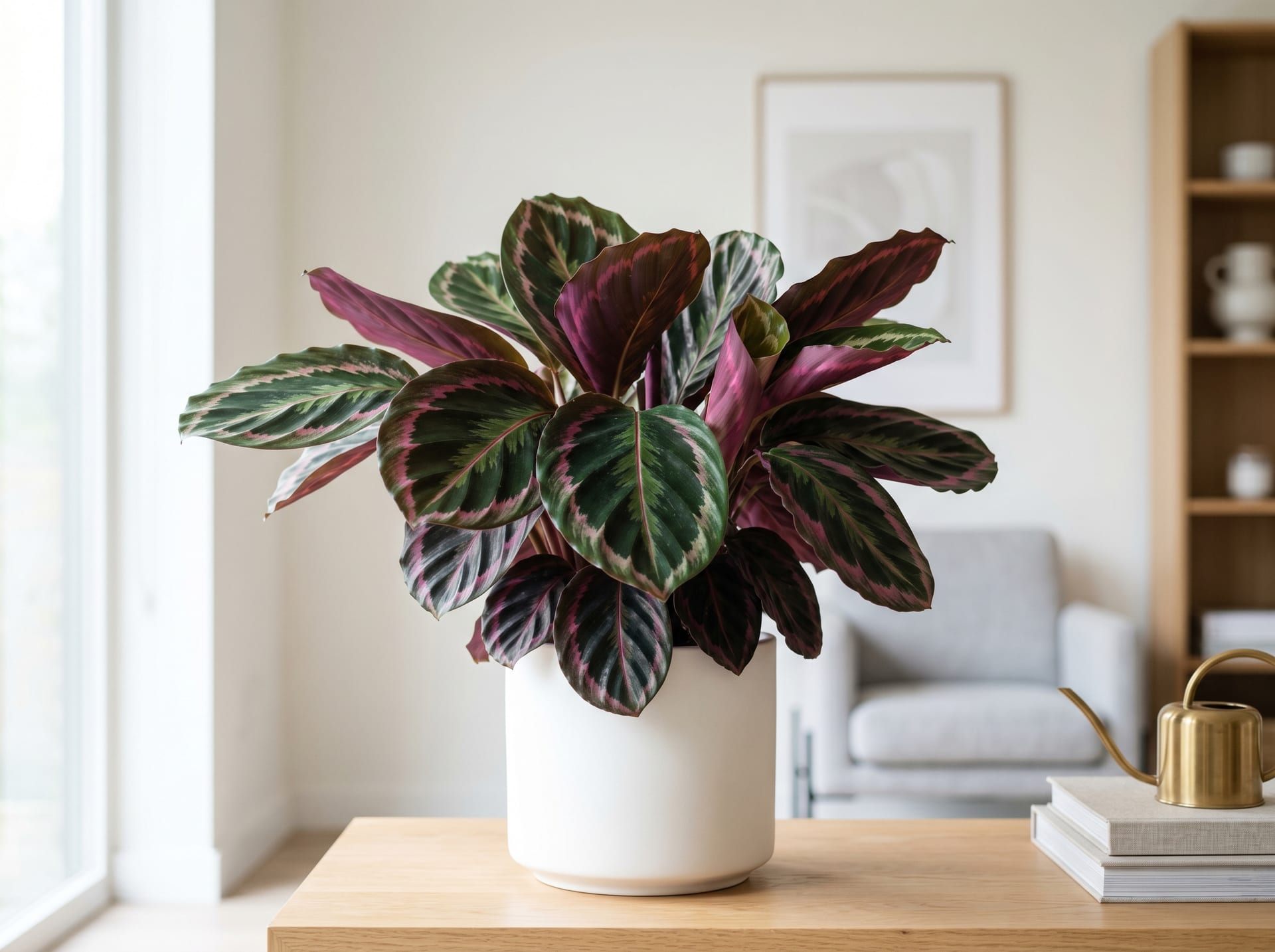
竹芋
Interior plant with beautifully patterned leaves. Characteristic nyctinastic movement (leaves close at night). Prefers humidity.
View 竹芋 encyclopedia →前3笔销售免佣金!在2026年8月31日前注册生产者账户 → 前3笔成交的手续费免费!
栽培者 招募中!
在BoTachoku上销售,直接面向全国客户销售吗?
ボタちょく的 6 项透明性承诺
观叶植物出品中,栽培者说明以下信息。确保品种、产地、光照需求、栽培难度的透明性。
- 品种说明
- 实物照片
- 色泽
- 产地说明
- 光照需求
- 难度说明
Browse all 16 varieties
观叶植物分类正在招募认证栽培者
栽培者正在陆续注册,即将上架。设置上架通知,不错过新商品。
「接收上架通知」需免费注册会员即可设置。当有符合您保存条件的新商品上架时,我们会通过邮件和站内通知提醒您。
已注册的栽培者(抢先看)
竹芋的基本数据
- 养护难度
- 适合中级者
- 寿命
- 5+ years
- 体型
- 30-80cm
- 适宜温度
- 15〜28℃
- 适宜湿度
- 50〜80%
- Placement
- Bright shade. Direct sun causes leaf burn
- Watering
- Keep soil consistently slightly moist
- Humidity
- Prefers high humidity. Maintain 50%+
- Temperature
- Above 15°C. Cold-sensitive
- Notes
- Leaf tips dry easily. Avoid dry air and chlorinated water
关于竹芋
Calathea is a perennial plant native to the tropical rainforests of Central and South America, particularly Brazil, and belongs to the family Marantaceae. Its name derives from the Greek word for "basket," reflecting the plant's long history of having its leaves used in weaving. The defining appeal of Calathea lies in its strikingly patterned foliage — geometric and painterly combinations of green, white, deep purple, and cream that vary dramatically across the many cultivated varieties. Many varieties also feature purple undersides, adding a layered visual effect that shifts with the angle of light. The plant's nyctinastic movement — folding its leaves upward in the evening and reopening them by morning — gives it a lively, almost animated personality unlike most houseplants. While Calathea does require higher humidity, indirect light, and careful watering, making it more suitable for attentive growers, the reward is the daily pleasure of observing subtle changes in its living, breathing leaves. It is a distinctive houseplant that blends decorative beauty with a tangible sense of vitality.
开始养护竹芋前需要了解的7件事
1Avoid Direct Sunlight
Direct sunlight causes leaf scorch and fades Calathea's distinctive patterns. A bright spot away from direct sun — such as near a window with a sheer curtain — works best. East- or north-facing windowsills provide suitable light conditions.
2High Humidity Is Essential
Calathea thrives in humidity around 60–70%; dry air causes the leaf tips to brown and crisp. Placing it near a humidifier or setting the pot on a tray of moist gravel helps maintain moisture levels. Misting the leaves can also help, but avoid leaving standing water on the foliage.
3Water Quality Matters
Calathea can be sensitive to fluoride and chlorine in tap water, which may cause leaf tip damage over time. Using water left overnight to off-gas, filtered water, rainwater, or soft water helps keep the foliage healthy.
4Don't Let Soil Dry Out
Water thoroughly once the top of the soil feels dry, but ensure the pot drains well to prevent root rot. Maintaining consistently moist — not waterlogged — soil is the goal. Use a well-draining potting mix and a pot with drainage holes, and reduce watering slightly in winter.
5Enjoy the Nyctinasty
Calathea raises and closes its leaves at night, reopening them in the morning — a phenomenon called nyctinasty. This movement is a sign of a healthy plant and can also serve as an indicator of its light and moisture conditions. If the leaves stay closed during the day, consider adjusting its placement or watering routine.
6Fertilize Lightly in Growing Season
During the growing season from spring to summer, apply a diluted liquid fertilizer at half the recommended strength once or twice a month. Over-fertilizing can damage roots and foliage, so err on the side of less. Withhold fertilizer during the dormant period in autumn and winter.
7Repot Every Two Years
When roots begin to emerge from the drainage holes or water drains poorly, it is time to repot. Move to a pot one size larger in spring, handling the roots gently to minimize stress. After repotting, keep the plant out of direct sun for a few days while it adjusts to its new container.
竹芋的常见问题
- Q.Why are the tips of my Calathea's leaves turning brown?
- A.The most common cause is low humidity. Using a humidifier or misting the leaves regularly often resolves the issue. Chlorine in tap water or over-fertilizing can also contribute to browning tips.
- Q.How often should I water my Calathea?
- A.Water thoroughly once the top 2–3 cm of soil feels dry. The frequency varies by season and room temperature — typically once or twice a week in summer and about once a week in winter.
- Q.Can Calathea grow in a room with low light?
- A.Calathea prefers indirect light and avoids harsh sun, so it adapts reasonably well to lower-light rooms. However, insufficient light may cause the leaf patterns to fade and slow overall growth.
- Q.My Calathea's leaves stopped moving at night. Is something wrong?
- A.When the sleep movement stops, it often signals insufficient light, a root-bound pot, or overall stress. Try adjusting the plant's position to improve light exposure, and consider repotting or fertilizing if needed.
- Q.How should I care for Calathea in winter?
- A.Calathea is sensitive to cold and should be kept above 10°C (50°F). Be mindful of the drying effect of indoor heating and maintain humidity. During winter, reduce watering frequency and hold off on fertilizing as growth naturally slows.
竹芋种植的实用工具
Learn more about 竹芋 in the encyclopedia
View 竹芋 encyclopedia entry →
Care difficulty, size, origin and light needs — all basics covered.