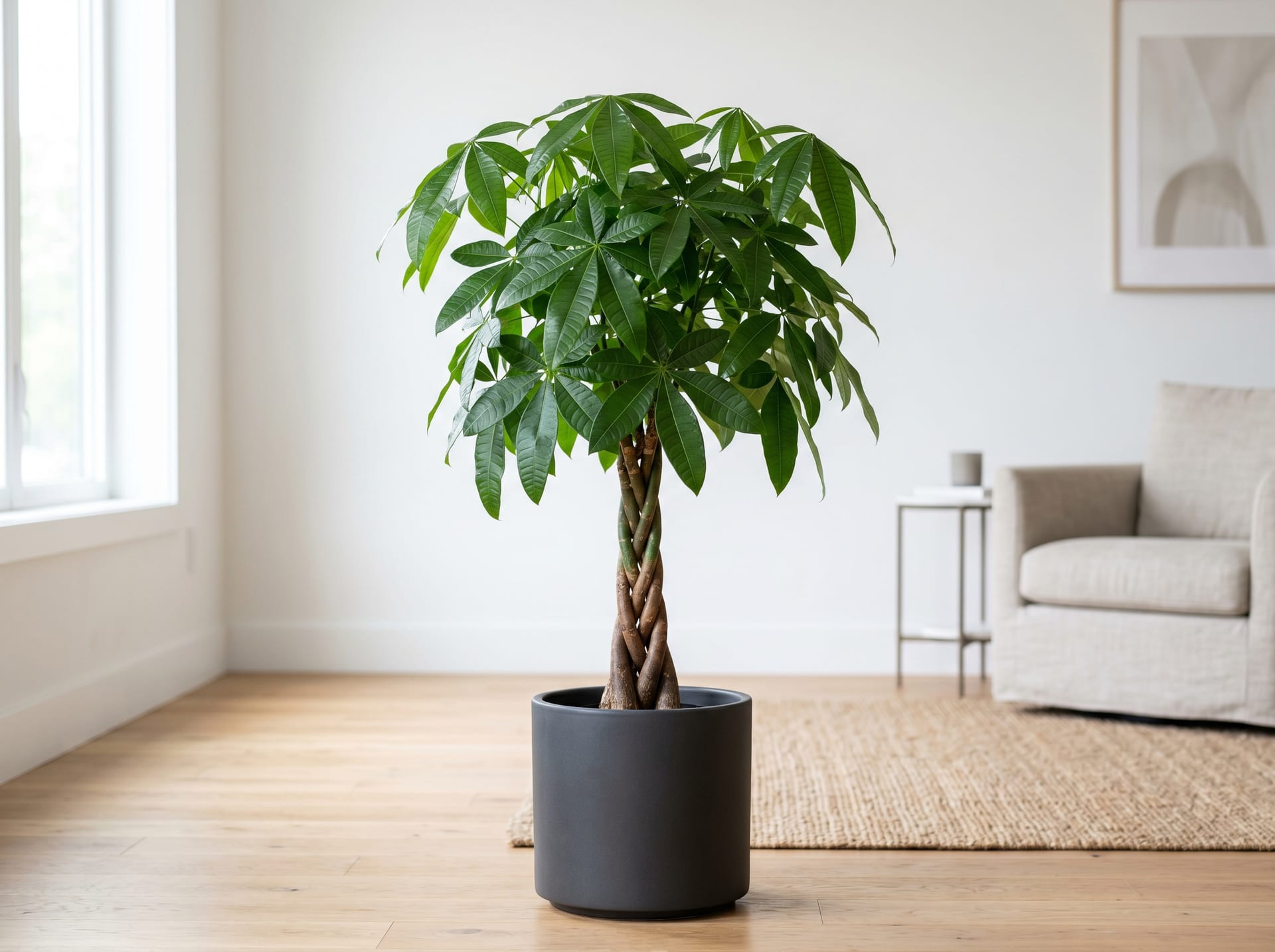
发财树/鹅掌柴
Pachira and Schefflera are beloved houseplants prized for their resilience and ease of care. Pachira stores water in its trunk, while Schefflera charms with its distinctive palmate leaves. Both bring a refreshing natural touch to indoor spaces and suit a wide range of lifestyles.
前3笔销售免佣金!在2026年8月31日前注册生产者账户 → 前3笔成交的手续费免费!
栽培者 招募中!
在BoTachoku上销售,直接面向全国客户销售吗?
ボタちょく的 6 项透明性承诺
观叶植物出品中,栽培者说明以下信息。确保品种、产地、光照需求、栽培难度的透明性。
- 品种说明
- 实物照片
- 色泽
- 产地说明
- 光照需求
- 难度说明
Browse all 16 varieties
已注册的栽培者(抢先看)
关于发财树/鹅掌柴
Pachira aquatica, native to Central and South America, is often called the "money tree" for its good-luck associations and its unique ability to store water in its trunk. Its braided stems and glossy, palmate leaves give it a strong decorative presence. Schefflera, originating from Southeast Asia and Pacific islands, offers a lighter, airier aesthetic with its radiating leaflets. Both plants excel in shade tolerance and drought resistance, making them forgiving choices for beginners who are still finding their rhythm with plant care. As they grow, their changing forms bring ongoing visual interest, and both respond well to pruning, allowing owners to shape them to suit their space.
开始养护发财树/鹅掌柴前需要了解的7件事
1Know Their Light Needs
Both Pachira and Schefflera thrive in bright, indirect light. Prolonged direct sunlight can scorch their leaves, so placing them near a sheer curtain is ideal. If light is insufficient, you may notice pale leaves or leggy growth as a warning sign.
2Watering Frequency
Pachira stores water in its trunk, so water thoroughly only after the soil dries out completely. Schefflera also dislikes overly wet conditions — water when the top layer of soil feels dry. Avoid leaving standing water in saucers, as this can lead to root rot for both plants.
3Cold Weather Care
Both plants originate from tropical or subtropical regions and are sensitive to temperatures below 10°C. In winter, move them away from cold drafts near windows. Be mindful that direct heating vents can cause excessive dryness, which stresses the foliage.
4When to Repot
Signs that repotting is needed include roots growing out of drainage holes or noticeably poor drainage. The best time is during the growing season from May to July. Use a pot one size larger and fresh potting mix, then keep the plant in a shaded spot for a few days to recover.
5Fertilizing Tips
During the growing season (May to September), apply a slow-release fertilizer about once a month to support healthy, glossy foliage. If using liquid fertilizer, dilute to half the recommended concentration and apply every two weeks. Reduce or stop feeding in winter when growth slows.
6Watch for Common Pests
Pachira is prone to scale insects, while Schefflera often attracts spider mites and aphids. Regularly inspect the undersides of leaves for early detection. Misting the foliage or wiping leaves with diluted soapy water are simple, effective preventive measures.
7Estimated Growing Costs
Seedlings can start from just a few hundred yen, while large, well-shaped specimens may cost several thousand to tens of thousands of yen. Ongoing costs for soil, fertilizer, and pots typically amount to a few thousand yen per year. No special equipment is needed, making them budget-friendly choices for indoor growing.
发财树/鹅掌柴的常见问题
- Q.Which is easier to care for, Pachira or Schefflera?
- A.Both are beginner-friendly, but Pachira is more drought-tolerant and requires less frequent watering, making it ideal for busy individuals. Schefflera grows faster and is rewarding for those who enjoy watching their plant change and develop.
- Q.Can they grow in a room with little sunlight?
- A.Both have reasonable shade tolerance and can survive under bright indoor lighting. However, very low-light conditions may cause small leaves or leggy growth, so placing them as close to a window as possible will yield the best results.
- Q.Why are the leaves turning yellow?
- A.Common causes include overwatering leading to root rot, nutrient deficiency, or sudden temperature changes. Start by checking the soil moisture and the plant's environment. Identifying the cause before taking action will help the plant recover more effectively.
- Q.Are they safe around pets and children?
- A.Pachira has low toxicity, but ingestion in large amounts is still not advisable, so keep it out of reach as a precaution. Schefflera contains calcium oxalate crystals, which can cause oral irritation in dogs, cats, and humans if chewed. Placing them in elevated or inaccessible spots is recommended in households with pets or young children.
- Q.When is the best time to prune them?
- A.The best time to prune is during the active growing season from May to August. Plants recover quickly from cuts during this period and are more likely to produce healthy new growth. Avoid heavy pruning in winter, as it can stress the plant; limit winter maintenance to removing dead leaves only.