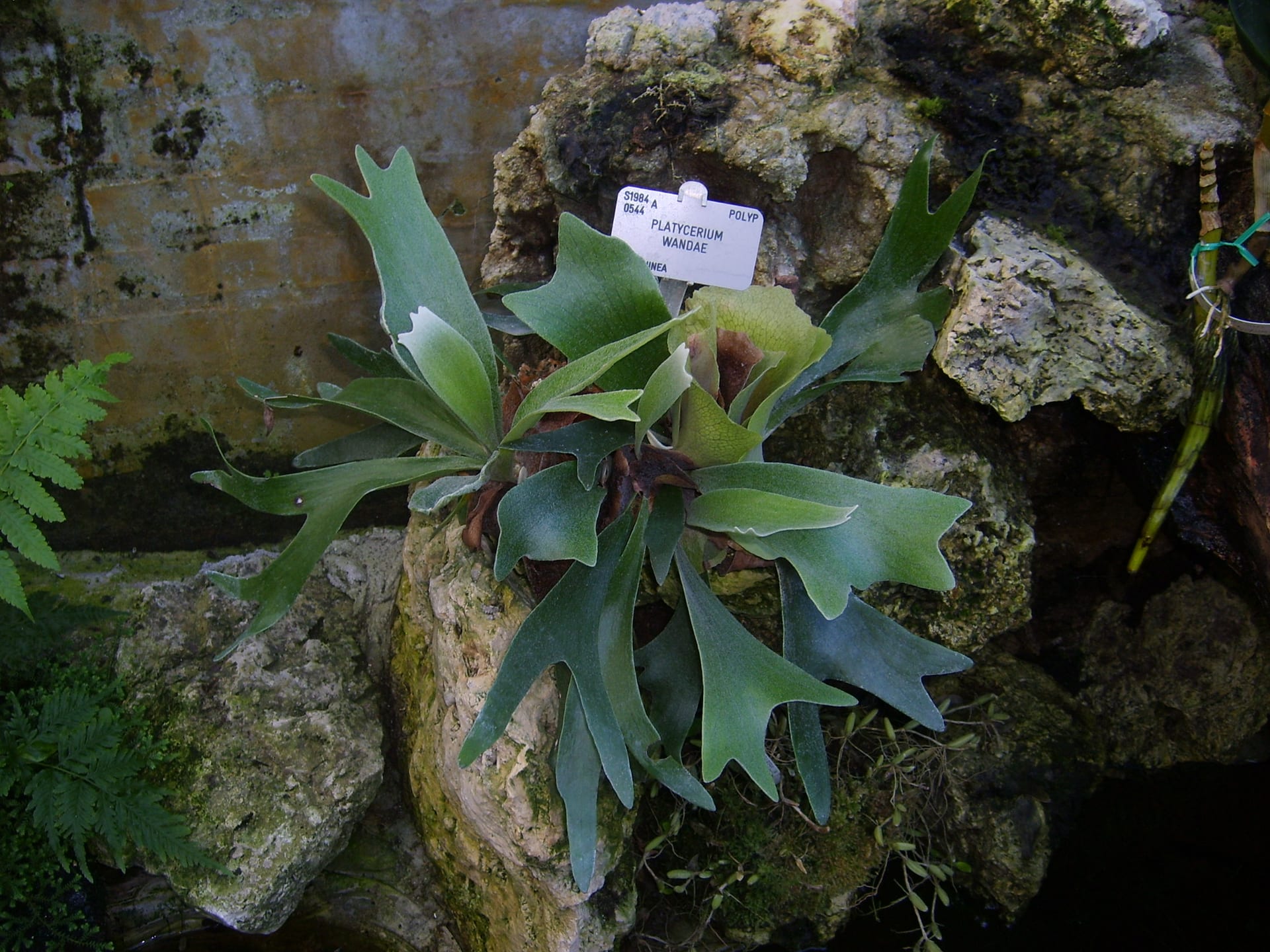
 © Honymand / Public domain
皇后蜂巢蕨
Platycerium wandae, the Queen Staghorn Fern, is an epiphytic fern from New Guinea and is regarded as one of the largest species in the genus. Its upright shield fronds form a basket-like shape with lobes along the top edge, and a frilly, ruffled margin develops around the growing point. It is said to grow about 30 percent larger than Platycerium superbum, though few primary sources give measured sizes. Rated for experienced growers, this perennial rewards patient care with a dramatic, sculptural presence as it matures.
View 皇后蜂巢蕨 encyclopedia →成交手续费0%!2026年9月30日前注册,前 2 株免佣金!
生产者 招募中!
在GrowerDirect上销售,直接面向全国客户销售吗?
GrowerDirect的 6 项透明性承诺
观叶植物出品中,生产者说明以下信息。确保品种、产地、光照需求、栽培难度的透明性。
- 品种说明
- 实物照片
- 色泽
- 产地说明
- 光照需求
- 难度说明
查看全部139个品种
已注册的生产者(抢先看)
皇后蜂巢蕨的基本数据
- 养护难度
- 适合高级者
- 寿命
- 多年生(附生蕨类)
- 体型
- 被认为是属中最大级别,据说比苏佩尔布姆大约大30%。显示测量值的一手资料很少。
- 浇水
- 显示是否需要施肥的资料很少。在原生地,积累在储水叶中的落叶等分解后变成营养。
- 光照和放置位置
- 明亮的半阴处。避免强烈的直射日光。
- 浇水
- 在植株根部(生长点周围)定期浇水,根部稍干后再进行下次浇水。不要使其完全干透。对于板植的植株,可以将整盆浸入水中或向植株根部浇灌大量清水。
- 温度和越冬
- 喜欢高温,不耐寒冷。能耐短期低温,但温度降至4℃左右以下会受损。冬季在温室或温暖的室内管理,保持高湿度。
- 基质和换盆
- 在木板或蛇木板上用水苔附生,或用兰花专用基质或水苔进行盆栽。由于储水叶会生长并覆盖根部,不要强行剥离储水叶。
- 繁殖方法
- 因为不产生小植株,所以不能分株繁殖。从孢子繁殖。
- 病虫害和注意事项
- 因为植株会长得很大,板植时应使用能承受株重的牢固板材和固定装置。注意红蜘蛛、蚜虫和粉蚧。覆盖孢子叶表面的白色星状毛是保护植株的,不要擦掉。
关于皇后蜂巢蕨
Queen Staghorn Fern (Platycerium wandae) is a large epiphytic fern from New Guinea with frilly margins. Care basics and buying tips for experienced growers.
开始养护皇后蜂巢蕨前需要了解的7件事
1Plan for a Very Large Plant
This is among the largest species in the genus and is said to grow about 30 percent larger than Platycerium superbum. Few primary sources give measured sizes, so expect some variation depending on growing conditions. Leave generous room on a wall or hanging space for the plant to fill out over the years.
2Bright Shade and Airflow
Strong direct sun can scorch the fronds, so a bright, lightly shaded spot such as behind a sheer curtain suits it best. It comes from New Guinea and likes humid air, but stagnant conditions invite rot, so keep air moving around the plant. Indoors, a bright window plus a gentle fan or circulator works well.
3Water by Dryness
As a rule, water once the sphagnum moss around the roots has dried on the surface. Soak the whole mount or water thoroughly, then let the excess drain away. Constant wetness can damage the roots, so avoid keeping the plant soggy.
4Mount It, Don't Pot It
Because it is an epiphyte, it is normally grown on a board or cork slab with sphagnum moss, or in an airy hanging basket, rather than in ordinary potting soil. Good drainage and airflow are what keep the roots healthy. Handle the roots and growing point gently when attaching the plant, since the shield fronds cover the root zone.
5Repot in Warm Weather
When the moss has broken down or the plant has outgrown its board or basket, it is time to remount it. Choose a warm growing season, and loosen the old moss gently so the growing point and shield fronds are not damaged. Keep the plant out of harsh sun for a while afterward so it can settle.
6Keep It Warm and Humid in Winter
Native to New Guinea, this fern loves warmth and dislikes cold. It can handle brief cool spells, but it is said to suffer damage below about 4 degrees Celsius, so keep it in a greenhouse or a warm room over winter with high humidity. The moss dries slowly in cool weather, so water less often and keep the plant away from cold drafts and direct blasts of heating.
7What to Check When Buying
Check that the growing point at the center is undamaged and that neither the shield fronds nor the fertile fronds show black patches or mushy areas. A plant that is firmly established on its board or moss tends to settle more easily after a move. Ask the grower about the temperature and light it has been raised in, and compare that with your own space.
皇后蜂巢蕨的常见问题
- Q.Can a beginner grow it?
- A.It is rated for experienced growers, since temperature and moisture need careful handling. Gaining experience with a hardier staghorn fern first is a sensible route. Before bringing one home, make sure you can offer winter warmth and good airflow.
- Q.How big does it get?
- A.It is regarded as one of the largest in the genus and is said to grow about 30 percent larger than Platycerium superbum. Few primary sources give measured sizes, so we cannot state a specific figure. Plan generous space on a wall or in a hanging spot.
- Q.Can I leave it outdoors in winter?
- A.Generally not. It dislikes cold and is said to suffer damage below about 4 degrees Celsius, so bring it into a greenhouse or a warm room for winter and keep the humidity high. Avoid cold drafts and direct heater airflow.
- Q.Old shield fronds turned brown. Should I cut them?
- A.Shield fronds naturally turn brown and papery as they age, and they keep covering and shielding the roots while holding moisture. Unless the tissue is diseased or rotting, leave them in place rather than pulling them off. If they turn mushy or show other signs of damage, judge by their condition.
- Q.Can I grow it indoors by a window?
- A.Yes, if you can provide enough light and airflow, though weak light can leave the plant struggling. Place it in a bright spot behind a sheer curtain and keep the air moving with a fan or circulator. If light is short, a plant grow light is another option.
皇后蜂巢蕨种植的实用工具
在图鉴中详细了解皇后蜂巢蕨
查看皇后蜂巢蕨的图鉴条目 →
收录栽培难度、尺寸、原产地、日照等基础数据。