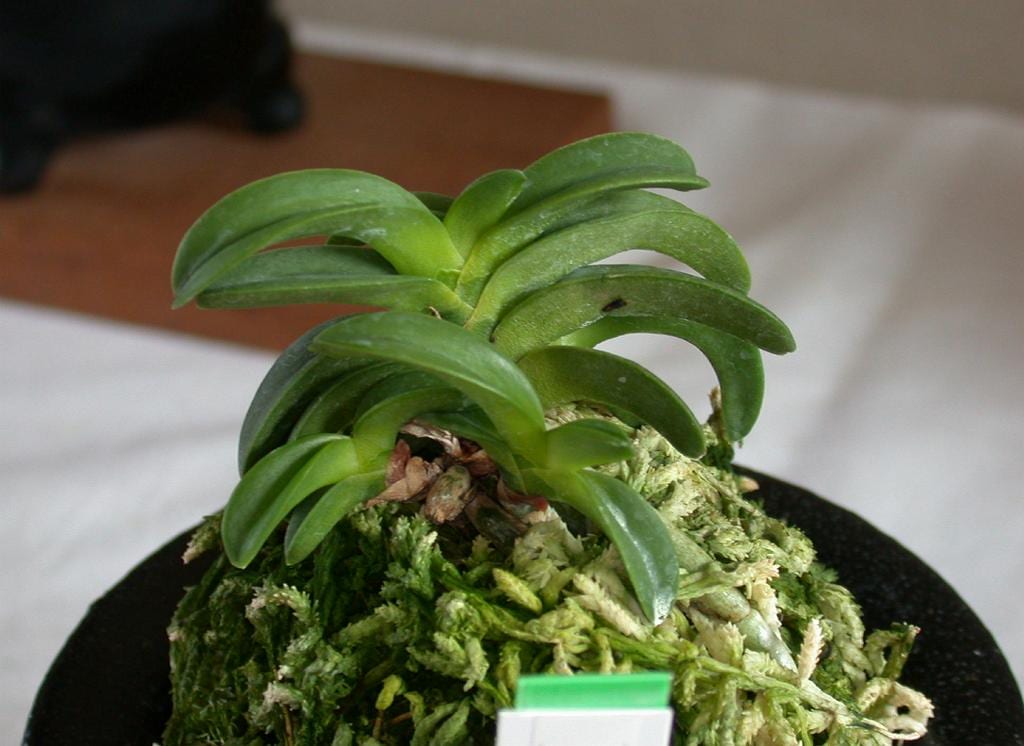
 © Keisotyo / CC BY-SA 3.0
富贵兰 青海
Neofinetia falcata 'Seikai' is a classic cultivar prized for its distinctive foliage — short, broad leaves that curl backward and overlap in a striking, layered form. Variegated Seikai plants even appear in picture albums kept by daimyo families during the Edo period, reflecting a long history of appreciation among enthusiasts. The compact, small-growing habit gives each plant a sculptural presence that suits container culture well. Rated as beginner-friendly, it's an approachable choice for those growing Neofinetia falcata for the first time. As a very slow-growing perennial that adds only about two or three new leaves a year, it lets growers watch the plant's form develop gradually over time.
View 富贵兰 青海 encyclopedia →成交手续费0%!2026年9月30日前注册,前 2 株免佣金!
生产者 招募中!
在GrowerDirect上销售,直接面向全国客户销售吗?
GrowerDirect的 6 项透明性承诺
兰花出品中,生产者明示以下信息。确保品种、原产地、光照需求、栽培难度信息透明。
- 品种明示
- 实物照片
- 色泽
- 产地明示
- 光照需求
- 难易度明示
查看全部142个品种
富贵兰 青海的基本数据
- 养护难度
- 适合新手
- 寿命
- 多年生。单个叶片生存期4~5年,长时可保持8年左右。
- 体型
- 小型(叶片较短)
- 浇水
- 生长期使用极度稀释的液体肥料,用量要适量。
- 光线与摆放位置
- 夏季需遮光放置在明亮的半阴处,冬季需置于光线充足的地方。
- 浇水
- 当植物基质水苔干燥后充分浇水。生长非常缓慢,单个茎每年仅长出2~3片新叶。
- 温度与越冬
- 这是自生于日本温暖地区的附生兰花,对高温和低温相对耐受,但冬季需保护,避免冻害和霜冻。
- 基质与换盆
- 通常采用富贵兰特有的种植方法,将水苔堆成山形,在顶部种植。水苔块的中心需留空以保证通风。分株应在子株充分生长后进行。
- 品种识别方法
- 短而宽的叶片向外反卷相互交错的叶姿是青海的特征。需要选择品种名确实的植株,避免与其他类似的短叶品种混淆。
- 病虫害与注意事项
- 母本福兰是国内的自生种。请选择人工栽培繁殖的植株,而不是野生采集的株。
关于富贵兰 青海
Neofinetia falcata 'Seikai' is a classic cultivar known for its short, broad leaves that curl and overlap in a distinctive layered form — compact, beginner-friendly, and appreciated since the Edo period.
开始养护富贵兰 青海前需要了解的7件事
1Choose a Bright, Shaded Spot
Neofinetia falcata prefers bright, indirect light and good air circulation rather than direct sun, which can scorch the leaves. A spot behind a sheer curtain or on a shaded shelf works well. Because 'Seikai' is small with short leaves, positioning it so light reaches the whole plant evenly helps it keep a well-balanced shape.
2Water in a Wet-Dry Rhythm
As an epiphyte, Neofinetia falcata dislikes constantly soggy roots. Water thoroughly once the surface or moss has dried out, giving the roots a clear wet-dry cycle to stay healthy. Because 'Seikai' has short leaves that hold less water, you may want to water slightly more often during dry spells.
3Use Fast-Draining Media
Neofinetia falcata is typically grown in well-draining, breathable media such as sphagnum moss, pumice, or bark. Keeping the medium from staying constantly wet helps prevent root rot. Since compact cultivars like 'Seikai' have fewer roots, use just enough medium that the roots aren't cramped in the pot.
4Repot Every 1–2 Years
Repot roughly every one to two years, watching for breakdown of the moss and the condition of the roots. Early spring, as new growth begins, is the best time, and roots should be handled gently to avoid damage. Because 'Seikai' stays compact with short leaves, choose a pot size that matches the plant for a balanced look.
5Shade in Summer, Sun and Protection in Winter
In summer, provide shade in a bright spot and keep the air moving to prevent stagnant humidity. In winter, give it plenty of sun while protecting it from frost and freezing, such as in a bright indoor spot or a simple greenhouse. As a very slow-growing perennial, it rewards consistent seasonal care with a form you can enjoy for many years.
6Picking a Healthy Plant
Look for a plant with undamaged, unblemished leaves arranged in a tight, balanced overlap. 'Seikai' is known for its short, broad leaves that curl backward as they overlap, so plants that show this trait clearly tend to have the most ornamental value. It's also worth checking that the roots are firm and healthy.
7Feed Sparingly
Neofinetia falcata doesn't need much fertilizer, and overfeeding can damage the roots. A diluted liquid fertilizer applied once or twice a month during the growing season, spring through autumn, is generally enough. Compact cultivars like 'Seikai' are especially prone to fertilizer burn, so it's safer to use a weaker dilution than the label recommends.
富贵兰 青海的常见问题
- Q.Is Neofinetia falcata 'Seikai' suitable for beginners?
- A.Yes, 'Seikai' is rated as a beginner-friendly cultivar. Once you understand the basics of placement, watering, and potting media, it's an approachable plant even for first-time Neofinetia falcata growers.
- Q.How fast does 'Seikai' grow?
- A.Neofinetia falcata grows very slowly, with each stem producing only about two or three new leaves a year. Since the plant is a perennial, you can enjoy it over the long term as it gradually adds leaves.
- Q.What does 'Seikai' look like?
- A.Its defining feature is short, broad leaves that curl backward as they overlap in a distinctive layered form. The plant stays compact overall, making for an attractive small-scale specimen.
- Q.How long has 'Seikai' been cultivated?
- A.Variegated Seikai plants appear in picture albums kept by daimyo families during the Edo period, showing a long history of appreciation among growers. It remains a widely grown classic cultivar today.
- Q.What kind of spot suits 'Seikai' best?
- A.A bright, shaded location with good air circulation, away from direct sun, works well. Strong direct light can scorch the leaves, so filtered light such as through a sheer curtain is a good guideline.
富贵兰 青海种植的实用工具
在图鉴中详细了解富贵兰 青海
查看富贵兰 青海的图鉴条目 →
收录栽培难度、尺寸、原产地、日照等基础数据。