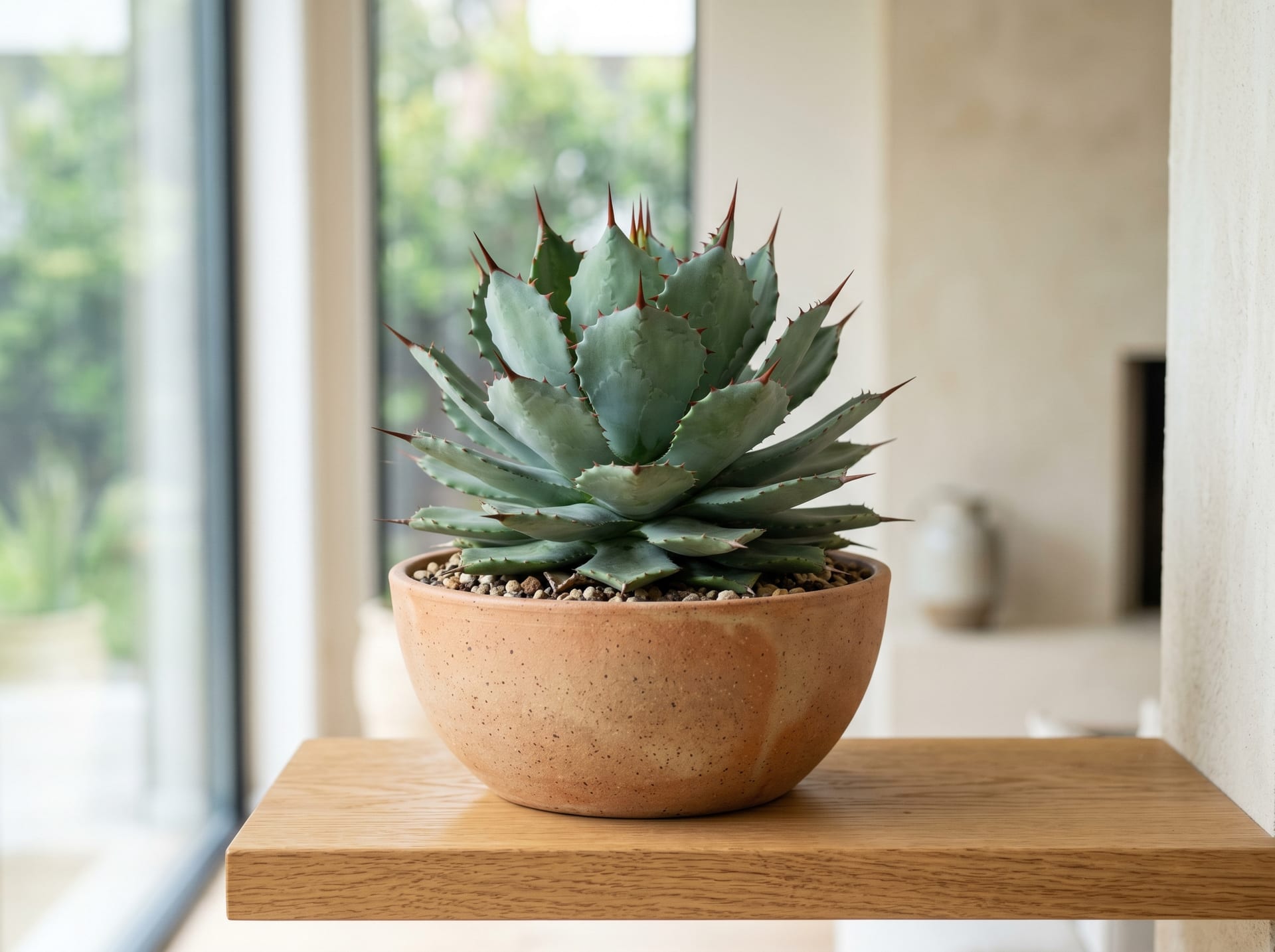
Isthmensis
Agave isthmensis is a rare species native to Mexico, recognized for its compact rosette and finely toothed leaf margins that give it a distinctive character. Its slow growth rate makes it manageable for a wide range of growers, from beginners to enthusiasts. Despite its refined appearance, it is a tough, drought-tolerant plant well-suited to modern succulent collections.
View Isthmensis encyclopedia →Grower Wanted!
List your plants on GrowerDirect and sell directly to customers nationwide!
6 Transparency Commitments from GrowerDirect
Every Agave from our Grower includes full transparency: variety, origin, light requirements, and care difficulty.
- Variety Disclosed
- Real Plant Photos
- Color Details
- Origin Disclosed
- Light Requirements
- Care Difficulty
Browse all 141 varieties
Light Requirements
Difficulty Level
No listings match your filters
Adjust your filters, or get notified when new listings arrive.
Getting alerts is free with a member account. When new listings match your saved search, we'll notify you by email and in-app.
Browse other categories
Verified growers (preview)
Isthmensis key facts
- Growing Difficulty
- Beginner-friendly
- Lifespan
- Perennial (15-25 years)
- Size
- 15-30cm
- Watering & Fertilizer
- Minimal
- Light & Placement
- It prefers direct sun, and a bright spot brings out the blue tint of the leaves. Its small size makes it ideal for pots.
- Watering
- Water sparingly, only after the soil dries. In winter, cut back to about once a month.
- Soil & Repotting
- A mix that emphasizes drainage is essential. Growth is slow, so repot into a slightly larger pot once root-bound.
- Temperature & Overwintering
- Cold tolerance is around 5°C and it needs protection from frost. Move it to a frost-free spot for winter.
- Propagation
- It sometimes produces offsets and can be propagated by division. Separate offsets once they have grown a bit.
About Isthmensis
Agave isthmensis is a rare agave native to the Isthmus of Tehuantepec region in Oaxaca, Mexico, with its species name reflecting this origin. It is best recognized by its tightly compact rosette of short, broad, bluish-gray leaves adorned with finely serrated margins and a sharp terminal spine — details that give the plant a precise, sculptural quality. Compared to many larger agave species, its modest size makes it well suited to container growing, which has earned it a devoted following among collectors and succulent enthusiasts. Although growth is slow, this characteristic helps the plant maintain its neat, symmetrical form for years. It tolerates heat and drought well but dislikes excess moisture; provided drainage is adequate, it is not particularly difficult to cultivate. Wild specimens are rarely traded, making nursery-grown plants the main source and contributing to its reputation as a prized collector's item.
Featured Growers Selling Isthmensis
Browse all Isthmensis growers (1 total) →7 things to know before growing Isthmensis
1Limited Availability
Agave isthmensis has limited distribution and is best sourced from specialty succulent shops or dedicated online sellers. Before purchasing, compare several sources and check the leaf color, the condition of the spines and how firm the base of the plant is. Buying from reputable growers helps ensure plant health and accurate identification.
2Sunlight Is Essential
This agave thrives in strong sunlight and ideally sits in a bright spot with plenty of direct sun. Insufficient light causes etiolation, which disrupts its naturally compact rosette shape. Outdoor cultivation is recommended; if kept indoors, a bright south-facing window or supplemental grow lighting is necessary.
3Water Sparingly
During the growing season (spring through autumn), water thoroughly only after the soil has dried out completely. In winter, reduce watering to roughly once a month to prevent root rot during dormancy. Overwatering is the most common cause of failure with this species, so erring on the side of dryness is always the safer approach.
4Use Fast-Draining Soil
A well-draining mix of succulent or cactus soil combined with 30–50% pumice or perlite works well. Standard potting soil retains too much moisture and is unsuitable. Always use pots with drainage holes and add a layer of coarse gravel at the bottom to encourage rapid water escape.
5Handle With Care
The leaf tips of Agave isthmensis are sharply pointed and can cause injury if handled carelessly. Always wear thick gloves when repotting or moving the plant, and stay aware of spine direction. Placing the plant out of reach of small children and pets is a basic safety precaution.
6Monocarpic Flowering Habit
Like all agaves, Agave isthmensis is monocarpic — it flowers only once in its lifetime and the parent plant dies after blooming. Flowering typically takes 10 to 20 years and is seen as the plant's final achievement. Before flowering, most plants produce offsets (pups) that can be separated and grown on to continue the lineage.
7Check Cold Hardiness
Agave isthmensis tolerates cold down to about 5°C and is vulnerable to frost. In winter, move the plant to a place where frost cannot reach it. In areas with cold winters, overwintering indoors or in a greenhouse where it is protected from the cold is the safer choice.
Frequently asked questions about Isthmensis
- Q.Can Agave isthmensis be grown indoors?
- A.Yes, it can be grown indoors near a bright, sunny window. However, insufficient light may cause the plant to stretch and lose its compact form, so the brightest possible spot is recommended. Moving it outdoors during summer helps maintain a tight, healthy rosette.
- Q.How often should I water Agave isthmensis?
- A.During the growing season (spring to autumn), water only after the soil has dried out completely, judging by the soil's dryness rather than a fixed interval. In winter, when growth slows, reduce this to about once a month. Always check soil moisture before watering rather than following a strict schedule.
- Q.Does it produce offsets (pups) readily?
- A.Agave isthmensis can produce offsets, which may appear around the base of mature plants. Once large enough, these pups can be separated and potted individually to propagate the plant. The rate of offset production varies depending on the individual plant and growing conditions.
- Q.How often does it need repotting?
- A.Due to its slow growth rate, frequent repotting is not necessary. Signs that repotting is due include roots emerging from the drainage holes or the pot becoming visibly root-bound; at that point, move it to a pot one size larger. Spring, when growth resumes, is the best time to repot.
- Q.What should I check when purchasing a plant?
- A.Check that the leaves form a symmetrical, even rosette without discoloration or soft rot. The base of the plant should feel firm and stable in the pot, which is a good indicator of healthy roots. Also inspect the spaces between leaves for signs of common pests such as mealybugs.
Handy Growing Tools for Isthmensis
Learn more about Isthmensis in the encyclopedia
View Isthmensis encyclopedia entry →
Care difficulty, size, origin and light needs — all basics covered.
More in this category
Can't find the plant you're looking for?
Post your wishes for free and growers with matching plants will contact you with introductions.