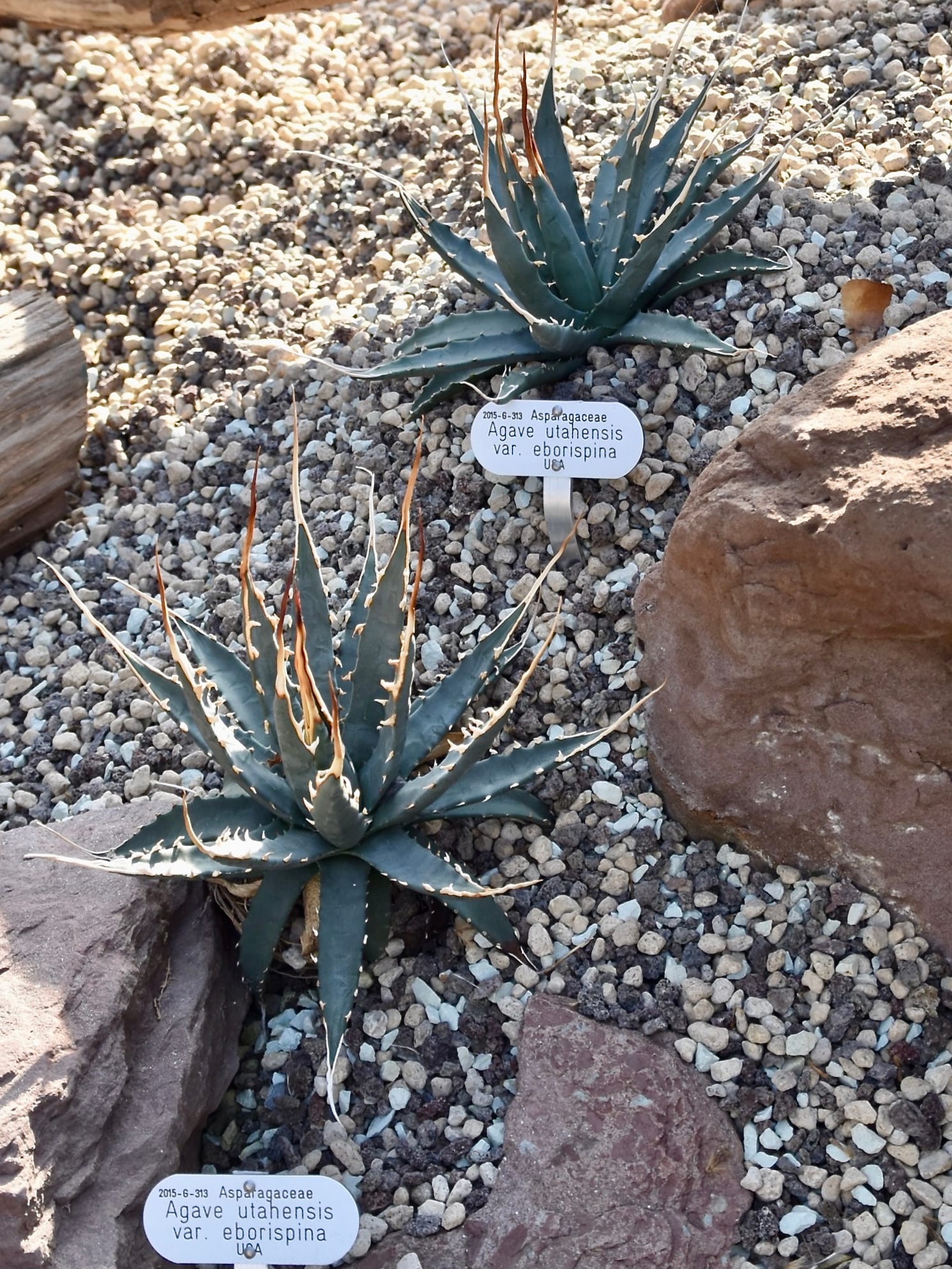
 © NasserHalaweh / CC BY-SA 4.0
Agave utahensis var. eborispina (Ivory-spined agave)
Agave utahensis var. eborispina is prized for the striking contrast between its slender, densely packed leaves and the thick, ivory-colored terminal spines that can reach 10 to 20 cm in length. Sometimes traded under the Japanese name "Kagerou" when its spines curve dramatically, this Utah agave variant stays compact, with rosettes typically spanning 15 to 30 cm across, making it a manageable centerpiece even in tight growing spaces. As a perennial, each rosette lives for years before flowering, after which it dies back and is replaced by offsets that carry the plant forward. Because it calls for careful attention to drainage and light exposure, it's generally considered a variety suited to experienced agave growers rather than beginners.
View Agave utahensis var. eborispina (Ivory-spined agave) encyclopedia →0% commission on your first sales!Register by September 30, 2026 and your first 2 plants are commission-free!
Grower Wanted!
List your plants on GrowerDirect and sell directly to customers nationwide!
6 Transparency Commitments from GrowerDirect
Every Agave from our Grower includes full transparency: variety, origin, light requirements, and care difficulty.
- Variety Disclosed
- Real Plant Photos
- Color Details
- Origin Disclosed
- Light Requirements
- Care Difficulty
Browse all 141 varieties
Light Requirements
Difficulty Level
No listings match your filters
Adjust your filters, or get notified when new listings arrive.
Getting alerts is free with a member account. When new listings match your saved search, we'll notify you by email and in-app.
Browse other categories
Verified growers (preview)
Agave utahensis var. eborispina (Ivory-spined agave) key facts
- Growing Difficulty
- Advanced
- Lifespan
- Perennial; the flowering rosette dies and offsets carry on
- Size
- Rosettes 15-30 cm; tip spine 10-20 cm
- Watering
- Light feeder; a little slow-release fertiliser in the growing season is enough
- Light & Placement
- Give full sun and, above all, good airflow; keep it out of the rain from the rainy season through summer.
- Watering
- The utahensis group is far less tolerant of humid heat than most agaves; prioritise airflow in summer and water only when the mix is thoroughly dry.
- Temperature & Winter
- Native to limestone at roughly 1,100-1,900 m. Hardiness data are scarce, so winter it dry in a bright spot out of the rain and avoid hard freezes.
- Soil & Repotting
- A limestone plant: use a very free-draining gritty mix, and repot at the start of the growing season to spare the roots.
- Notes
- Wavy-spined plants are sold separately as 'Kagerou'; seedlings vary in how their spines develop.
About Agave utahensis var. eborispina (Ivory-spined agave)
Agave utahensis var. eborispina, sometimes called "Kagerou," is a compact Utah agave variant known for its thick ivory spines and striking rosette form, a variety best suited to experienced growers.
7 things to know before growing Agave utahensis var. eborispina (Ivory-spined agave)
1Light and Airflow
Give it as much direct sun as possible, whether outdoors or in a bright window, along with good air circulation. Strong light is essential for keeping the spine color vivid and the rosette tightly formed; insufficient light causes the leaves to stretch and lose their compact shape.
2Water Sparingly
Let the soil dry out completely before watering again, since overwatering is a leading cause of root rot. Space out waterings even further during periods when growth naturally slows.
3Fast-Draining Soil
Use a mix heavy in hard-fired akadama or pumice for sharp drainage and good aeration. Avoid ordinary potting soils rich in organic matter, as they hold too much moisture and can harm the roots over time.
4Repotting Schedule
Repot roughly every one to two years to prevent the roots from becoming pot-bound. Because the terminal spines are long and sharp, protect your hands with thick gloves or wrap the leaves in newspaper during the process to avoid injury.
5Seasonal Care
During the active growing period, keep the plant outdoors in full sun; as temperatures drop, move it to a bright spot indoors to protect it from cold and excess moisture. Make any relocation gradual, since sudden changes in environment can stress the plant.
6Choosing a Good Plant
Look for a rosette with a tight, well-formed center and thick, ivory-colored terminal spines, which best showcase this variety's character. If you prefer specimens with dramatically curving spines, also check how the leaves themselves curl.
7Mind the Sharp Spines
The terminal spines can reach 10 to 20 cm and are quite sharp, so position the plant where people and other plants won't brush against it, adjusting the pot's orientation if needed. Extra caution is worthwhile in homes with small children or pets.
Frequently asked questions about Agave utahensis var. eborispina (Ivory-spined agave)
- Q.Why is it sometimes called "Kagerou"?
- A.Plants whose terminal spines curve dramatically as they grow are often traded under the Japanese name "Kagerou," a nod to their striking shape. Even within this variety, the degree of spine curvature varies from plant to plant.
- Q.Can it be grown outdoors?
- A.Yes, it thrives outdoors in a spot with plenty of sun and good airflow. That said, it's sensitive to cold and prolonged rain, so moving it to a bright indoor spot during cold spells or rainy stretches is a good precaution.
- Q.Is this a good choice for a first-time agave grower?
- A.This variety is generally considered suited to experienced growers, since it calls for careful judgment around watering and placement. If you're new to agaves, it may be worth building confidence with a hardier variety first before taking this one on.
- Q.How do offsets form and multiply?
- A.After the parent rosette flowers and dies, offsets typically appear around its base and can be separated to propagate new plants. While the species is perennial overall, it's worth remembering that each individual rosette reaches the end of its life once it flowers.
- Q.Is it okay to trim the spine tips?
- A.Trimming the spines causes the cut tips to dry out and discolor, which takes away from the very look that makes this variety distinctive. If safety is a concern, it's better to simply place the plant somewhere people won't brush against it.
Handy Growing Tools for Agave utahensis var. eborispina (Ivory-spined agave)
Learn more about Agave utahensis var. eborispina (Ivory-spined agave) in the encyclopedia
View Agave utahensis var. eborispina (Ivory-spined agave) encyclopedia entry →
Care difficulty, size, origin and light needs — all basics covered.
More in this category
Can't find the plant you're looking for?
Post your wishes for free and growers with matching plants will contact you with introductions.