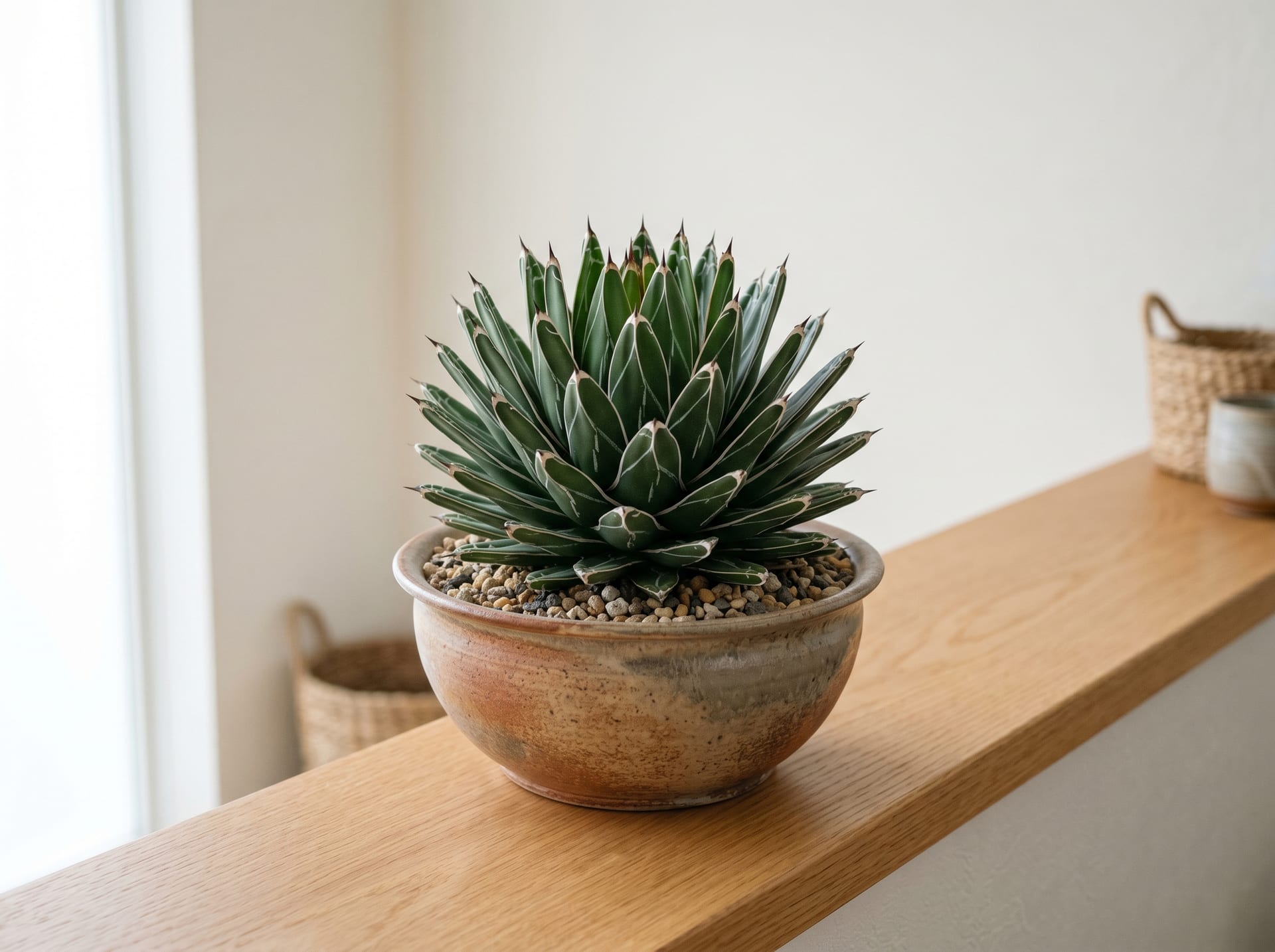
Victoria-reginae
Agave victoriae-reginae, known as Queen Victoria Agave or "Sasa-no-Yuki" in Japanese, features a compact rosette of dark green leaves adorned with striking white markings, earning it the nickname "Queen of Agaves." It is an extremely slow-growing plant, and it is not unusual for it to take 10 to 20 years or more to become a large specimen. Its tidy size has made it popular, and it is a classic entry-level variety for collectors.
View Victoria-reginae encyclopedia →Grower Wanted!
List your plants on GrowerDirect and sell directly to customers nationwide!
6 Transparency Commitments from GrowerDirect
Every Agave from our Grower includes full transparency: variety, origin, light requirements, and care difficulty.
- Variety Disclosed
- Real Plant Photos
- Color Details
- Origin Disclosed
- Light Requirements
- Care Difficulty
Browse all 141 varieties
Light Requirements
Difficulty Level
No listings match your filters
Adjust your filters, or get notified when new listings arrive.
Getting alerts is free with a member account. When new listings match your saved search, we'll notify you by email and in-app.
Browse other categories
Verified growers (preview)
Victoria-reginae key facts
- Growing Difficulty
- Intermediate
- Lifespan
- 20-30 years
- Size
- 20-40cm
- Light & Placement
- It prefers bright direct sun, but it is safest to avoid intense summer sun. In midsummer place it in bright partial shade or under shade cloth.
- Watering
- Water sparingly, only after the soil dries. In winter keep it almost completely dry.
- Temperature & Overwintering
- In winter keep it out of frost and never let it freeze. Keeping it dry improves its tolerance of low temperatures.
- Soil & Repotting
- Use a fast-draining mix. Growth is very slow and the plant stays around 30-50 cm across, so repot only once the roots fill the pot.
- Pests & Cautions
- Watch for leaf scorch from strong summer sun and root rot from excess moisture. With spines only at the leaf tips, it is relatively safe to handle.
About Victoria-reginae
Native to the limestone cliffs and rock faces of Mexico, Agave victoriae-reginae was named in honor of Queen Victoria of Britain — a tribute befitting its regal bearing. Its thick, dark green leaves are dramatically traced with crisp white margins and lines, creating a geometric elegance that has captivated collectors for generations. The plant stays compact, typically 30 to 50 cm in diameter, making it ideal for pot culture both indoors and out. Remarkably tough and drought-tolerant, it asks only for well-draining soil and a restrained hand with watering. Like all agaves, it is monocarpic: after decades of slow, steady growth it flowers once and then gives way to offsets that carry on its lineage. This unhurried life cycle — and the quiet daily pleasure of watching it unfold — is a large part of what makes Sasanoyuki so treasured among serious plant enthusiasts.
Find Victoria-reginae by prefecture
Featured Growers Selling Victoria-reginae
Browse all Victoria-reginae growers (1 total) →7 things to know before growing Victoria-reginae
1Extremely Slow Growth
Sasa-no-Yuki adds only a few new leaves per year, making it one of the slowest-growing agaves. It can take 10 to 20 years or more to become a large specimen, so cultivating this plant requires a long-term commitment. When buying, check that the white leaf markings are crisp, the base is firm, and the soil is not waterlogged.
2Minimal Watering Required
Like most succulents, Sasa-no-Yuki is highly susceptible to overwatering. During the growing season (spring to autumn), water only after the soil has completely dried out, and keep it almost completely dry in winter. Well-draining soil and pots with drainage holes are essential to prevent fatal root rot.
3Needs Bright Light and Airflow
This agave prefers bright, direct sunlight, but it is safest to avoid intense summer sun; in midsummer move it to bright partial shade or under shade cloth. Outdoors, a sheltered spot under eaves that protects it from excess rain is ideal. Indoors, place it by a sunny window. Poor air circulation can encourage pests and fungal issues.
4Keep Frost-Free and Dry in Winter
Sasa-no-Yuki does best at roughly 5 to 40°C. In winter, keep it away from frost and never let it freeze. Keeping it dry with watering stopped helps it tolerate cold better. Cold combined with moisture can cause damage, so moving the plant indoors or to a sheltered, frost-free location during winter is the safest approach.
5Mind the Small Leaf-Tip Spines
The leaf margins have no spines; only a small terminal spine sits at each leaf tip, so the plant is relatively safe to handle. Still, wearing gloves when repotting or moving it helps avoid scratches from the tips. Consider placing it out of reach of small children and pets.
6Blooms Only Once in Its Lifetime
Sasa-no-Yuki is monocarpic, meaning it blooms only once after several decades and then dies. Flowering is a sign of full maturity, and if offsets (pups) have been produced, the plant's lineage can be continued. Many enthusiasts make it a personal goal to witness this rare once-in-a-lifetime bloom.
7Soil and Pot Selection Are Key
Mix commercial cactus or succulent soil with 20 to 30 percent pumice or perlite to improve drainage and reduce root rot risk. Terracotta pots are particularly recommended as they allow excess moisture to evaporate through the walls. Repot only when roots become pot-bound, as frequent repotting is unnecessary and can stress the plant.
Frequently asked questions about Victoria-reginae
- Q.Can it be grown on an indoor windowsill?
- A.Yes, provided the windowsill receives direct sun — a south- or east-facing window is ideal. Insufficient light causes the plant to etiolate and lose its compact, symmetrical form, so choose the brightest spot available.
- Q.How often does it need to be repotted?
- A.Because growth is so slow, frequent repotting is unnecessary; repotting once the roots have filled the pot is enough. Do so when roots begin emerging from the drainage holes or when the soil has degraded and drains poorly — move up just one pot size at a time.
- Q.Why are the leaves turning yellow?
- A.The most common cause is overwatering leading to root rot. Check whether you are watering before the soil fully dries out. If root rot is suspected, unpot the plant, trim any damaged roots, and replant in fresh, well-draining soil.
- Q.Does the plant always die after flowering?
- A.Yes, as a monocarpic plant the parent rosette dies after flowering. However, offsets frequently appear around the base before or shortly after the flower stalk emerges, and these can be separated and potted up to continue the plant's lineage.
- Q.Can it overwinter outdoors?
- A.The key is to keep it away from frost and never let it freeze, so in winter it is safer to keep it indoors or under a frost-free, rain-sheltered eave. Keeping it dry with watering stopped helps it tolerate low temperatures.
Handy Growing Tools for Victoria-reginae
Learn more about Victoria-reginae in the encyclopedia
View Victoria-reginae encyclopedia entry →
Care difficulty, size, origin and light needs — all basics covered.
More in this category
Can't find the plant you're looking for?
Post your wishes for free and growers with matching plants will contact you with introductions.