Agave Fertilizer & Fertilization Guide | Fertilizer Strategy Varies by Whether You Aim for Compact or Large Growth
Explains recommended fertilizers for agave—from the differences between solid slow-release fertilizers, liquid fertilizers, and plant tonics. Covers how fertilizing amounts vary between compact cultivation and growth promotion, when to stop fertilizing in summer, seasonal schedules, and how to prevent fertilizer burn.
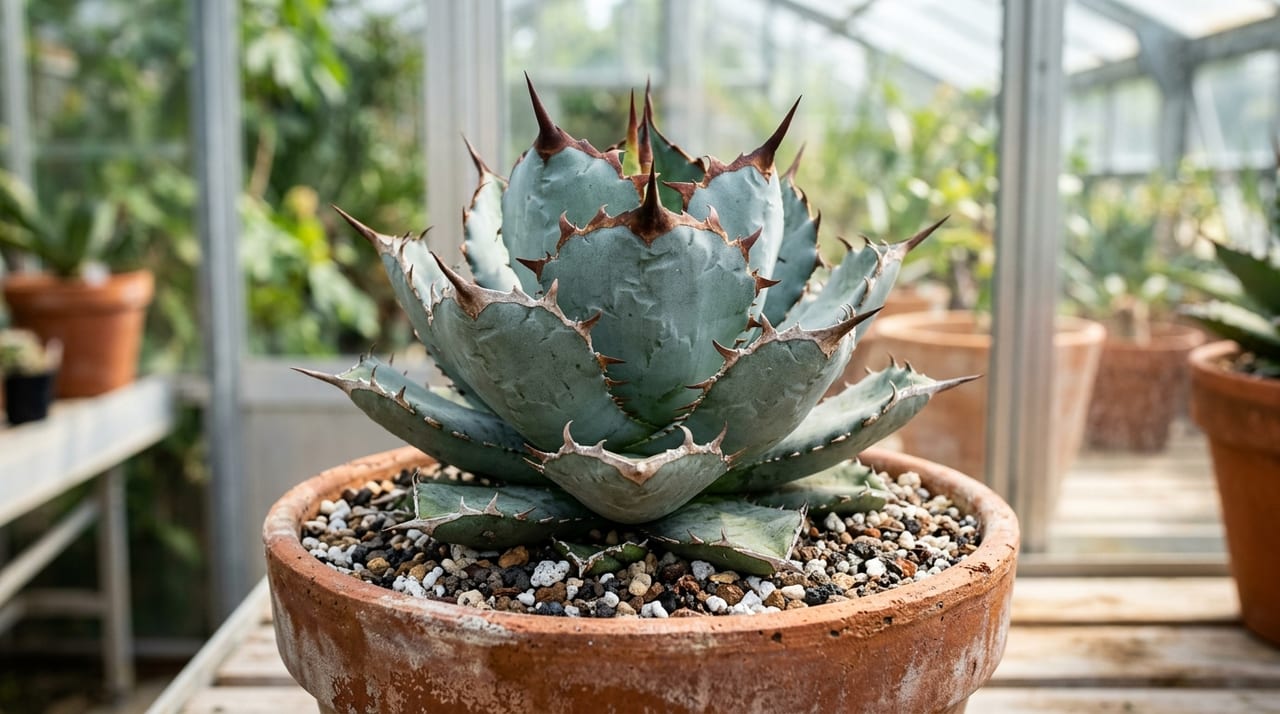
Key Takeaways
Explains recommended fertilizers for agave—from the differences between solid slow-release fertilizers, liquid fertilizers, and plant tonics. Covers how fertilizing amounts vary between compact cultivation and growth promotion, when to stop fertilizing in summer, seasonal schedules, and how to prevent fertilizer burn.
Agave fertilizer management is more about "how to apply" fertilizer than "how much to apply." Agave is a hardy plant that can grow with relatively little nutrition, but the plant's appearance changes dramatically depending on how you fertilize. Your fertilizer strategy will be completely different depending on whether you aim for a large, striking specimen or a compact, neatly formed plant. Here we explain the fundamentals of agave fertilizer management and specific methods.
Quick Reference Table for Fertilization Strategy
| Cultivation Goal | Solid Fertilizer | Liquid Fertilizer | Key Points |
|---|---|---|---|
| Compact growth | 2–3 pellets at pot edge during growing season | Diluted 4× strength, once monthly | Combine with zeolite/charcoal, minimize application |
| Large growth | Half-strength, every 2 months | Diluted 2× strength, every 2 weeks | N:P:K = 6:6:8 or similar, low nitrogen |
※ In both approaches, stop all fertilization during winter (November–February). Excess nitrogen causes excessive elongation.
Basic Knowledge of Nutrients Needed for Agave
First, let's understand the basic nutrients.
Nitrogen (N) This nutrient promotes leaf growth. High nitrogen speeds up leaf development, but excess causes leaves to become thin and soft, leading to excessive elongation. For agave, the basic rule is to keep nitrogen modest.
Phosphorus (P) This nutrient is involved in root development and flowering. In agave, strong root establishment leads to stable growth. Apply phosphorus at appropriate levels.
Potassium (K) This nutrient increases the plant's disease and cold resistance. Potassium is essential for agave health; deficiency causes leaf tips to die off.
Trace Elements Iron, manganese, zinc, and copper are also needed in small amounts. Particularly, iron deficiency causes yellowing of new leaves.
Fertilizer Management for Compact Growth
This is how to fertilize when aiming for a compact, tightly formed plant shape.
Basic Approach Keep fertilizer to a minimum. Excess nutrition will cause leaves to grow large and elongated, moving away from the ideal form of short, thick leaves.
Specific Schedule During the growing season (April–September), it's sufficient to place 2–3 pellets of slow-release solid fertilizer around the pot's edge. If using liquid fertilizer, dilute it 4 times the recommended strength and apply once monthly. Stop all fertilizer in winter.
Adjustments to Growing Medium Instead of reducing fertilizer, mix zeolite or charcoal into the growing medium. This can provide trace elements and improve the root zone environment. This alone is enough to maintain healthy growth.
Balance with Watering In compact cultivation, watering is also minimal, so fertilizer may take longer to take effect. Solid fertilizers dissolve through watering, so lower watering frequency weakens the fertilizer's effectiveness.
Fertilizer Management for Large Growth
This is how to fertilize when aiming for a large, impressive specimen.
Basic Approach Apply fertilizer steadily during the growing season to prevent nutrient deficiency. However, agave is somewhat sensitive to over-fertilization, so use about half the amount recommended for typical houseplants.
Specific Schedule During the growing season, apply slow-release solid fertilizer at half the recommended strength every 2 months. Simultaneously, apply liquid fertilizer every 2 weeks, diluted to twice the recommended strength. Liquid fertilizers with a high potassium ratio (N:P:K = 6:6:8 or similar) are best suited for agave.
Using Organic Fertilizers Organic, slow-release fertilizers like Bio Gold and Magamp K have components that dissolve gradually, making them compatible with agave. You can promote stable growth while avoiding excessive elongation from sudden nutrient surges.
Seasonal Fertilization Calendar
Here's an organized timeline for fertilizing throughout the year.
Spring (March–May) Begin fertilizing as growth resumes. Start with diluted liquid fertilizer, and gradually increase amounts as temperatures rise. If you repotted, wait 2–3 weeks before starting fertilization.
Summer (June–August) This is the most vigorous growing season. However, some plants enter semi-dormancy during Japan's extreme heat, so adjust based on the plant's condition. If temperatures exceed 35°C for extended periods, reduce fertilizer application.
Autumn (September–October) The latter part of the growing season. Reduce fertilization somewhat during this period and prepare the plant for winter by ensuring it's well-developed. Increasing the potassium ratio will improve cold hardiness.
Winter (November–February) As a rule, do not fertilize. Plants with stopped growth cannot absorb fertilizer; leftover fertilizer in the growing medium can damage roots.
Prevention and Management of Fertilizer Burn
It's important to know how to handle fertilizer problems.
Symptoms of Fertilizer Burn Leaf tips turn brown and die off, roots discolor brown, and new leaf development stops. If white crystals appear on the growing medium surface, that's evidence of fertilizer components precipitating out.
How to Address It If fertilizer burn is suspected, first flush the pot with large amounts of water to wash away excess fertilizer. Remove any solid fertilizer if present. Then stop all fertilizer completely for 2–4 weeks while the plant recovers.
Prevention Tips Don't let fertilizer come into direct contact with dry growing medium, and apply liquid fertilizer just after watering. Giving concentrated liquid fertilizer to dry soil can damage roots through osmotic shock.
Agave fertilizer management is a nuanced field where the approach changes based on your desired plant form. At GrowerDirect, you can directly ask growers about the fertilizers and fertilization schedules they actually use. Since management methods vary even among growers of the same variety, it's recommended to speak with multiple growers to find an approach that works for you.
Differences Between Solid Fertilizers, Liquid Fertilizers, and Plant Tonics—and How to Choose
When asked "What's the best fertilizer for agave?", the answer depends on your goal for the plant. First, understand that the "fertilizer" shelf at garden centers has three types of products, each with a different role.
| Type | Examples | Function | Application Guide | Compatibility with Compact Cultivation |
|---|---|---|---|---|
| Solid slow-release fertilizer | Magamp K, Pronick | Base fertilizer that works slowly over several months | Mix into growing medium at repotting, or place at pot edge during growing season | ◎ Compact form won't break down if used sparingly |
| Liquid fertilizer | Hyponex concentrate, Flower Factory | Quick-acting supplementary fertilization; apply with watering | Dilute 2–4× recommended strength, apply 1–2 times monthly during growing season | ○ Workable if you limit concentration and frequency |
| Plant tonics & growth stimulants | Menedeal, Liquidas, HB-101 | Promote root development and supply trace elements. Not a fertilizer. | Use at recommended dilution after repotting or for weakened plants | ◎ Contains almost no N-P-K, so safe to use even with compact cultivation |
Plant tonics and growth stimulants contain almost no primary nutrients (N, P, K), so giving only tonics will not make plants grow larger. Conversely, they're ideally used to aid root recovery on plants where you want to avoid fertilizer—such as compact specimens or recently repotted plants—rather than as a "fertilizer substitute." Think of it as "support during a fertilizer-free period," not "fertilizer replacement."
Recommendations by Type
- Beginners wanting to reduce failure: Magamp K medium pellets at repotting only. No supplementary fertilization needed; this is the safest combination against fertilizer burn.
- Want to grow large quickly: Use Magamp K as base fertilizer, then apply Hyponex concentrate diluted 2× strength every 2 weeks during the growing season. Choosing a liquid fertilizer with a high potassium ratio will reduce excessive elongation.
- Want to grow compactly and beautifully: Keep Magamp K at half the recommended amount or less for base fertilization; either skip liquid fertilizer or use it diluted 4× strength once monthly. Use plant tonics only during the post-repotting root-development phase.
What About Fertilizing in Summer?
Midsummer is part of agave's growing season, but under Japan's intense heat, plants sometimes enter semi-dormancy. If temperatures exceed 35°C for consecutive days, stop liquid fertilizer and resume when conditions cool. Fertilizing roots weakened by heat can cause fertilizer burn instead of being absorbed. If you must fertilize, limit it to plant tonic diluted at recommended strength, applied after evening watering. Summer watering and placement adjustments are explained in detail in Agave Summer Care.
Balancing Organic and Synthetic Fertilizers
There's much debate about whether organic or synthetic fertilizers are better for agave. The conclusion is that both have merits, and using them appropriately for different situations is best.
Organic fertilizers (Bio Gold, oil cake, etc.) take longer to show effect, so there's less stress from sudden nutritional changes. They also promote soil microbe activity and have long-term soil environment improvement benefits. However, organic materials risk attracting mold and insects in warm, humid environments, so caution is needed for indoor cultivation.
Synthetic fertilizers (Hyponex, Flower Factory, etc.) have clearly defined components, allowing precise control of needed nutrients. Liquid-type fertilizers are quick-acting and convenient since you can fertilize while watering. However, over-application damages roots (fertilizer burn) at a higher risk than with organic fertilizers, so it's recommended to start at about half the recommended concentration.
As a recommended approach, mix Magamp K (slow-release organic-synthetic) into the growing medium at repotting, then apply diluted liquid fertilizer 1–2 times monthly during the growing season as supplementary fertilization. Stop all fertilizer in winter and resume when growth picks up in spring; make this cycle your standard practice.
Frequently Asked Questions About Fertilizer Management
Q. Is fertilizer really necessary for agave? A. It's not essential, but appropriate fertilization makes a clear difference in growth speed and plant vigor. Supplemental fertilizing is particularly effective for seedlings in early growth stages or when aiming for large specimens. Conversely, a strategy of minimizing fertilizer is also valid if you want to grow plants compactly.
Q. Which fertilizer is most recommended? A. Magamp K (medium pellets) is the most convenient and least failure-prone, as you simply mix it into the growing medium at repotting and it lasts several months. For supplementary application, Hyponex concentrate diluted 2–4× the recommended strength is recommended.
Q. Does fertilizer cause excessive elongation? A. Excessive nitrogen is a cause of elongation. Choose a formulation with balanced N:P:K ratios that keep nitrogen modest. Formulations like 6:6:8 or 3:6:6, where phosphorus and potassium equal or exceed nitrogen, are best suited for agave.