Agave Summer Care Guide | Managing Direct Sunlight, Shade Cloth, Watering, and Humidity Control
Peak summer agave care relies on 20–30% shade cloth and evening watering (5–7 PM). Learn how to prevent leaf scorch from direct sun and west-facing light, when to begin shading, optimal watering frequency and timing, and ventilation strategies to prevent rot in Japan's hot, humid summers.
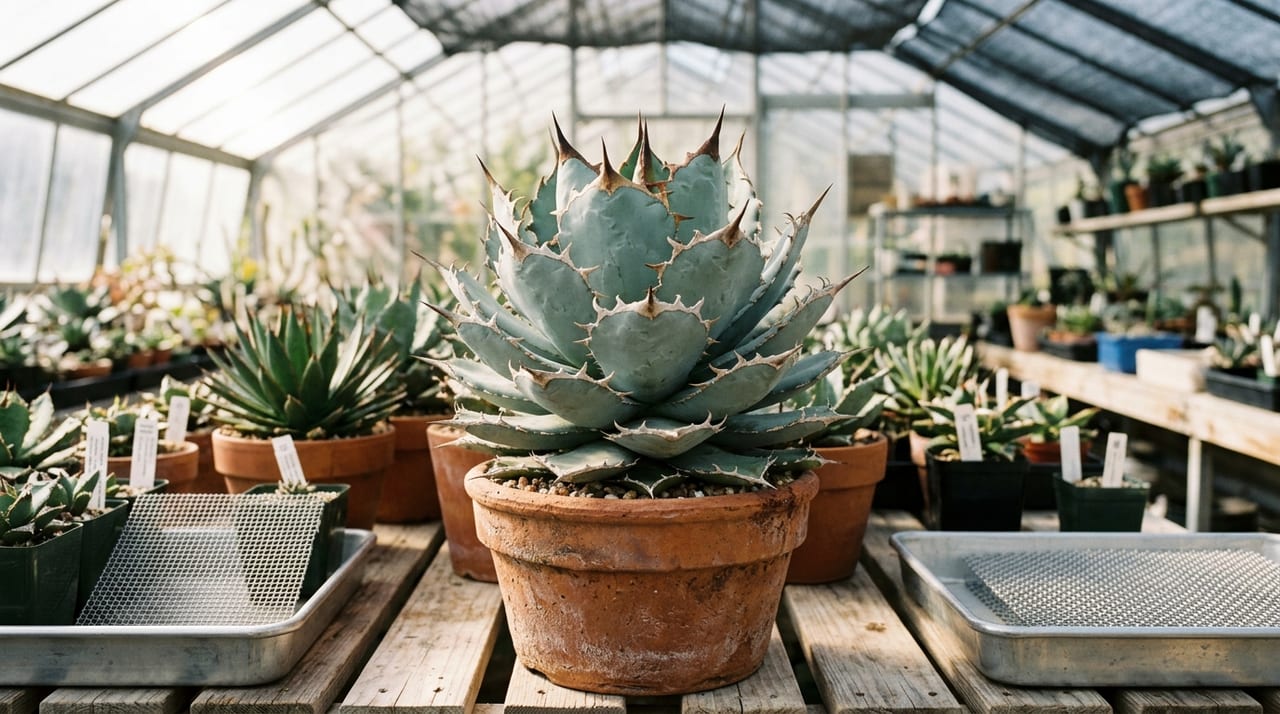
Key Takeaways
Peak summer agave care relies on 20–30% shade cloth and evening watering (5–7 PM). Learn how to prevent leaf scorch from direct sun and west-facing light, when to begin shading, optimal watering frequency and timing, and ventilation strategies to prevent rot in Japan's hot, humid summers.
Agave's Heat Tolerance Can Be Deceiving | Understanding Japan's Unique Summer Climate
Agave is a succulent native to arid regions of Mexico and the southwestern United States, prized for its robust resilience to intense direct sunlight and drought. However, trusting their reputation for heat tolerance without proper care can lead to painful failures during Japan's summers.
Japan's summer differs fundamentally from agave's native habitat in one crucial way: simultaneous high temperatures and high humidity. The Mexican Plateau's summer brings high temperatures but dry air, with nighttime temperatures dropping significantly. In contrast, Japan's Pacific side maintains high humidity even after the rainy season ends, with warm, muggy nights that offer little relief. This environmental difference is the core challenge of summer agave cultivation.
Additionally, acclimatization is a critical step when moving plants from indoor or greenhouse conditions to outdoor settings. Even heat-tolerant plants cannot adapt to abrupt environmental changes. The basic protocol is: Week 1—manage in bright shade or under shade cloth; Week 2—expose to direct morning sun only; Week 3 onward—gradually increase direct sun exposure. Skipping this process and moving a plant directly to full balcony sun can cause severe leaf scorch—white, charred-looking damage—within hours, leaving permanent marks. Those new to agave cultivation may also find the Agave Buying Guide helpful.
Shade Cloth Guidelines | Variety-Specific Adjustments Matter
During peak summer (July–August), most agaves benefit from approximately 20–30% shade cloth. West-facing afternoon sun is particularly problematic. Morning east-facing light is relatively gentle, whereas afternoon west-facing sun is both intense in brightness and heat, creating focal leaf scorch that blanches leaf tissue. Using shade cloth or moving pots to shade during afternoon hours is a practical solution.
However, excessive shade causes agaves to etiolate. Leaf spacing becomes elongated, and the compact rosette form deteriorates. Use only the minimum shade necessary, and adjust flexibly—remove shade cloth on cloudy days, for example.
Shade Cloth Guidelines by Variety
- Titanota, Horrida, Parviflora, and similar: Relatively tolerant of direct sun; minimal shade cloth (10–20%) often suffices.
- Variegated varieties like Kichijoji-kan-nishiki and Ouhi-Raijin-nishiki: With reduced chlorophyll, they're prone to scorch and benefit from 30–40% shade cloth.
- Thin-leafed and fine-leafed types like Attenuata and Geminiflora: Sensitive to intense light; partial shade is advisable during summer.
- Waxy-leafed varieties (e.g., Fillifera): The white powdery bloom on leaves acts as natural sun protection. Avoid washing it away during watering.
For more detailed descriptions and comparison of popular agave varieties, see the Agave 100 Varieties Identification Guide.
Watering Timing and Volume | Alternating Wet and Dry Is Essential
For summer agave, the golden rule is to water in the evening (5–7 PM) or later. Watering during the day when soil temperature is elevated creates sauna-like conditions that damage roots. Watering in the evening allows roots to absorb moisture during the cool night hours.
Water thoroughly until it drains from the pot's base. Frequent shallow watering keeps roots confined to the soil surface, weakening the plant's drought and heat tolerance. After thorough watering, allow soil to dry completely before the next watering. This wet-dry cycle is key to keeping agaves healthy.
Checking Soil Moisture
The most reliable way to check dryness is to lift the pot and feel its weight. If it feels noticeably lighter than immediately after watering, the soil moisture has dissipated. Until you develop the feel, insert a wooden stick or chopstick into the pot's center; if soil doesn't cling to it when removed, the medium is dry.
During intense heat waves, pots may dry in 2–3 days, requiring watering 2–3 times weekly. Conversely, during the rainy season or prolonged wet spells, reduce watering to prevent rot.
Air Circulation Prevents Root Rot | The Humidity Control Foundation
Japan's high summer humidity is agave's greatest enemy. Poor air circulation leads directly to root rot, and by the time it's detected, the plant's core may already be compromised. Ensuring adequate air circulation is the single most critical summer survival measure.
For outdoor plants, positioning in naturally breezy spots is ideal; in still-air locations, use a fan or air circulator to create artificial airflow. This is especially critical for indoor setups. Stagnant air allows pot temperature and humidity to rise, dramatically increasing root rot risk.
Choosing Pots and Soil Mix
- Terracotta or slotted pots: High porosity aids water evaporation, ideal for preventing summer rot.
- If using plastic pots: Choose those with large drainage holes and compensate with a draining-focused substrate.
- Soil composition: Prioritize drainage with a mix centered on pumice, volcanic ash, and fine red lava rock, minimizing organic matter. If using commercial cactus/succulent mixes, amend with 30% additional pumice.
Spacing between pots is an often-overlooked factor. Crowding pots traps stagnant air, promoting rot. Maintain adequate spacing appropriate to plant size.
Summer Fertilization and Growth Management | Leveraging the Growth Season
Agaves are summer-active plants with peak growth from spring through summer. Strategic fertilization during this period encourages robust leaf development and offshoot production.
Diluted liquid fertilizer every two weeks or granular slow-release products (e.g., Magamp K) are practical options. Over-fertilizing causes leaf elongation and form degradation; apply 50–67% of recommended rates. Variegated varieties, with reduced chlorophyll, absorb nutrients less efficiently and are sensitive to excess fertilizer. For detailed fertilization strategies, see the Agave Fertilization Guide.
Plant Condition Checklist
| Sign | Likely Cause |
|---|---|
| New leaves unfurling continuously | Healthy growth underway |
| New leaf emergence slowed or stopped | Possible root-bound, root rot, or underwatering |
| Lower leaves suddenly yellowing or softening | Suspect root rot; investigate immediately |
| Leaves becoming wrinkled | Underwatering; apply thorough watering |
| Leaves turning white/charred | Leaf scorch; apply shade cloth or relocate |
As summer ends (late September onward), growth slows with declining temperatures. Begin reducing watering frequency and transition to winter dormancy management. For cold-season care, consult the Agave Cold Hardiness and Winter Dormancy Guide.
Summary | Discover Premium Agaves on GrowerDirect
The five essential points of summer agave care are: acclimatization, shade cloth, evening watering, air circulation, and rot prevention. Neglecting any one of these risks plant weakening or root rot.
A common beginner mistake is overconfidence in agaves' heat tolerance. Correctly understanding agave resilience and adapting care to Japan's hot, humid summers is the foundation of cultivating beautiful specimens.
On GrowerDirect, you can purchase agaves directly from expert growers who specialize in them. We offer a wide range, from beginner-friendly varieties to rare, collector-grade specimens, and you can consult directly with growers about post-purchase care. Sourcing plants from specialists who intimately understand each variety's needs ensures a confident start to your agave journey. Find your perfect agave on GrowerDirect today.