Choosing the Right Pot for Agave and Soil Mix Recipes | Prioritizing Drainage
We introduce optimal pot materials and sizes for agave, plus multiple drainage-focused soil mix recipes.
Key Takeaways
We introduce optimal pot materials and sizes for agave, plus multiple drainage-focused soil mix recipes.
In agave cultivation, the choice of pot and soil are critical factors that significantly influence plant health and growth. Especially in Japan's hot and humid climate, a soil mix that prioritizes drainage is key to preventing root rot.
Choosing Your Pot
Differences by Material
Plastic pots are lightweight, affordable, and have slightly higher water retention. Since agave prefers dryness, when using plastic pots, you should compensate by formulating the soil mix with enhanced drainage. Black plastic pots risk getting too hot inside during summer, so white or lighter-colored plastic pots are preferred.
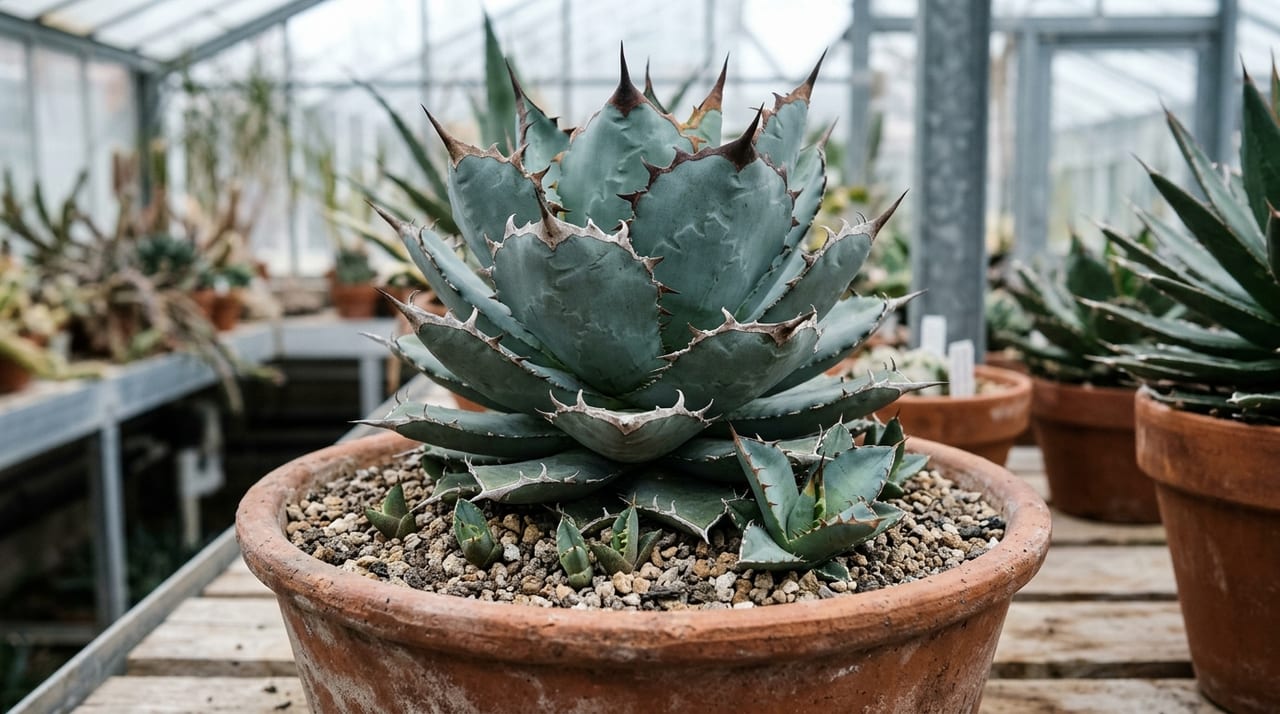
Terracotta pots excel in breathability and drainage, making them the best-suited material for agave. Water evaporates from the pot walls, which helps prevent excess moisture. However, they are heavy, and moving large plants can be difficult.
Slit pots have slits cut into the bottom and sides. They prevent root circling, where roots continuously grow in circles inside the pot, and offer exceptionally high drainage. Though they appear plain, they are one of the most practical pot choices for agave.
Choosing the Right Size
A pot roughly the same diameter as the agave's rosette, or slightly larger, is appropriate. Pots that are too large hold too much soil and dry more slowly, increasing root rot risk. Agave tends to form tighter, more compact growth when slightly root-bound, so it's best not to give it too much extra space.
Pot Depth
Most agave have thick taproots, so a pot with adequate depth is preferable. Choose a standard or slightly deeper pot rather than a shallow, wide pan.
Basic Principles of Soil Mix Composition
The most important aspect of an agave soil mix is drainage. Poor drainage easily causes root rot, and the risk is especially high during Japan's rainy season and summer months.
Ideal soil conditions
- Water flows rapidly out of the drainage hole when watered
- Soil dries within a short timeframe (2–3 days is ideal)
- Adequate nutrient retention
- pH in the slightly acidic to neutral range (approximately 6.0–7.0)
Recommended Soil Mix Recipes
Recipe 1: Standard Mix (For Beginners)
- Akadama (small grain) 3 : Hyuga soil (small grain) 3 : Pumice (small grain) 2 : Perlite 1 : Charcoal 1
- A well-balanced, hard-to-fail recipe. A versatile formula suitable for most agave species.
Recipe 2: Ultra-Drainage Mix (For Advanced Growers / Humid Environments)
- Hyuga soil (small grain) 4 : Pumice (small grain) 3 : Perlite 2 : Zeolite 1
- An entirely inorganic mix with no organic matter. Recommended for poorly ventilated areas like apartment balconies or for those concerned about management during the rainy season. Nutrient retention is low, so liquid fertilizer supplementation is necessary.
Recipe 3: Seedling Mix
- Akadama (fine grain) 4 : Vermiculite 3 : Perlite 2 : Charcoal 1
- A mix with somewhat higher water retention. Seedlings are less drought-tolerant than mature plants, so this balances water retention with drainage.
Recipe 4: Large Plant Mix
- Hyuga soil (medium grain) 3 : Akadama (medium grain) 3 : Pumice (medium grain) 2 : Perlite 1 : Charcoal 1
- Medium-grain particles ensure good drainage even in large pots. Suitable for repotting large plants with thick roots.
Guide to Soil Materials
Akadama Processed granulated soil from the Kanto loam layer. It offers a good balance of water retention and drainage, and is a foundational soil in horticulture. Hard-fired akadama resists breakdown and lasts longer, making it recommended.
Hyuga Soil A porous, pumice-like soil from Miyazaki Prefecture. It is extremely excellent for drainage and resists breakdown. It is the most popular soil material among agave enthusiasts.
Pumice A porous material made from crushed volcanic rock. Excellent drainage and aeration. Sometimes used as a substitute for Kanuma soil.
Perlite A lightweight white material made from heat-treated perlite ore. Improves drainage and aeration. Its downside is that it floats easily during watering.
Charcoal (Rice Hull Charcoal) A material made from carbonized rice hulls. It has soil sterilization and pH-adjustment effects. Keep the proportion to about 10% of the total mix.
Zeolite A natural mineral with ion-exchange capacity. It increases nutrient retention and helps prevent root rot.
About Drainage Material
It is standard practice to add drainage material to the bottom of an agave pot. Use medium to large pumice pieces, filling about 10–20% of the pot's depth. This drainage layer prevents water from pooling at the bottom.
Advanced Technique: Adjusting Mix by Season
As your skills advance, you can fine-tune your soil mix composition in response to seasonal and environmental changes.
During the rainy season through summer (June–August), moisture and heat stress is at its peak. When repotting during this period, increase the proportion of pumice or perlite by 10–20% compared to your standard mix to maximize drainage. In poorly ventilated areas like apartment balconies, the ultra-drainage mix proves especially effective at preventing root rot. If leaves get damaged during repotting, How to Handle Agave Leaf Damage, Burn, and Breakage offers reliable remedies.
During winter (November–February), growth slows and the soil dries more slowly. When repotting in autumn, using a slightly more drainage-focused mix than your summer formula reduces winter overwatering risks.
Regarding soil reuse, hard-fired akadama and hyuga soil can be washed and reused if not broken down. However, discard soil that has undergone significant organic decomposition or was used for plants with root rot. When reusing, it's safe to sterilize with boiling water first.
To reduce soil costs, buying akadama, pumice, or kanuma in large bags (14L–) from a home improvement store is recommended. The per-unit cost is roughly one-third that of small pre-packaged amounts, and you can freely experiment with your own preferred mixes.
Storing and Managing Soil Long-term
Soil quality degrades if not stored properly.
Unused soil should be stored in tightly sealed vinyl bags in a cool, dark place away from direct sunlight. Once opened, soil absorbs moisture and deteriorates, so ideally use it within one season. For large-bag purchases, transferring to a sealed container preserves quality longer.
Reusing previously-used soil: Hard-fired akadama, hyuga soil, and pumice can be reused if not broken down—rinse them, dry in the sun, and they're ready to go. However, always discard soil from plants that had disease or root rot. For reuse, hot water sterilization or microwave heating is a safe option.
Cost-saving tips: Buying akadama, pumice, or kanuma in large bags (14L–) from a home improvement store costs roughly one-third of small pre-packaged amounts. Collectors who repot frequently find large-bag purchases worthwhile. Pre-mixing batches of your chosen formula and storing them ready-to-use saves time at repotting.
Start Growing Agave with GrowerDirect
GrowerDirect's agave growers have deep expertise from years of experience and understand the optimal soil mixes well. When purchasing, you can ask for soil advice tailored to your specific environment. Raising healthy plants in proper soil is the shortest path to beautiful agave.