Complete Guide to Agave Packing & Shipping|Safe Shipping Methods for Bare-Root & Rooted Plants and Material Selection
Explains packing methods for safe agave shipping on flea-market apps and online shops. Covers protection techniques for both bare-root and rooted plants, material selection for leaves and spines, box selection, shipping carrier differences, and seasonal precautions in practical terms.
Key Takeaways
Explains packing methods for safe agave shipping on flea-market apps and online shops. Covers protection techniques for both bare-root and rooted plants, material selection for leaves and spines, box selection, shipping carrier differences, and seasonal precautions in practical terms.
Why Is Agave Shipping Difficult?
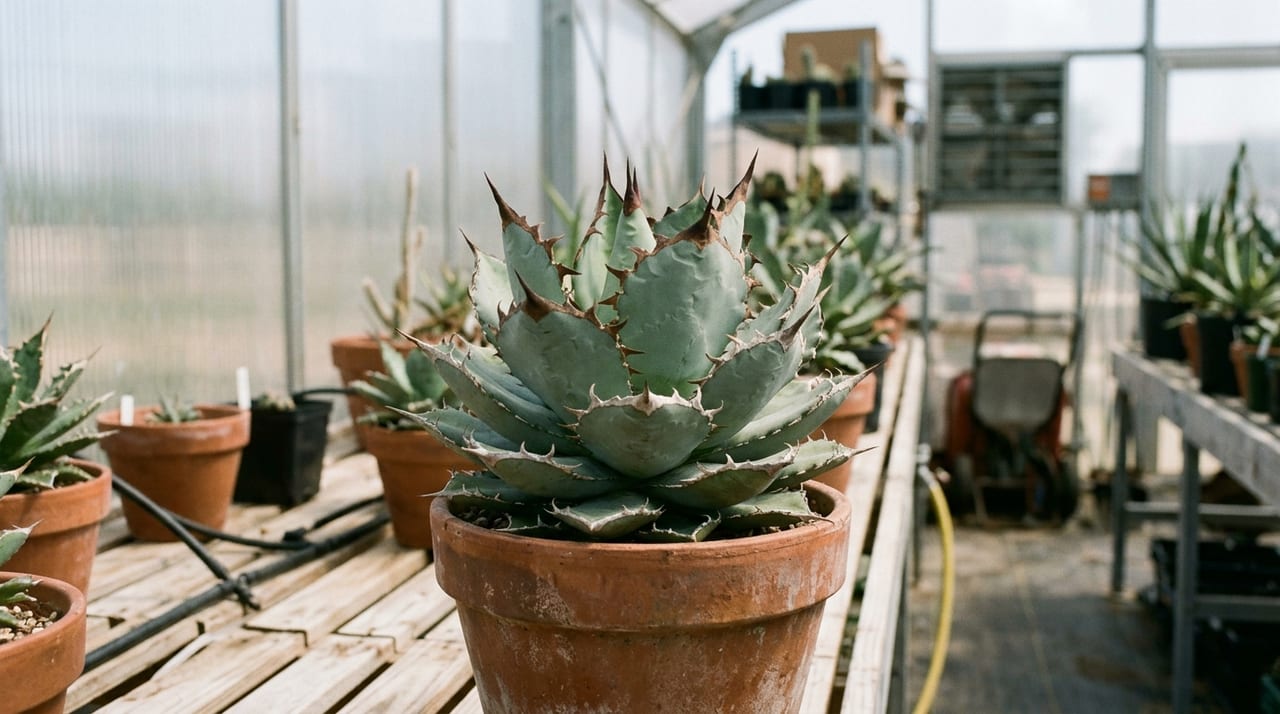
Agave has sharp serrated edges and thick leaves, with characteristics quite different from typical houseplants. While trading through flea-market apps and online shops has expanded, troubles persist upon arrival—spines broken, leaves torn, and newly developing roots crushed. Vibration and pressure during transport are greater than imagined, and careless packing almost always results in damage.
Agave is often perceived as a "strong plant," but shipping stress is a different matter. If the center of the rosette is pressed and deformed, it will not return to its original shape, and chipped serrated edges remain permanently. To deliver the plant in a condition that satisfies the recipient, careful packing with step-by-step protection is essential. If you want to minimize mistakes in plant selection before purchase, please also refer to Agave Buying Guide|Differences Between Seedlings, Imports, and Offsets and How to Choose.
This article systematically compiles practical knowledge on packing procedures suited to both bare-root and rooted plants, as well as how to choose by season and shipping method.
Packing Procedures for Bare-Root Plants
Preliminary Preparation
Bare-root plants have exposed roots, so there is less stress on the plant body and a smaller box can be used—these are advantages. Complete the following before shipping.
- Wash the roots clean and remove dead or damaged portions
- Allow cut surfaces to dry and treat with fungicide as needed
- Wipe off soil and residual chemicals from the leaves
- Withhold water until the day before shipping to lighten the plant
Protecting the Root Base
It is common to lightly wrap the roots in paper towels or newspaper and add a pinch of slightly moistened sphagnum moss for water retention. If moisture is excessive, rot risk increases during transit, so keep it to a "moist" level.
Wrap lightly with plastic wrap or a plastic bag and secure with masking tape. The junction between root and leaf (caudex) is critical in agave, so the trick is not to wrap too tightly so as not to crush it. If you also want to look ahead to rooting management after arrival, it is reassuring to also check Rooting Management Manual for Imported Agave|Rescue Techniques for Bare-Root Plants.
Protecting Leaves and Serrated Edges
The sharp serrated edges at the leaf tips have the power to pierce packing materials themselves. Wrapping in the following order is safe.
- Cover the entire rosette with thin tissue or paper towels
- Wrap with bubble wrap on top. Lay it so the serrated edges align in one direction
- Lightly fill between leaves with newspaper to prevent crushing the center
For Agave titanota and similar varieties with particularly sharp serrated edges, placing small paper scraps over the leaf tips provides extra safety.
Packing Procedures for Rooted Plants (Potted)
For rooted potted plants, all three elements—the root ball, pot, and plant body—must be protected.
Preventing Soil Spillage
Cover the pot surface with plastic wrap or stretch film to prevent soil from shifting. Soil easily spills from the drainage hole at the pot bottom, so also place wrap there and secure with a rubber band. If the soil mix is primarily pumice and flows easily, placing a layer of newspaper on the surface before wrapping with plastic is effective.
Securing the Pot
If the pot moves inside the box, the rosette receives direct damage. Fill the gap between the box sides and the pot with cushioning made from rolled bubble wrap or newspaper to minimize empty space. If the pot is laid on its side, the soil collapses, so generally choose a box size that maintains vertical placement.
Protecting Leaves
As with bare-root plants, covering the rosette is essential. For rooted plants, ensure space at the top of the box so leaf tips do not touch the box lid. If they touch, abrasion will inevitably occur from vibration during shipping.
Choosing Boxes and Selecting Shipping Carriers
How to Choose a Box
For agave, "tall boxes" with generous depth and height are highly valued. Using the rosette diameter + 5 cm for width and total plant height + 10 cm for height as a guide ensures adequate space. Boxes that are too large allow movement inside and have the opposite effect, so aiming for a snug fit is the golden rule.
Characteristics by Shipping Carrier
- Yamato Transport: Handles packages carefully with excellent tracking. A standard choice
- Sagawa Express: Strong in large shipments and suited for shipping large plants
- Japan Post Pack: Good balance of compensation and shipping cost; popular for small to medium plants
Regardless of carrier, always apply "Fragile" and "Do Not Flip" stickers. Flipping the package upside down alone can cause fatal damage to spines and roots, so do not skip this step.
Seasonal Considerations
Summer (June–September)
Long-distance transport in high-temperature environments causes moisture buildup. Choose early in the week for shipping and avoid shipments that span the weekend. If possible, choose standard shipping rather than cooled delivery, and opening small ventilation holes in the box provides peace of mind. Avoid watering immediately before shipping.
Winter (December–February)
Most agave species suffer cold damage below 5°C. For shipments to regions with freezing risk, heat-pack insulated packing is effective. Position heat packs away from the plant body and prevent direct contact with leaves. For deep winter shipments, try to avoid cold wave periods and consult with the recipient on scheduling before shipping.
Communication to Reduce Problems
As important as packing technique is prior communication with the buyer. By communicating the expected shipping date, post-arrival opening procedures, and contact methods in case of problems, many complaints can be prevented. Providing photo guidance saying "We ship with this type of packing" increases the recipient's confidence. It is more considerate to ask them to open immediately upon arrival and monitor for a few days as if managing rooting. If roots are damaged upon arrival, it is also good to direct them to Agave Root Rot Treatment and Prevention|Early Detection and Rescue Procedures.
Conclusion
If you approach agave packing from the perspective of protecting four elements—leaves, serrated edges, roots, and pot—there is no confusion. Do not scrimp on materials, choose appropriately sized boxes, and add seasonal measures. Following these basics alone prevents most shipping problems.
Take care with packing so that plants you have lovingly grown reach their next caretaker in beautiful condition.