Complete Guide to Algae Control in Planted Aquariums | Causes, Prevention & Removal Methods
Types of algae (algae) that develop in planted tanks and their countermeasures. Explains removal methods by cause for green algae, black beard algae, cyanobacteria, and diatoms, utilization of algae-eating organisms, and management of water quality and light intensity for prevention.
Key Takeaways
Types of algae (algae) that develop in planted tanks and their countermeasures. Explains removal methods by cause for green algae, black beard algae, cyanobacteria, and diatoms, utilization of algae-eating organisms, and management of water quality and light intensity for prevention.
Related Species
Algae Growth Is a Signal From Your Tank—Learn to Read It Correctly
When you enjoy a planted aquarium, you will almost inevitably face the problem of "algae (algae growth)." Glass panes turn green, driftwood sprouts black whiskers, and substrate becomes covered with a blue-green slime…. Many aquarists have experienced such scenes.
However, algae growth is not entirely a bad thing. Rather, it should be understood as "a signal that your tank is trying to communicate something about its condition." If you can correctly identify the type of algae and eliminate its root cause, you can restore your aquarium to its former beauty with aquatic plants as the star. This article provides a systematic explanation of the characteristics, causes, and countermeasures for each type of algae.
Know the Main Types of Algae and Their Growth Causes
Green Algae
The most common type of algae, it attaches to glass panes, substrate, driftwood surfaces, and virtually every corner of the tank. The causes are most often excessive light and nutrient overload. When nitrogen and phosphate concentrations remain high in the water, algae flourishes vigorously. Since small amounts can occur even in a healthy tank naturally, it is important to focus on control rather than aiming for complete elimination.
Black Beard Algae
Black to gray whisker-like algae that densely attaches to the cut surfaces of driftwood and leaf edges of aquatic plants. It tends to develop when there is insufficient CO₂ concentration or sudden shifts in KH (carbonate hardness), and from strong water currents from filter outlets. Once established, it becomes extremely stubborn and is scarcely eaten by shrimp, earning it the reputation among aquarists as "the most troublesome algae."
Cyanobacteria
Blue-green, slimy film-like algae characterized by a distinctive musty or putrid odor. Technically a type of bacterium, it rapidly increases when poor substrate permeability or accumulation of nitrates and phosphates creates anaerobic conditions. Because it is noticeable not just by appearance but also by odor, early detection is crucial.
Diatoms
Brown, fine powdery algae commonly seen in newly established tanks. It tends to appear due to water supply containing high levels of silicates or periods when filter bacteria have not yet colonized. As the tank stabilizes, it usually subsides naturally, making it relatively easy to manage.
Effective Removal Methods by Algae Type
Dealing With Green Algae
- Shorten lighting duration to 6–8 hours per day and manage with a timer
- Perform water changes 1–2 times per week to dilute nutrients
- Physically remove algae with scrapers or algae-removing magnets
- Adjust fertilizer dosage to match the growth rate of aquatic plants
- Cultivate fast-growing stem plants like Cabomba or Hornwort to absorb excess nutrients in the water before algae can
Dealing With Black Beard Algae
- Review CO₂ dosage and create an environment where aquatic plants can photosynthesize actively
- Adjust filter outlet direction to avoid direct contact with areas where algae is developing
- Apply undiluted wood vinegar with a cotton swab to the affected area, wait a few minutes, then rinse thoroughly (dry method)
- Temporarily remove affected driftwood or stones from the tank for treatment—this is the safest approach
Dealing With Cyanobacteria
- Stir substrate with a thin pipe or pipette to improve water permeability
- Complete light exclusion for 3 days (cover the tank with cardboard or black vinyl bags) to rapidly reduce numbers
- Removal by shrimp or snails is ineffective, so direct removal with a pipette or tweezers is more reliable
- Combine light exclusion with water changes and substrate cleaning
Dealing With Diatoms
- If the tank is newly established, observe and wait for natural resolution
- Remove algae from glass with a scraper and discard it along with the siphoned water
- Accelerate resolution by increasing filtration capacity (upgrading filter grade or using bacterial supplements)
Using Algae-Eating Organisms Effectively
Biological removal is a powerful way to suppress algae with minimal effort. However, since different organisms excel at different types of algae, it is important to select based on the type of algae that has developed.
| Organism | Specializes In | Cautions |
|---|---|---|
| Yamato Amano Shrimp | Filamentous algae & green algae generally | May eat new shoots of aquatic plants |
| Red Cherry Shrimp | Soft green algae & bacterial films | Capability is more modest than Yamato shrimp |
| Otocinclus | Diatoms and green algae on glass | May starve if algae disappears |
| Siamese Flying Fox | Black beard algae & filamentous algae | May stop eating algae once they reach full size |
| Japanese Mystery Snail | Algae on glass and rock surfaces | Prone to escape; a tank lid is essential |
By combining multiple organisms, you can address a wider range of algae. However, overcrowding can degrade water quality and actually increase algae, so introduce only as many organisms as your tank size can support.
Water Quality and Light Management to Prevent Algae Recurrence
Prevention is just as important as removal. By adhering to the following basic management practices, you can maintain an environment where aquatic plants consume nutrients before algae becomes dominant.
- Lighting Management: Base it on 6–8 hours per day and always use a timer. Avoid placing the tank where direct sunlight reaches it
- Water Changes: Perform weekly, changing 20–30% of the water volume. Continuously diluting nitrates and phosphates is the foundation of algae suppression
- Fertilizer Adjustment: Excessive liquid or solid fertilizers provide surplus nutrients that algae can feed on. Observe plant growth rate and adjust gradually in small amounts
- CO₂ Addition: Promotes photosynthesis in aquatic plants and allows them to consume nutrients efficiently, giving them the competitive edge over algae
- Filter Maintenance: Rinse filter media once every 2–4 weeks to prevent flow reduction from clogging
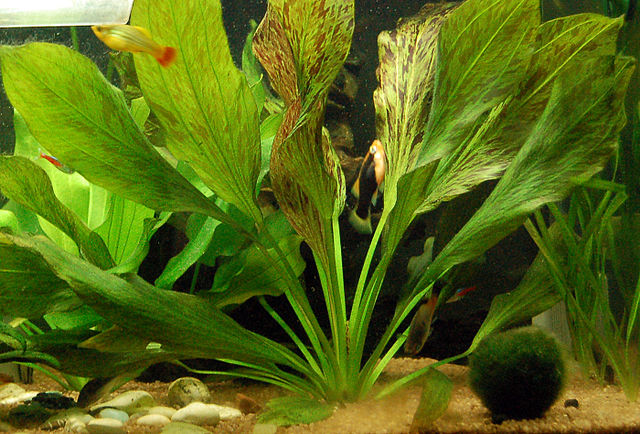
- Using Root-Feeding Aquatic Plants: Incorporating strong-rooting plants like Echinodorus that directly absorb nutrients from the substrate into your layout makes it easier to prevent substrate eutrophication
Rather than aiming for zero algae, prioritize creating an environment where aquatic plants can thrive. When plants are growing vigorously and photosynthesizing actively, the space for algae to spread naturally shrinks.
Summary
The essence of algae control is not "killing algae alone" but "correcting the conditions that favor algae growth." By balancing light, nutrients, CO₂, water flow, and organisms, you achieve a healthy tank where aquatic plants are dominant.
Especially if you are new to algae problems, start by identifying "which type of algae it is." By narrowing down the type using appearance, color, texture, and location as clues and cross-referencing with the causes and countermeasures introduced in this article, you should be able to resolve it efficiently.
Battling algae is a milestone that all aquarists experience. By persisting in your engagement with your tank, you will find the path to a beautiful planted aquarium layout.