The Difference Between Imported Caudex Plants and Domestically-Grown Seedlings | Points for Choosing
An explanation of the merits and demerits of imported caudex plants and domestically-grown seedlings, points for choosing between them, and differences in management.
Key Takeaways
An explanation of the merits and demerits of imported caudex plants and domestically-grown seedlings, points for choosing between them, and differences in management.
When acquiring a caudex plant, many enthusiasts struggle with the choice between an "imported specimen" and a "domestically-grown seedling." Each has its own merits and demerits, and choosing the right one for your purpose and experience level is essential.
Characteristics of Imported Specimens (Wild-Collected)
Imported specimens are plants collected from their native habitats in Madagascar and Africa where they have been growing for many years, then imported to Japan. They are also called "wild-collected specimens."
Merits
- The unique form created by nature (irregular trunk thickening, branch structure) is the greatest appeal
- Wild-collected plants that have taken years to develop possess a presence and character that seedlings cannot match
- Large specimens can be obtained at sizes that would take decades to achieve through seedling cultivation
- Highly valued by collectors and enthusiasts
Demerits
- Requires root development management (in the case of bare-root plants)
- Risk of failure to develop roots
- Possibility of internal rot or hidden pests
- Stress while adapting to the Japanese environment
- Tends to be expensive
- Some species are regulated under the Convention on International Trade in Endangered Species (CITES), requiring acquisition through legitimate channels
Characteristics of Domestically-Grown Seedlings
Domestically-grown seedlings are plants raised from seed in Japan. In recent years, more growers are taking on the challenge of cultivating caudex seedlings.
Merits
- Already adapted to Japan's climate from the start, making them easier to manage
- Roots are well-established when received, eliminating the need for root development management
- You can obtain cultivation history and parent plant information directly from the grower
- No concerns about CITES restrictions
- Generally more affordable than imported specimens
- Clear provenance, having been grown from seed
Demerits
- Lack the wild, untamed form characteristic of wild-collected specimens
- Reaching large sizes takes time
- Large individual variation among seedlings (which can also be a merit)
- Supply of popular cultivars may be limited
Differences in Form
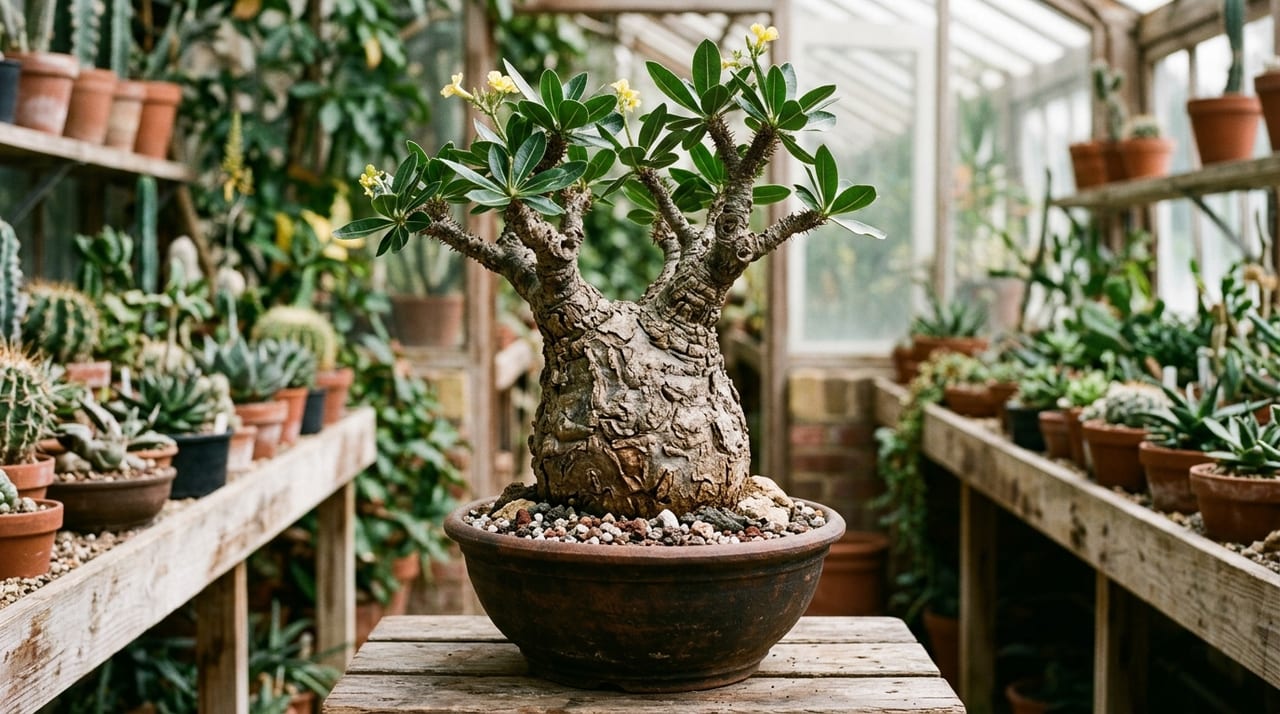
Form of Imported Specimens Grown in harsh natural environments (drought, intense sunlight, wind, herbivory), the trunk develops irregularly, marked by scars and lumps that create a distinctive appearance. The round, sturdy form that wild-collected Gracilius specimens possess is difficult to replicate in greenhouse cultivation.
Form of Domestically-Grown Seedlings Growing in a stable environment, the trunk tends to thicken uniformly and smoothly. However, with thoughtful management practices, it is possible to develop somewhat wild forms. Restricting roots in shallow pots or creating contrast between intense light and watering schedules can result in well-developed specimens.
Differences in Management
Management of Imported Specimens Root development management is the first hurdle. Even after successful rooting, careful management is necessary for 1-2 years while adapting to the Japanese environment. Avoid sudden environmental changes, adjusting light, water, and temperature gradually.
Management of Seedling Specimens Already adapted to Japanese conditions when purchased, they can be grown using standard caudex plant care methods. Young specimens are less drought-tolerant than mature plants, so watering frequency should be slightly higher.
Points for Choosing
For Beginners Starting with domestically-grown seedlings is strongly recommended. There is no risk of root development failure, and management is relatively straightforward. After becoming familiar with caudex cultivation, tackling bare-root imported specimens is the safe approach.
For Collectors It is wise to use both types depending on your purpose. Display specimens can be impressive wild-collected plants, while everyday plants can be easier-to-manage seedlings.
From an Investment Perspective High-quality wild-collected specimens tend to appreciate due to their rarity, though market prices fluctuate. Well-maintained seedlings also increase in value over time, so enjoying them with a long-term perspective is recommended.
Common Mistakes Beginners Make and How to Avoid Them
Mistake 1: Thinking of seedlings as "inferior" Seedlings grown in Japan's climate from germination to maturity already have the greatest advantage: adaptation to local conditions. While they may lack the dramatic form of wild-collected plants, the probability of successfully growing them without loss is clearly higher with seedlings.
Mistake 2: Keeping wild-collected specimens indoors in dim light Wild-collected specimens grew under intense sunlight. Placing them in weak indoor light immediately after import causes excessive stem elongation and poor plant shape. After rooting, provide strong light outdoors or under LEDs, stronger than what seedlings typically need.
Mistake 3: Applying the same care to both types Seedlings have fine roots that absorb water quickly, so early watering after the soil dries is appropriate. In contrast, wild-collected plants have thick but sparse roots and are sensitive to overwatering, so watering at the same frequency can damage roots. Developing the habit of judging by pot weight allows you to respond appropriately to both types.
Find Your Caudex Plant on GrowerDirect
GrowerDirect connects you directly with growers who specialize in domestically-grown seedlings and those who handle legitimately imported wild-collected specimens. Because you can verify the plant's provenance and management methods directly with the grower, you can choose with confidence. Whether you are a beginner or an experienced collector, find your ideal specimen on GrowerDirect.