Cymbidium Flower Bud Differentiation and Temperature | The Mechanism of Nighttime Low Temperature Inducing Flower Bud Formation and Winter Management Practices
Explaining the mechanism of nighttime low temperatures required for Cymbidium flower bud differentiation, and practical methods for autumn temperature management and winter care.
Key Takeaways
Explaining the mechanism of nighttime low temperatures required for Cymbidium flower bud differentiation, and practical methods for autumn temperature management and winter care.
Related Species
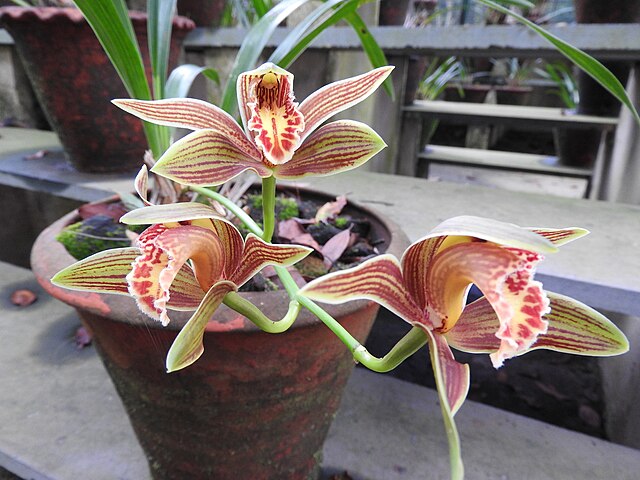
Cymbidium is a perennial orchid native to Southeast Asia, South China, and the Himalayan foothills, where it grows as an epiphytic orchid. Hardy and relatively cold-tolerant, it is known in Japan as the most widely cultivated orchid among tropical orchids. From autumn through winter, it produces magnificent flower spikes bearing 10–20 flowers per spike that bloom continuously over an extended period. However, to ensure reliable flowering every year, it is essential to correctly understand the mechanism of "flower bud differentiation" and practice appropriate temperature management.
Mechanism of Flower Bud Differentiation
Cymbidium flower bud differentiation is a physiological phenomenon induced by "nighttime low temperature response." When the nighttime minimum temperature continuously drops to approximately 8–15°C, the tissue near the base of the pseudobulb begins to convert from "leaf bud" to "flower bud." This process is called "flower bud induction."
The conditions for flower bud induction are as follows.
- Responsive period: In Japan's climate, generally mid-September through late November
- Daytime temperature: There is no problem even at around 25°C
- Nighttime minimum temperature: Continuous exposure to low temperatures of 8–15°C is an essential condition
- High temperature risk: If nighttime temperatures consistently exceed 20°C, flower bud differentiation will not occur, and flowering cannot be expected regardless of how carefully the plant is managed throughout the year
- Low temperature risk: In frost-prone zones where temperatures drop well below 3–5°C, roots and leaves suffer damage
Therefore, the optimal nighttime temperature range is narrowed to a relatively narrow band of 8–15°C. Placing this "flower bud induction zone" at the center of autumn temperature management is the biggest key to achieving flowering every year.
Practical Outdoor Management
The most reliable method for inducing flower buds is to place plants outdoors from September through November and expose them to natural autumn nighttime temperatures. In most regions of Japan, this method alone naturally induces flower bud differentiation. Key points for outdoor management are as follows.
- Daytime: Ensure sufficient sunlight to build up the pseudobulbs
- Nighttime: Maximize the use of natural low temperatures and day-night temperature difference
- Timing for moving indoors: Bring plants indoors before frost occurs (before the minimum temperature drops to around 5°C). Exposing roots to sudden cold causes freezing damage that will affect the following year's growth; it is recommended to check your region's first frost forecast and begin indoor protection with ample margin
- Urban areas such as apartments: Nighttime outdoor air temperature is relatively high, and balcony nighttime temperatures may exceed 20°C on certain days. In such cases, temporary relocation to a cool north-facing balcony or a higher altitude location is also effective
Temperature Control in Greenhouses and Indoors
When managing plants in a greenhouse or indoors, heaters and heating equipment often raise nighttime temperatures excessively. During the flower bud differentiation period (September–November), it is ideal to keep the nighttime temperature set to 8–12°C and maintain the daytime temperature at around 15–20°C. In vinyl greenhouses, using ventilation openings to take in cool night air and leveraging natural low temperatures is an effective management approach.
In greenhouses with heating equipment, use timers or thermostats to limit nighttime heating. Especially after October, "not overheating" is the golden rule; if the minimum temperature does not drop below 5°C, many plants can overwinter in a simple unheated vinyl greenhouse.
Flower Bud Confirmation and Care After Discovery
When flower bud differentiation succeeds, small buds with rounded tips appear near the base of the pseudobulb around November–December. The way to distinguish flower buds from leaf buds is as follows.
- Flower buds: Appear around November–December as small buds with rounded tips near the base of the pseudobulb
- Leaf buds: Pointed in shape and extend upward
For this reason, distinguishing them from the rounded flower buds is relatively easy.
Once flower buds are confirmed, avoiding sudden temperature fluctuations and dryness becomes the top priority. Moving the plant near heating vents or exposing it to sudden high temperature environments causes "blast" disorder, in which flower buds turn yellow and drop. After confirming flower buds, switch to indoor management, maintaining 8–12°C at night and 15–20°C during the day, allowing you to enjoy extended flowering from January through April.
Fertilizer and Water During the Flower Bud Formation Period
Points on fertilizer and water during the flower bud formation period (September–November) are as follows.
- Fertilizer: Apply fertilizer centered on phosphorus and potassium, with reduced nitrogen, 1–2 times per month. Excess nitrogen risks prioritizing leaf growth over flower bud formation. Using "flowering promotion type liquid fertilizer" or "P·K enhanced fertilizer" makes fertilizer adjustment easier
- Watering: During the flower bud induction period, water somewhat sparingly to apply "drought stress" on roots, which is said to encourage flower bud formation. Restrict watering until the pseudobulbs shrivel slightly
Summary
The key to reliably flowering Cymbidium every year lies in proper exposure to nighttime low temperatures (8–15°C) from September through November. This temperature range is the trigger for flower bud differentiation, and if this management is neglected, flowers will not bloom no matter how carefully the plant is tended throughout the year. Using natural low temperatures outdoors as the foundation, and securing the maximum nighttime low-temperature response period while avoiding frost damage, is the certain path to luxurious Cymbidium blooming. Since you can enjoy flowers for 1–3 months after blooming, the investment in autumn temperature management is well worth it.