Pothos Variety Encyclopedia | 13 Varieties Explained from Marble Queen to Global Green
We've compiled a comparison table of 13 Pothos varieties, organizing their light requirements and availability. This guide explains how to distinguish between Marble Queen, Snow Queen, and Pearls and Jade, the differences from Satin Pothos (a separate genus), and propagation methods.
Key Takeaways
We've compiled a comparison table of 13 Pothos varieties, organizing their light requirements and availability. This guide explains how to distinguish between Marble Queen, Snow Queen, and Pearls and Jade, the differences from Satin Pothos (a separate genus), and propagation methods.
Related Species
Pothos is one of the most familiar houseplants, cherished in offices and homes for many years. It is synonymous with plants that are "hard to kill," but in recent years new varieties have appeared in succession, gaining attention as collector's items. Even among Pothos, different varieties have completely different leaf colors and patterns, offering the joy of collecting. Here we explain the representative varieties of Pothos and their characteristics.
Standard Pothos Varieties and Their Characteristics
First, let us introduce the readily available standard varieties.
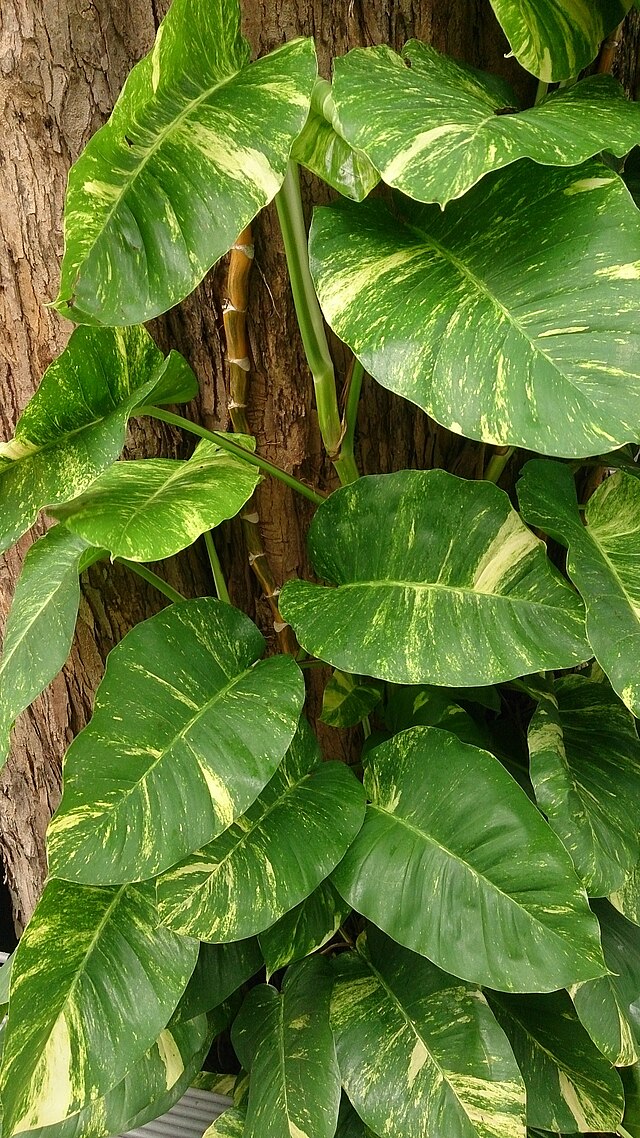
Golden Pothos This is the most widely available variety, and when people say "Pothos," they often refer to this one. It has green leaves with irregular yellow variegation. It is extremely hardy, tolerates shade, and won't die even if you occasionally forget to water. It's ideal for your first houseplant.
Marble Queen This variety has beautiful white and green marble-like variegation. The more white it has, the more beautiful it appears, but it has lower photosynthetic capacity and requires a brighter location than Golden Pothos. Growth is also somewhat slower, but this makes it less prone to leggy growth and easier to maintain a compact form.
Lime Pothos This variety is entirely bright lime green. It has no variegation, but its vivid color brightens the space. When placed in a dark location, the color changes to a deeper green, so managing it in a bright place allows you to enjoy its beautiful lime color.
Enjoy This variety has clear white and green contrast variegation. While Marble Queen has 'blended' variegation, Enjoy is characterized by 'crisp' variegation. The leaves are small, and it grows compactly.
Rare and Notable Varieties
Here we introduce varieties popular among collectors.
Global Green This is a relatively new variety that began circulating around 2020. With lime green variegation on dark green leaves, the green-on-green coloration is fresh. It is hardy and grows quickly, and appears to be a variety that will become standard in the future.
Manjula (Happy Leaf) This is a showy variety with four colors—white, cream, lime green, and green—mixed in on broad leaves. The leaf curling is also characteristic, and its distinctive appearance is popular. It is somewhat delicate and requires management in a bright location.
Seb Blue This variety has a unique leaf color with a silver-blue cast. It is sometimes officially classified as Epipremnum pinnatum, and there is taxonomic debate, but it circulates as a member of the Pothos family. As it grows, the leaves develop slits, taking on a Monstera-like appearance.
Pothos Variety List | Characteristics and Availability of 13 Varieties
We've compiled a list of Pothos varieties in circulation. 'Availability' is a gauge of how often you see them in garden centers and home improvement stores, with more ★ indicating easier availability. Varieties with larger white areas in their variegation have less surface area for photosynthesis, so they require brighter locations and grow more slowly. Understanding this relationship will help you avoid confusion when choosing varieties and placement locations.
| Variety | Leaf Color/Pattern | Required Brightness | Availability |
|---|---|---|---|
| Golden Pothos | Green with irregular yellow variegation | Bright shade acceptable | ★★★ |
| Jade (Green Pothos) | Deep green with no variegation | Most shade tolerant | ★★★ |
| Lime Pothos (Neon) | Bright lime green throughout | Bright shade to partial shade | ★★★ |
| Marble Queen | Blended white and green marble pattern | Partial shade (brightness required) | ★★☆ |
| Enjoy (N'Joy) | Crisp white and green variegation, small leaves | Partial shade | ★★☆ |
| Global Green | Dark green with lime green variegation | Bright shade acceptable | ★★☆ |
| Hawaiian | Golden with larger leaves | Bright shade acceptable | ★★☆ |
| Pearls and Jade | White variegation on green with green speckles within the variegation | Partial shade | ★☆☆ |
| Snow Queen | Largest white area | Partial shade (brightness required) | ★☆☆ |
| Glacier | Small leaves with silver over white variegation | Partial shade | ★☆☆ |
| Manjula (Happy Leaf) | Four colors: white, cream, lime, and green + curled leaves | Partial shade | ★☆☆ |
| Skeleton Key | Elongated growth with leaf slits | Partial shade | ★☆☆ |
| Seb Blue | Silver-blue leaves; slits appear as it grows | Partial shade | ★☆☆ |
'Silver Pothos (Satin Pothos)' is a different genus. This plant with silver speckles on the leaves is Scindapsus pictus, not Pothos (Epipremnum). Although care is similar, it is more drought tolerant and grows more slowly, so check the label when purchasing.
How to Distinguish Varieties Similar to Marble Queen
There are multiple varieties with 'marble' in the name, which are often confused when purchasing. The following three are particularly easy to mistake.
- Marble Queen: The characteristic is that white and green blend together gradually. Within a single leaf, the boundary between white and green is blurred, creating a swept-brush-like pattern. It has a large white area and slower growth.
- Snow Queen: White is even more dominant than Marble Queen, with some leaves appearing almost entirely white. Since there is less surface area for photosynthesis, it requires the most light and has the slowest growth.
- Pearls and Jade: A variety derived from Marble Queen; the defining difference is small green speckles scattered within the white variegation, and the leaves are smaller. There is also a tendency for variegation to be biased toward the leaf margins.
To distinguish between them reliably, judge first by leaf size (if small, it's Pearls and Jade), then by the white area (if almost entirely white, it's Snow Queen; if half white and half green and blended, it's Marble Queen). Note that all variegated varieties will show reduced variegation if placed in a dark location, with green becoming dominant. If you want to maintain the pattern, ensure a bright location. The propagation methods discussed below—water propagation and stem layering—work as-is. For detailed instructions, please also refer to How to Propagate Foliage Plants.
Display Variations for Pothos
Pothos can be displayed in various ways that take advantage of its vining nature.
Hanging This is the most popular display method. Hanging it from a ceiling or shelf and letting the vines cascade creates an elegant atmosphere. If the vines grow too long, they can be cut and propagated in water.
Pole Training Allowing it to climb moss poles or tree fern supports tends to produce larger leaves. In nature, Pothos climbs trees to grow, so training it upward brings out its natural form. Keeping the pole moist makes aerial root attachment easier.
Hydro Culture Pothos is also suitable for water cultivation (hydroculture). Placing it in a clear glass vase lets you enjoy the root growth and makes an attractive interior decoration. Change the water once a week and apply diluted liquid fertilizer once a month.
How to Propagate Pothos
Pothos is extremely easy to propagate.
Water Propagation Simply cut the stem below a node and place it in water. Roots develop in 1–2 weeks. If you cut with one leaf per node, you can produce multiple plants from a single vine. Once roots reach 3–5 cm, transplant into soil.
Stem Layering Cut the vine into individual nodes and place them horizontally on moist soil. Roots and new shoots emerge from each node. This is a more efficient method that produces more plants at once than water propagation.
Division Large, mature plants can also be divided during repotting. Gently untangle and separate the roots without damaging them.
Tips for Managing After Repotting Without Failure
Post-repotting care is just as important as the repotting work itself. If you mishandle this period, repotting can backfire.
Timing for Resuming Watering: Hold off on watering for 3–7 days after repotting to promote drying and recovery of damaged roots. When you do water after this, water thoroughly to ensure the entire soil mass is moist. From the second watering onward, return to the normal cycle.
Shade Management: For 1–2 weeks after repotting, manage the plant under about 50% shade. Strong light before roots establish can prevent water absorption and cause leaf scorch or wilting.
Resuming Fertilizing: Wait 2–3 weeks after repotting. Damaged roots are sensitive to fertilizer, and high-concentration fertilizer risks root burn. When you resume, start at about half the normal concentration.
Repotting is a stressful event for the plant, but with proper aftercare, it will grow vigorously in its new soil and pot.
Things to Keep in Mind When Managing Pothos
Even hardy Pothos has several precautions to consider.
Sensitive to Cold Pothos is tropical and begins to weaken below 10°C. Manage it in a warm interior during winter and be careful of cold air near windows.
Avoid Direct Sunlight Variegated varieties especially are prone to leaf scorch from direct sun. Bright indirect light is best.
Beware of Toxicity Pothos leaves and stems contain calcium oxalate crystals, which can cause poisoning if ingested by pets. In homes with dogs or cats, place it out of reach.
At GrowerDirect, you can purchase rare Pothos varieties directly from growers who specialize in cultivating them. The appeal of GrowerDirect is that you can obtain high-quality plants of varieties like Global Green and Manjula that are difficult to find at ordinary garden centers, sourced directly from the grower.