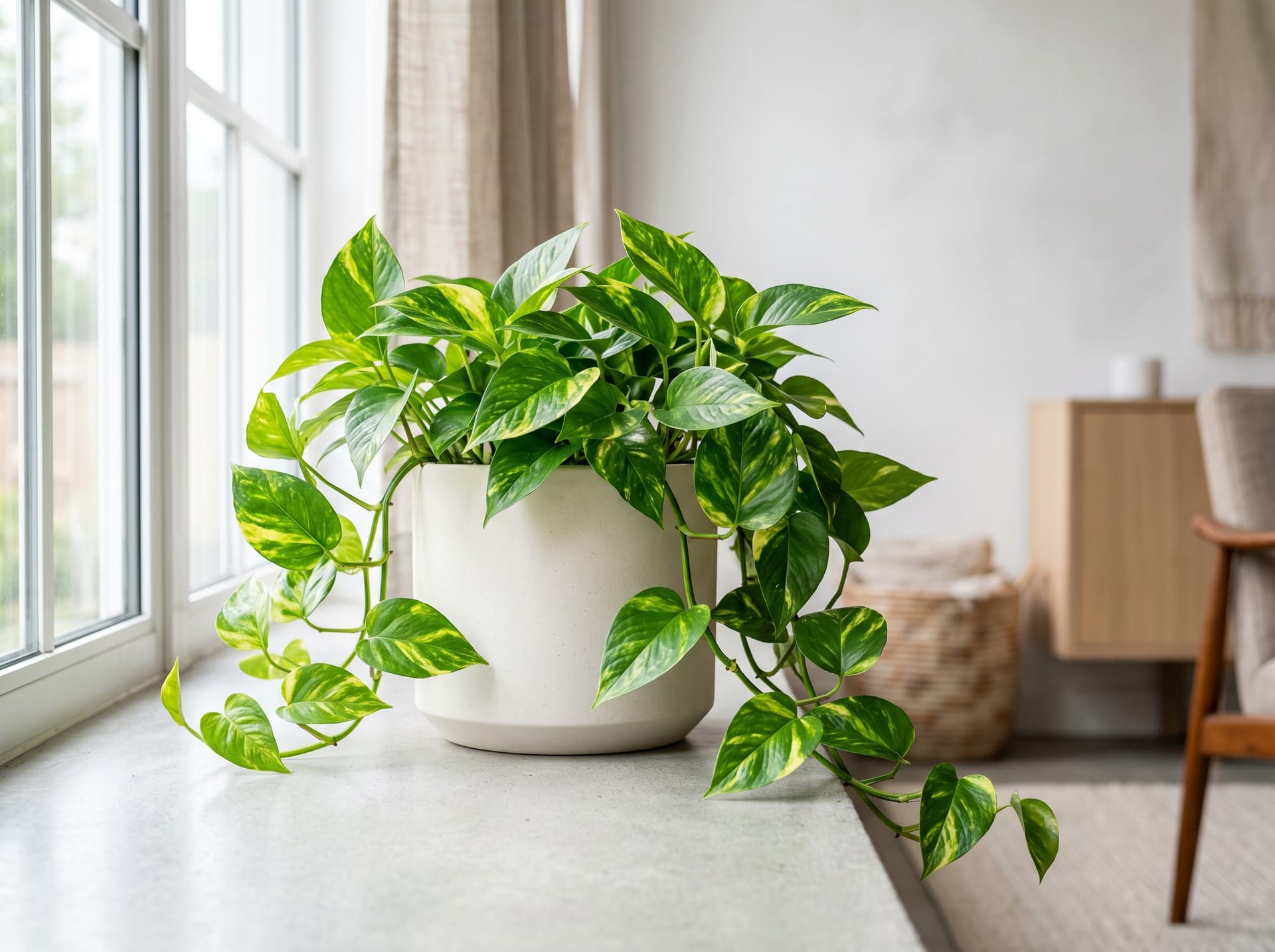
AI-generated image
Pothos
BeginnerEpipremnum aureum
One of the hardiest houseplants. Perfect for hanging or trailing. Many varieties including Golden, Marble Queen, and Neon. Grows in water.
Overview
Pothos (Epipremnum aureum) is a species in the arum family Araceae, native to Mo'orea in the Society Islands of French Polynesia. Widely cultivated for its heart-shaped leaves with yellow or white variegation, it is one of the most popular houseplants in temperate regions due to its remarkable tolerance of low light, drought, and neglect. The trailing vines can extend several meters, making it ideal for hanging baskets or high shelves. It propagates readily from stem cuttings in water or soil. However, the species has become naturalized in tropical and subtropical forests worldwide — including Southeast Asia, Australia, the Pacific Islands, and the West Indies — where it can cause severe ecological damage by smothering native vegetation.
Source: Wikipedia (CC BY-SA 4.0)
Lifespan of the Pothos
The Pothos lives 10+ years.
Size of the Pothos
The Pothos grows to Vine (1-10m+).
Temperature & humidity for the Pothos
The ideal temperature for the Pothos is 15〜30℃.
Basic Info
Origin
Mo'orea in the Society Islands of French Polynesia
Lifespan
10+ years
Size
Vine (1-10m+)
Temperature
15〜30℃
Humidity
50〜70%
Watering & Fertilizer
Liquid fertilizer monthly in spring-fall
Growing Tips
Placement
Shade tolerant. Variegated types need more light
Watering
Allow to dry between waterings. Overwatering causes root rot
Temperature & Overwintering
Optimal range is 15-30°C. It is cold-sensitive, so keep it in a warm room in winter and away from cold windows.
Fertilizer
Feed liquid fertilizer once a month from spring to autumn. It grows very fast, so keep feeding while you want it to extend.
Propagation
Cut at nodes and root in water
Pests & Cautions
Toxic to pets, so place it where cats and dogs cannot chew the leaves. Root rot from overwatering is the most common failure.
Pothos FAQ
QWhat is the growing difficulty level for Pothos?
Beginner. A variety suitable for beginners. No special equipment or experience is required—you can grow it without problems by setting up a basic cultivation environment.
QWhat is the ideal temperature for Pothos?
The ideal temperature for Pothos is 15〜30℃. Avoid sudden temperature changes and maintain a stable environment.
QWhat is the lifespan of Pothos?
The average lifespan of Pothos is 10+ years. With proper cultivation environment and nutrient management, you can keep it healthy for a long time.
QHow large does Pothos get?
The mature size of Pothos is Vine (1-10m+). This may vary slightly depending on cultivation environment and individual differences.
QHow should I water and fertilize Pothos?
Pothos: watering & fertilizer — Liquid fertilizer monthly in spring-fall. Aim for appropriate frequency and amount.
QWhat is the typical price for Pothos?
The price of Pothos varies significantly by variety, characteristics, size, and lineage. Please check GrowerDirect's price guide for the latest market information.
Last updated: October 2, 2026
Growing Specifications
- USDA Zone
- 10–12
Sources: Missouri Botanical Garden Plant Finder - Epipremnum aureum
References & Sources
Edited & verified by: GrowerDirect Editorial Team
The classifications, regulations, and growing data on this page are created and verified based on the primary information database below.
Taxonomy & Authority
Regulations & Conservation Status
Not listed in the CITES (Washington Convention) appendices. Not a designated invasive species either.
Sources: CITES Appendices (official) / Ministry of the Environment List of Specified Invasive Alien Species
Regulations may change. Always verify the latest information with the relevant authorities.
Related Species
Find listings for this species
Related Articles
Pothos Care Guide | Hardy Beginner-Friendly Foliage Plant Management and Interior Styling
A guide to growing Pothos, a popular foliage plant easy enough for beginners. Covers variety characteristics (Golden Pothos, Marble Queen, etc.), basics of light, watering, and fertilizer, and interior styling ideas including hanging and shelf displays.
Pothos Variety Encyclopedia | 13 Varieties Explained from Marble Queen to Global Green
We've compiled a comparison table of 13 Pothos varieties, organizing their light requirements and availability. This guide explains how to distinguish between Marble Queen, Snow Queen, and Pearls and Jade, the differences from Satin Pothos (a separate genus), and propagation methods.
Optimizing Foliage Plant Leaf Shine | Humidity Management to Achieve Gloss and Plant Health
Environmental management techniques to bring out glossy shine on foliage plant leaves. Techniques to achieve healthy and beautiful leaf expression through optimizing light, humidity, and water quality.
Why New Leaves on Foliage Plants Are Smaller — Practical Solutions for Light, Humidity, and Nutrition
We analyze the causes behind stunted growth and smaller new leaves on foliage plants. From light environment and humidity management to fertilization strategy and root health, we explain each factor and introduce methods to restore new leaf size.
🩺 Common diseases
Can't find the plant you're looking for?
Post your wishes for free and growers with matching plants will contact you with introductions.