Complete Cattleya Care Guide | How to Make the Queen of Orchids Bloom
A beginner-friendly explanation of Cattleya cultivation. Covers planting methods, watering and fertilizer management, temperature and light requirements, seasonal management for flowering, and the timing and techniques for repotting.
Key Takeaways
A beginner-friendly explanation of Cattleya cultivation. Covers planting methods, watering and fertilizer management, temperature and light requirements, seasonal management for flowering, and the timing and techniques for repotting.
Related Species
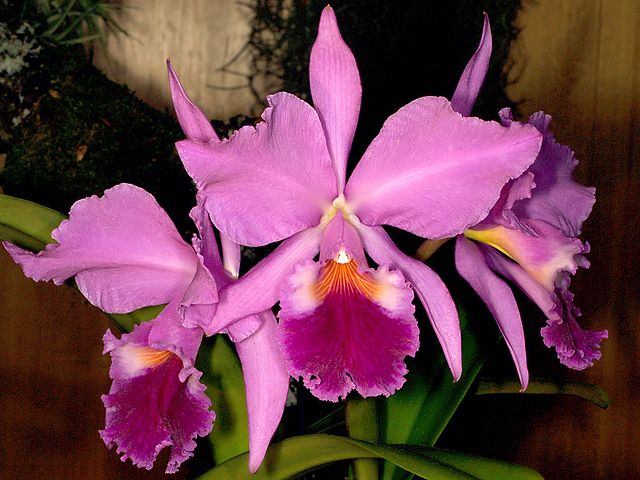
Cattleya (Cattleya) is called the "Queen of Orchids" and is a representative example of orchids that produce large, showy blooms. Their luxurious flowers and rich fragrance are appealing, but they require more careful management than phalaenopsis orchids. With the fundamentals mastered, even beginners can enjoy beautiful flowers.
Basic Information About Cattleyas
- Native Habitat: Tropical rainforests of Central and South America (epiphytic orchid)
- Blooming Period: Varies by variety (spring-blooming, autumn-blooming, winter-blooming, etc.)
- Bloom Duration: Approximately 2-4 weeks
- Fragrance: Many varieties have a sweet, elegant fragrance
- Cultivation Difficulty: Intermediate (can be grown adequately with understanding the basics)
Types and Groups of Cattleyas
Species Cattleyas - Labiata, Trianae, Mosiae, and others - Simple yet elegant flower appearance - Many adapt easily to cultivation environments
Hybrid Cattleyas - Large-flowered types: Showy blooms that photograph well at exhibitions - Miniature Cattleyas: Compact and easy to grow. Recommended for beginners - Midi Cattleyas: Medium size. Well-balanced flowers with ease of cultivation
Recommended Varieties for Beginners - Rlc. Haw Yuan Gold: Large yellow flowers. Hardy and blooms readily - C. intermedia: A species native to Brazil. Hardy with good flowering - Pot. Burana Beauty: Beautiful red flowers. Compact and easy to manage
Location and Light Management
Among orchids, Cattleyas prefer relatively strong light.
Light Intensity Guidelines - Requires brighter conditions than phalaenopsis orchids - Light through sheer curtains may be insufficient - An environment with approximately 30-50% shade is ideal - If leaves are a bright yellow-green color, light levels are adequate
Seasonal Management - Spring to Fall: Outdoor cultivation is possible. Best under shade cloth (approximately 50%) - Summer: Direct sunlight causes leaf burn. Always use shade cloth - Winter: Bring indoors and place near a south-facing window. Glass-filtered sunlight is fine
Watering Methods
Since Cattleyas are epiphytic orchids, they dislike constantly wet roots.
Basic Rules - Water only after the growing medium is completely dry - For sphagnum moss: Confirm it's dry to the touch before watering - For bark: Water thoroughly once the surface is dry - Water thoroughly until it runs from drainage holes, then discard excess water in the saucer
Seasonal Watering Frequency - Spring to Fall (growth period): Once every 3-5 days - Winter (dormant period): Once every 7-10 days - Rainy season: Watch for rot. Space waterings further apart
Important Notes - Don't allow water to pool on the pseudobulbs. This causes rot - Be careful not to get water inside new growth
Temperature Management
Optimal Temperature - Growth temperature: 20-30°C during the day, 15-20°C at night - Minimum temperature: 10°C or above (varies by variety) - A 5-10°C day-night temperature difference promotes flowering
Overwintering - Keep in a location that doesn't drop below 10°C - Be careful not to let heated rooms become too dry - Windowsills get cold at night, so move plants to the center of the room at night
Fertilizing
- Growth period (April-October): Apply diluted liquid fertilizer 2-3 times per month, or apply slow-release fertilizer in spring
- During blooming: Withhold fertilizer
- Dormant period (November-March): Do not fertilize
- Use a balanced orchid fertilizer with nitrogen, phosphorus, and potassium
Repotting
Timing - Spring (March-May) when new growth begins is ideal - Plan for repotting every 2-3 years - Outgrowth of the pot is also a sign to repot
Growing Media - Sphagnum moss: High water retention and easy to handle. Good for beginners - Bark: Good drainage. Requires slightly more frequent watering but less prone to root rot - Clay pots: Good air circulation and ideal for Cattleyas. Dry faster than plastic pots
Procedure 1. Remove the plant from the old pot and carefully remove old sphagnum moss or bark 2. Cut away any black, rotted roots with scissors 3. Wrap roots in fresh sphagnum moss and plant snugly in a clay pot 4. After repotting, withhold water for about a week and keep in shade to recover
Tips for Promoting Blooms
To get Cattleyas to bloom, following the right management cycle for your variety is important.
- Ensure adequate light: Insufficient light is the biggest reason for non-blooming
- Provide day-night temperature difference: Take advantage of natural temperature drops in fall
- Develop robust pseudobulbs: Thick, sturdy pseudobulbs produce flowers
- Observe the sheath: Once you spot a sheath containing the flower bud, avoid major environmental changes until blooming
Tips for Long-Term Enjoyment
With proper care, orchids can bloom for years. For long-term cultivation, keep these points in mind.
Maintain plant vigor: To enjoy flowers annually, balance between blooming and growth is key. After flowering, give the plant enough recovery time to promote leaf and root growth. Forcing weak plants to bloom will negatively impact flowering in subsequent years.
Regular repotting: Growing media degrades over time. Replace sphagnum moss every 1-2 years and bark every 2-3 years as a guideline. Neglecting deteriorated media can lead to root rot.
Early detection of pests and disease: Make a habit of checking the undersides of leaves and the base of the plant each time you water. Scale insects and spider mites cause greater damage if discovered late. When bringing home new plants, isolate them for about 2 weeks to prevent infection of your existing collection.
Fine-tuning your environment: Observe your plants daily and gradually optimize their conditions. Leaf shine, root growth, and new shoot vigor are indicators of your environment's quality.
Common Mistakes in Cattleya Cultivation and How to Avoid Them
Mistake 1: Insufficient Light This is the biggest reason Cattleyas fail to bloom. Managing them like phalaenopsis orchids won't provide enough light. Ensure brightness where leaves are lime to yellow-green in color. Dark green foliage signals insufficient light.
Mistake 2: Water Pooling Between Pseudobulbs Water pooling between pseudobulbs during watering can cause soft rot. Water in the morning so plants dry during the day. If water gets on the pseudobulb tops, blot it away with tissue.
Mistake 3: Division Size Keep at least 3 pseudobulbs, preferably 5 or more, per divided plant. Small divisions with 1-2 pseudobulbs lack vigor and take years to reach blooming size.
Annual Cattleya Care Calendar
| Period | Main Tasks | Key Points |
|---|---|---|
| Mar-May | Repotting & Resume Feeding | Wait for new growth to appear |
| Jun-Aug | Growth Season Care | Shading + ample watering + feeding |
| Sep-Nov | Induce Flowering | Utilize temperature differences, reduce feeding |
| Dec-Feb | Blooming & Winter Care | Minimum 13°C, reduce watering |
Since growth and blooming periods vary by variety, understanding your plant's specific growth pattern and adjusting your care cycle accordingly is important.
Find Cattleyas on Botachoku
On Botachoku, you can purchase healthy Cattleyas with proven blooming records directly from specialist growers. Being able to consult with growers directly about variety characteristics, blooming conditions, and growing tips is a major advantage. Experience the beautiful blooms of the Queen of Orchids with plants you find on Botachoku.