Complete Guide to LED Cultivation of Orchids | Techniques for Blooming Under Artificial Light
Explaining how to grow orchids with LED cultivation even without a window. We introduce everything from the necessary light intensity, spectrum, and irradiation time to LED management techniques for each variety.
Key Takeaways
Explaining how to grow orchids with LED cultivation even without a window. We introduce everything from the necessary light intensity, spectrum, and irradiation time to LED management techniques for each variety.
Related Species
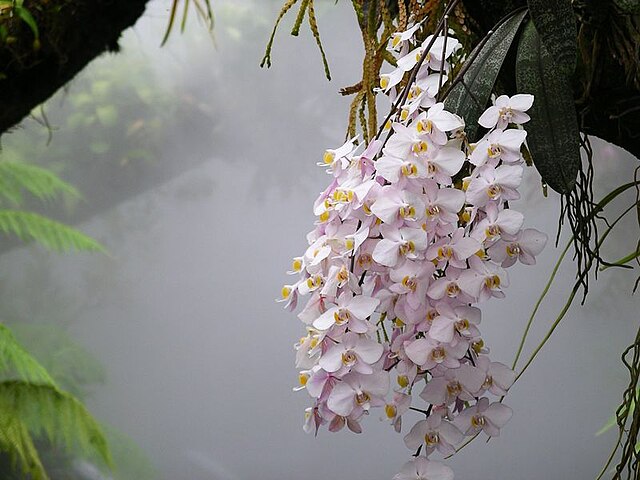
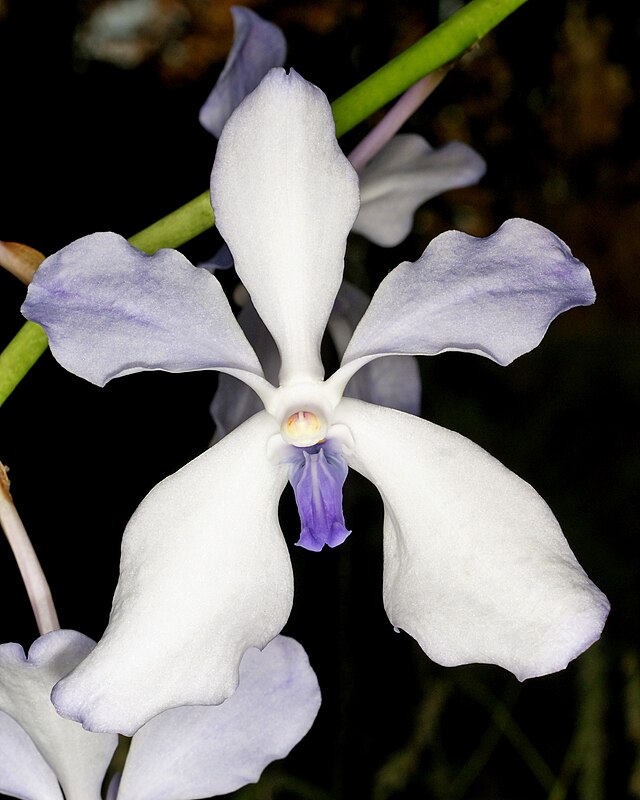
Many orchid enthusiasts struggle with the lack of a suitable window for cultivation, poor sunlight, or having only a north-facing room in an apartment. However, with recent advances in LED lighting technology, it has become entirely possible to grow orchids using artificial light alone and bring them into bloom. Here, we explain the knowledge and practical techniques necessary for LED cultivation.
Fundamentals of LED Lighting — Light Spectrum Needed for Orchids
The light plants use for photosynthesis is primarily red light (620–700 nm) and blue light (400–500 nm). For orchid LED cultivation, it is important to choose a light that includes these two wavelengths in an appropriate balance. Red light contributes to photosynthesis and flowering promotion, while blue light contributes to healthy growth of stems and leaves.
Commercial plant growth LEDs come in two types: "blue-pink type," which combines red and blue LED chips, and "full-spectrum type (white light)," which includes all wavelengths in a well-balanced manner. For orchid cultivation, the full-spectrum type is practical and recommended, as it appears more natural and is easier on the eyes. A color temperature of 5,000–6,500 K (daylight white to daylight color) is appropriate.
Light that includes far-red light (700–750 nm) is said to have a flower-promoting effect and is found in some high-performance growth LEDs. For varieties such as Phalaenopsis orchids, where flower bud differentiation is affected not only by temperature differences but also by the light environment, the presence or absence of far-red light can make a difference in results.
Light Intensity (PPFD) Needed by Variety
The light intensity needed for orchids varies greatly by variety. The light intensity effective for photosynthesis is expressed in a unit called "PPFD (photosynthetic photon flux density)" and is measured in μmol/m²/s. A home-use lux meter can provide a rough estimate, but it is more accurate to measure with a PPFD meter if possible.
Phalaenopsis orchids are shade-loving and grow and bloom sufficiently at PPFD 80–150 μmol/m²/s. This is the value when a full-spectrum LED is positioned at a distance of 30–40 cm. Be careful not to use too much light, as it can cause leaf burn.
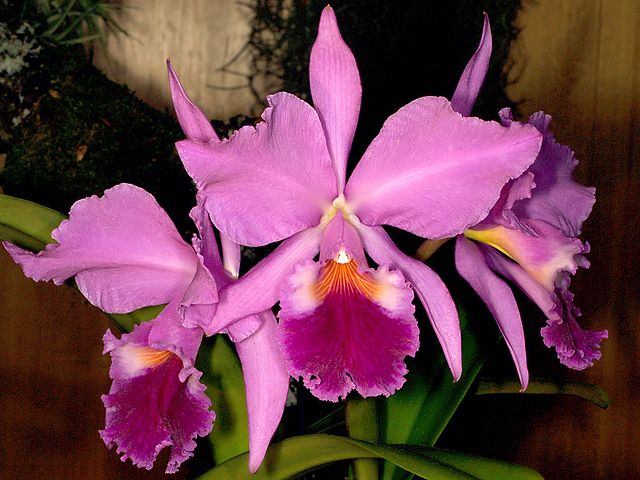
Light-loving varieties such as Cattleya and Vanda require PPFD of around 200–400 μmol/m²/s. If the light output is insufficient, reduce the distance to the light or use multiple lights. However, if the distance to the light is too close, there is a risk of heat damage, so a good guideline is to keep a distance where touching it by hand is not hot.
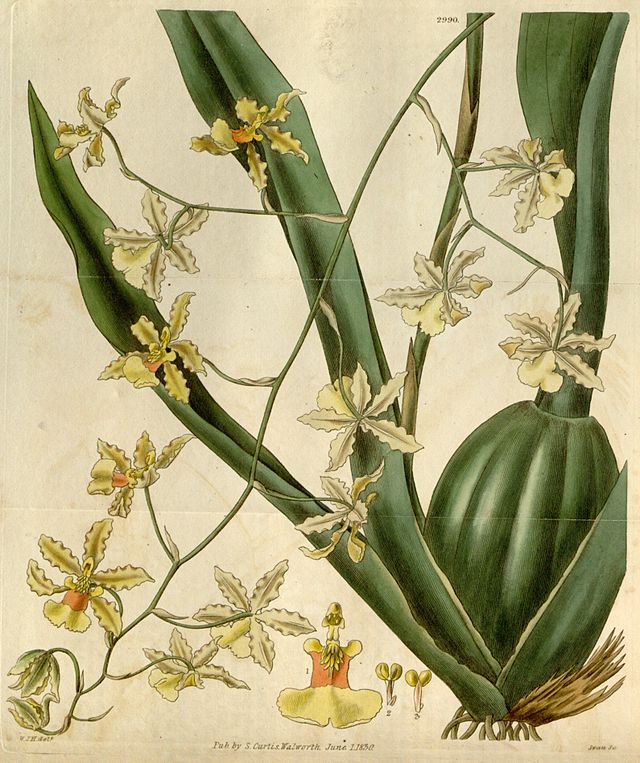
Dendrobium and Oncidium are suitable with intermediate light intensity (PPFD 150–250 μmol/m²/s). Shade-loving terrestrial orchids such as Jewel orchids are sufficient at 50–100 μmol/m²/s.
Irradiation Time and Timer Management
Managing irradiation time is extremely important in LED cultivation. Basically, 12–14 hours of lighting per day is recommended. Because dark periods are also necessary for the physiological activities of orchids, avoid 24-hour lighting. Use a timer to set the lights to turn on and off at the same time each day.
There is also a method of manipulating day length to promote flower bud differentiation. For Phalaenopsis orchids, flower bud differentiation is promoted when short-day treatment (10 hours of lighting) is combined with low temperature. On the other hand, some Cattleya varieties have flower buds that respond to long-day conditions, so adjust the irradiation time according to the characteristics of each variety.
Artificially reproducing the seasonal changes in day length is also an option. By setting 14 hours for spring and summer and 10–12 hours for fall and winter, you can create a light cycle close to the natural environment. This makes it easier for orchids to maintain their natural growth rhythm.
Building a LED Cultivation Environment — Shelving, Reflection, and Ventilation
To build an efficient LED cultivation environment, the standard approach is to install LED lights on shelves such as metal racks. By installing lights on each shelf and adjusting the height, you can manage multiple varieties simultaneously. Installing aluminum sheets or white boards inside the shelves increases light reflection efficiency and allows you to maximize the use of the light's output.
Do not forget to ensure ventilation. In a sealed shelf, LED heat and moisture tend to accumulate, which can cause disease. It is advisable to install a small USB fan to circulate air or keep one side of the shelf open.
For temperature management, 18–28°C is suitable for most orchids. LEDs produce less heat than fluorescent lights or HID lamps, but the temperature may rise locally directly under the lights. Check the temperature inside the shelf with a thermometer and adjust the fan speed as needed.
Humidity can be supplemented by placing a tray of water on the lower shelf or by placing a humidifier nearby. Because LED cultivation environments tend to be dry, manage humidity to maintain 50–70% using a hygrometer.
Cost-Effectiveness and Precautions for LED Cultivation
The initial cost of LED lighting is approximately 3,000–15,000 yen for a home-use plant growth LED panel. Electricity costs are very economical, at around 100–200 yen per month for a typical 20W LED panel. Compared to fluorescent lights, they have a longer lifespan (approximately 50,000 hours) and offer superior cost-performance in the long term.
As a precaution, some inexpensive LEDs have skewed spectra or have PPFD values listed on the package that are far from actual measurements. Choose products from trustworthy manufacturers and, if possible, actually measure PPFD to verify light intensity.
Additionally, LED cultivation is not a universal solution, and some varieties are difficult to flower without natural light. The quickest path to success is to start with shade-loving varieties such as Phalaenopsis and Jewel orchids, gain experience, and then challenge light-loving varieties.
Examples of Building a LED Cultivation Environment
Beginner Set (Budget under 5,000 yen)
- 20W full-spectrum LED panel × 1
- 24-hour timer × 1
- Install on a desk or shelf
Intermediate Set (Budget under 15,000 yen)
- 40W plant growth LED bar × 2
- Digital timer
- Metal rack (3-tier)
- Aluminum reflective sheet
Expanding the system gradually is a wise approach. Start by grasping the feel of LED cultivation with shade-loving varieties such as Phalaenopsis and Jewel orchids, build successful experiences, and then challenge light-loving varieties such as Cattleya.
Guide to Building a LED Cultivation Environment
Beginner Set (Budget under 5,000 yen)
- 1 × 20W full-spectrum LED panel + 24-hour timer
- Simple to set up on a desk or shelf
Intermediate Set (Budget under 15,000 yen)
- 2 × 40W plant growth LED bar + 3-tier metal rack + aluminum reflective sheet + digital timer
- A full-fledged environment for managing multiple varieties simultaneously
Once you build an LED cultivation environment, daily management requires only watering and fertilizer, making it a cultivation method suitable for busy people.
Find Orchids for LED Cultivation on GrowerDirect
On GrowerDirect, you can consult directly with growers to select varieties with proven success in LED cultivation. If you tell them about your growing environment, they may suggest varieties that have a track record of flowering in that environment. This is an era where you can enjoy orchids even without a window. Let the orchids you meet on GrowerDirect bloom under the light of LEDs.