Syngonium Pink (Pink Variegation): Propagation by Cuttings and Maintaining Variegation
Syngonium Pink (Pink Variegation): Propagation by Cuttings and Maintaining Variegation。What is Syngonium Pink: The Nature of Pink Variegation Syngonium Pink…
Key Takeaways
Syngonium Pink (Pink Variegation): Propagation by Cuttings and Maintaining Variegation。What is Syngonium Pink: The Nature of Pink Variegation Syngonium Pink…
Related Species
What is Syngonium Pink: The Nature of Pink Variegation
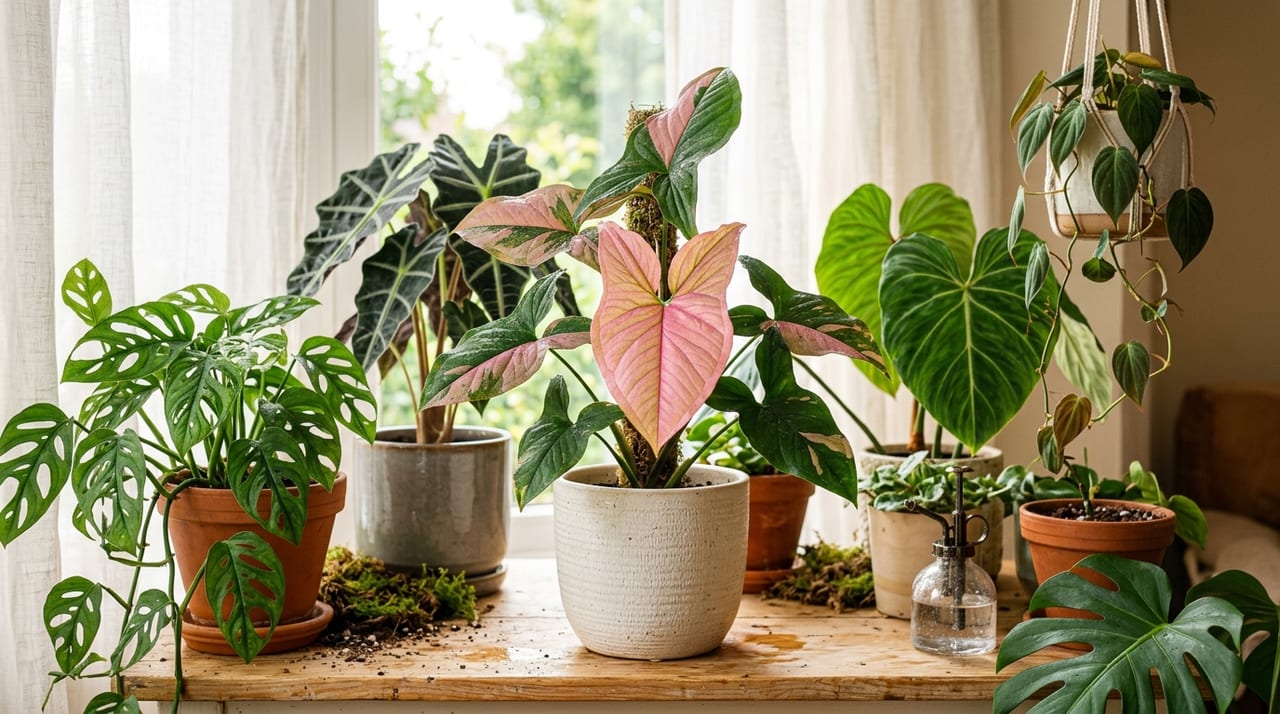
Syngonium Pink (Syngonium podophyllum 'Pink') is a trailing foliage plant in the Syngonium genus of the Araceae family, native to tropical forests in Central and South America. Its most distinctive feature is the vivid pink color that appears when new leaves unfold. This coloration is due to anthocyanin-based pigments, which accumulate in young leaves when environmental conditions—such as light and temperature—are favorable. As leaves mature, the pink fades and transitions from pale cream to greenish tones. Therefore, plants that continuously produce new leaves will display pink coloration for longer periods.
In nature, it grows vertically up tree trunks, wrapping aerial roots around the bark. Indoors, you can recreate this natural form by guiding the plant onto stakes or moss poles. Another charm of this species is how the leaf shape changes with maturity—young plants have arrow-shaped leaves that develop deeper lobes and become more complex as the plant matures.
Managing Light, Temperature, and Fertilizer to Sustain Pink Coloration
Pink coloration is directly tied to environmental management. The following three factors are especially important.
- Light: Bright, indirect light from an east- or south-facing window (positioned slightly away from the glass) is ideal. Avoid direct sunlight, which causes leaf burn. Conversely, insufficient light will cause new leaves to remain almost entirely green. Aim for the brightness level you'd get through sheer curtains.
- Temperature and Humidity: The optimal growing temperature is roughly 18–30°C (64–86°F); growth slows significantly below 10°C (50°F). This plant prefers high humidity, so using a humidifier or misting leaves during dry seasons will help stabilize leaf color.
- Fertilizer: Excess nitrogen promotes chlorophyll production, making pink coloration harder to achieve. During the growing season (spring through autumn), apply diluted liquid fertilizer only about once a month, and withhold fertilizer in winter.
Water according to this basic rule: "When the soil surface is dry, water until it drains from the pot's base." Keeping soil constantly wet promotes root rot and harms pink coloration. Never leave water standing in the saucer.
Steps to Propagate by Cuttings
Syngonium Pink propagates relatively easily from cuttings. The best time is from spring through early summer when temperatures are stable. Follow these steps.
- Selecting Stems: Choose a healthy stem with 2–3 nodes. Make an angled cut with clean scissors or a blade to increase the water-absorbing surface area.
- Removing Lower Leaves: Remove the leaves from the lower portion of the cutting. Leaving too many leaves increases transpiration and may cause the cutting to weaken from drying out before roots form.
- Treating the Cut: Allow the cut end to air-dry for a few hours before inserting it into medium; this inhibits bacterial infection.
- Planting Medium and Insertion: Use clean, well-draining medium—either small-grain akadama alone or akadama mixed with perlite in roughly equal parts. Insert the cutting so that 1–2 nodes are buried in the medium.
- Growing Environment: Place in bright shade and keep the medium from drying out excessively. Covering with a plastic bag to create a mini greenhouse promotes rooting.
- Timing for Potting Up: Emergence of new growth signals that rooting has occurred. When you gently tug the stem and feel resistance, it's time to pot up into regular growing medium.
Water propagation is also effective. Stand the cutting in a glass so that nodes are submerged, and place it in a bright spot out of direct sunlight. Change the water regularly, and transplant to medium once roots are 2–3 cm long.
Tips for Stabilizing Pink Variegation After Propagation
Newly rooted cuttings may have unstable leaf color for a while. Because young roots absorb water and nutrients inconsistently, avoid bright light immediately after potting up; instead, gradually acclimate to bright, indirect light over the first few weeks.
Gradually increase light as roots become established. This will deepen the pink coloration of new leaves. If new leaves remain mostly green over an extended period, suspect insufficient light or excess fertilizer (particularly nitrogen). Temporary cessation of fertilizing and moving the plant to a brighter location often resolves this.
Variegation intensity varies among individual plants. Selective pruning—retaining branches with strong pink color and removing those that are predominantly green—can increase the overall pink proportion of the plant. Pruned green branches can be reused as propagation material.
Staking and Daily Care
To grow Syngonium Pink beautifully, staking or using moss poles is effective. Aerial roots naturally wrap around stakes, and leaves expand larger, improving appearance. Prune excessively long vines to encourage branching. Pruned stems can be reused for propagation, eliminating waste.
Make it a habit to regularly check the undersides of leaves. Spider mites and scale insects are prone to infest this plant, especially in dry indoor environments. In early stages, wiping leaves thoroughly with a damp cloth or rinsing with a shower usually solves the problem. Ensure good air circulation and avoid keeping the plant in an enclosed space for extended periods—this also helps prevent infestations. When signs of root-binding appear, repot into a container one size larger, which will stimulate new leaf emergence and restabilize pink coloration.
Selecting a grower-sourced plant with vibrant pink variegation as your parent stock is a shortcut to maintaining beautiful coloration. Cuttings taken from a parent plant with excellent native coloration will inherit those traits; therefore, use cuttings from the most vibrantly colored branches in your collection as your propagation material.