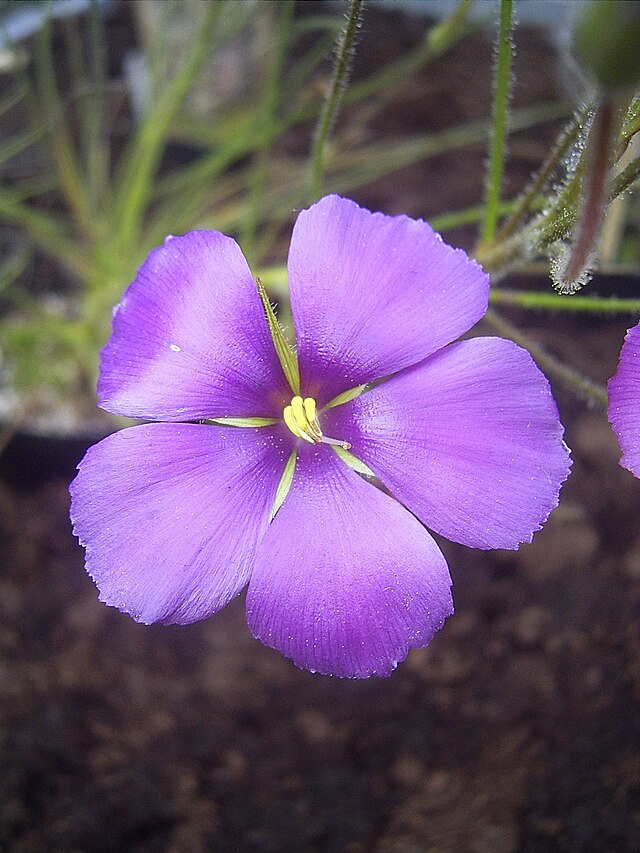
Source: Wikimedia Commons
Byblis Gigantea
AdvancedByblis gigantea
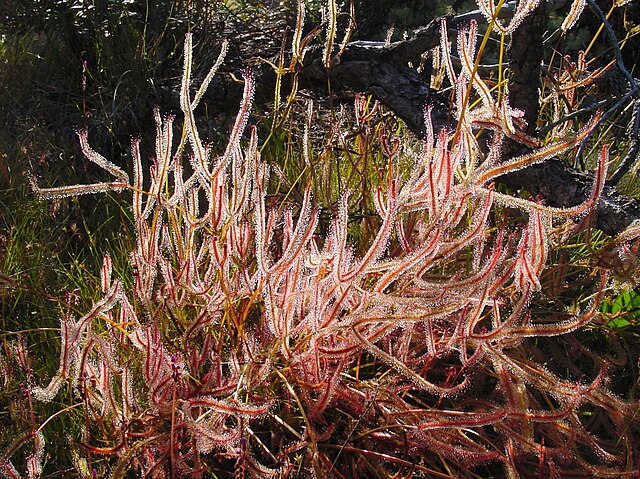
A large perennial Byblis from Western Australia with spectacular mucilage-covered long leaves.
Overview
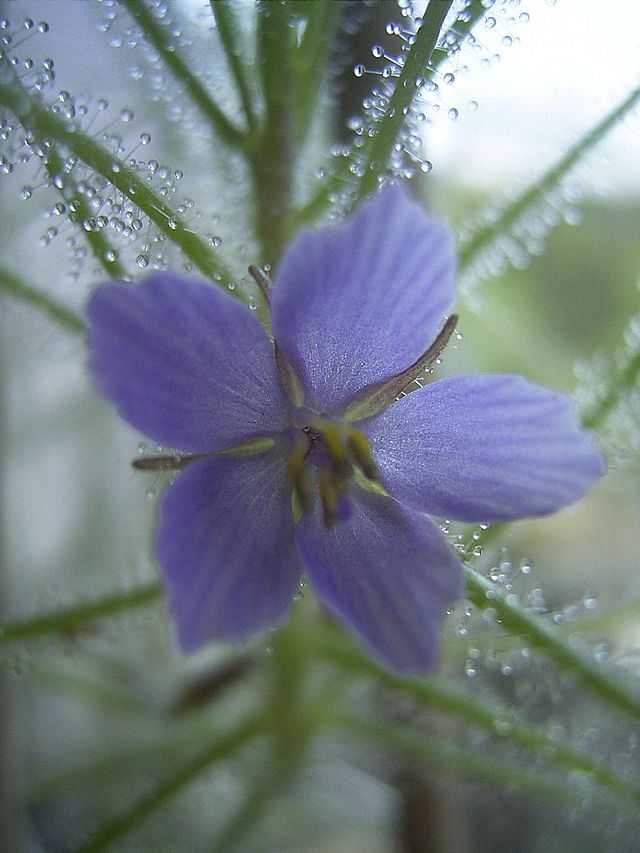
Byblis gigantea is a large perennial carnivorous plant native to the sandy heathlands and seasonal wetlands of southwestern Western Australia. Unlike the annual B. liniflora, it is a woody-stemmed perennial that reaches 30–60 cm in height and persists for several years. It shares the genus' characteristic iridescent shimmer from its dense, mucilaginous tentacles, which passively trap insects. Attractive pale purple to pink flowers are produced during the growing season. The plant follows the Mediterranean-type climate cycle of southwestern Australia, growing actively during the cool, wet winter and reducing activity in the dry, warm summer. It is a specialist subject for experienced growers.
Lifespan of the Byblis Gigantea
The Byblis Gigantea lives 5+ years.
Size of the Byblis Gigantea
The Byblis Gigantea grows to 30-60cm.
Temperature & humidity for the Byblis Gigantea
The ideal temperature for the Byblis Gigantea is 15〜28℃.
Cultivation is challenging: it requires sandy, acidic, well-drained media, wet-dry seasonal cycling, smoke treatment for seed germination, bright direct sunlight, and moderate temperatures (15–28°C).
Basic Info
Origin
Southwestern Western Australia, sandy coastal heathlands and seasonal wetlands
Lifespan
5+ years
Size
30-60cm
Temperature
5〜30℃
Humidity
60〜90%
Watering & Fertilizer
Insects (auto-capture)
Growing Tips
Light & Placement
It prefers strong direct sunlight, so grow it in a sunny spot. It reaches 30-60 cm tall, so allow enough space.
Watering
A wet-and-dry cycle suits it better than constant moisture. Use purified water or rainwater.
Temperature & Overwintering
It prefers a warm 15-28°C. It goes dormant in winter, so reduce watering and protect it from cold.
Soil & Repotting
Plant in an acidic sandy or sphagnum-based medium with good aeration and drainage. It is a perennial, so repot carefully without breaking the root ball.
Dormancy Care
It rests in winter (the dry season in its habitat) and regrows in the wet season. Keep it on the dry side while dormant and increase water as growth resumes.
Propagation
Propagate from seed, though germination takes time. Smoke treatment before sowing is considered effective.
Byblis Gigantea FAQ
QWhat is the growing difficulty level for Byblis Gigantea?
Advanced. A variety suitable for advanced growers. Requires advanced cultivation techniques and specialized equipment, with careful environmental adjustments needed.
QWhat is the ideal temperature for Byblis Gigantea?
The ideal temperature for Byblis Gigantea is 15〜28℃. Avoid sudden temperature changes and maintain a stable environment.
QWhat is the lifespan of Byblis Gigantea?
The average lifespan of Byblis Gigantea is 5+ years. With proper cultivation environment and nutrient management, you can keep it healthy for a long time.
QHow large does Byblis Gigantea get?
The mature size of Byblis Gigantea is 30-60cm. This may vary slightly depending on cultivation environment and individual differences.
QHow should I water and fertilize Byblis Gigantea?
Byblis Gigantea: watering & fertilizer — Insects (auto-capture). Aim for appropriate frequency and amount.
QWhat is the typical price for Byblis Gigantea?
The price of Byblis Gigantea varies significantly by variety, characteristics, size, and lineage. Please check GrowerDirect's price guide for the latest market information.
Last updated: October 2, 2026
References & Sources
Edited & verified by: GrowerDirect Editorial Team
The classifications, regulations, and growing data on this page are created and verified based on the primary information database below.
Taxonomy & Authority
Accepted name: Byblis gigantea Lindl.
Synonyms: Byblis lindleyana Planch.
Authority databases: GBIF · POWO · ICPS cultivar registration (International Carnivorous Plant Society)
Nomenclature follows global taxonomic authority databases.
Regulations & Conservation Status
This genus is not listed in CITES Appendices (among carnivorous plants, only Nepenthes/Sarracenia/Dionaea are subject to CITES).
Sources: CITES Appendices (carnivorous plants) - ICPS/Barry Rice / CITES & Carnivorous Plant Checklist (RBG Kew)
Regulations may change. Always verify the latest information with the relevant authorities.
Related Species
Find listings for this species
Related Articles
Rare Carnivorous Plants Guide | How to Grow Genlisea, Byblis, and Drosera
Detailed explanation of the characteristics and cultivation methods of rare carnivorous plants: Genlisea, Byblis, and Drosera. We introduce the insect-trapping mechanisms, cultivation conditions, and how to obtain them.
Byblis liniflora Cultivation Guide | Mucilage-Trap Carnivorous Plant
Byblis liniflora (Byblis genus) cultivation explained. From seed sowing to propagation methods for the beautiful "Rainbow plant" with luminous mucilage glands covering its entire body—a practical growing guide including substrate, water management, light, temperature conditions, and reproduction.
Carnivorous Plant Dormancy Awakening Guide | Correct Timing for Resuming Feeding, Fertilizing, and Watering
A step-by-step guide to the correct timing for resuming watering, restoring humidity, feeding, and fertilizing as your carnivorous plants emerge from dormancy and enter spring growth.
Why Carnivorous Plant Traps Fail and How to Fix Them | Optimizing Humidity, Nutrition, and Prey-Capture Systems
Investigate why carnivorous plant traps fail to capture insects. From humidity management to nutrient balance, gland secretion function, and dormancy, a detailed scientific approach to restoring trap function.
Can't find the plant you're looking for?
Post your wishes for free and growers with matching plants will contact you with introductions.