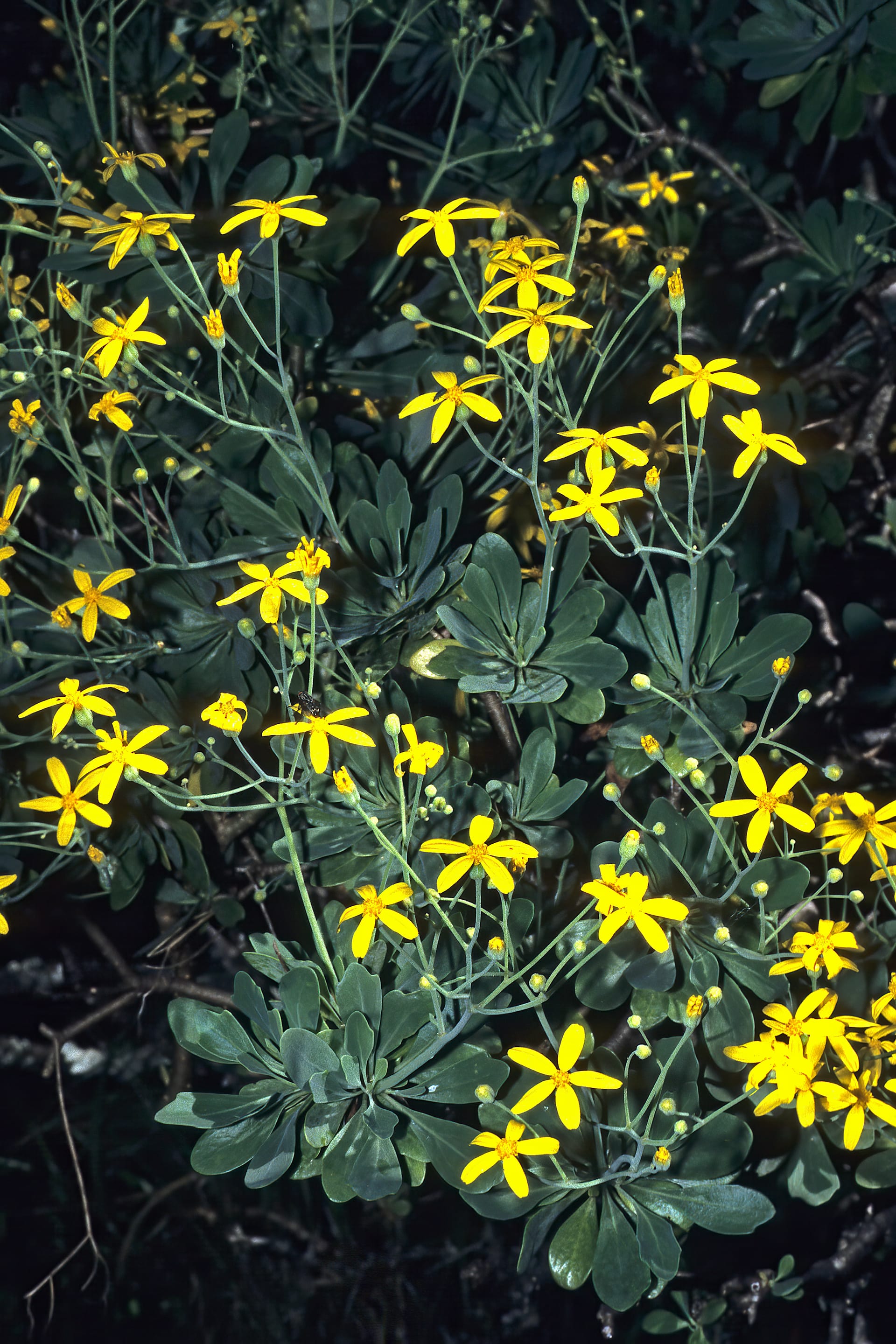
Source: Wikimedia Commons
Othonna triplinervia
BeginnerOthonna triplinervia
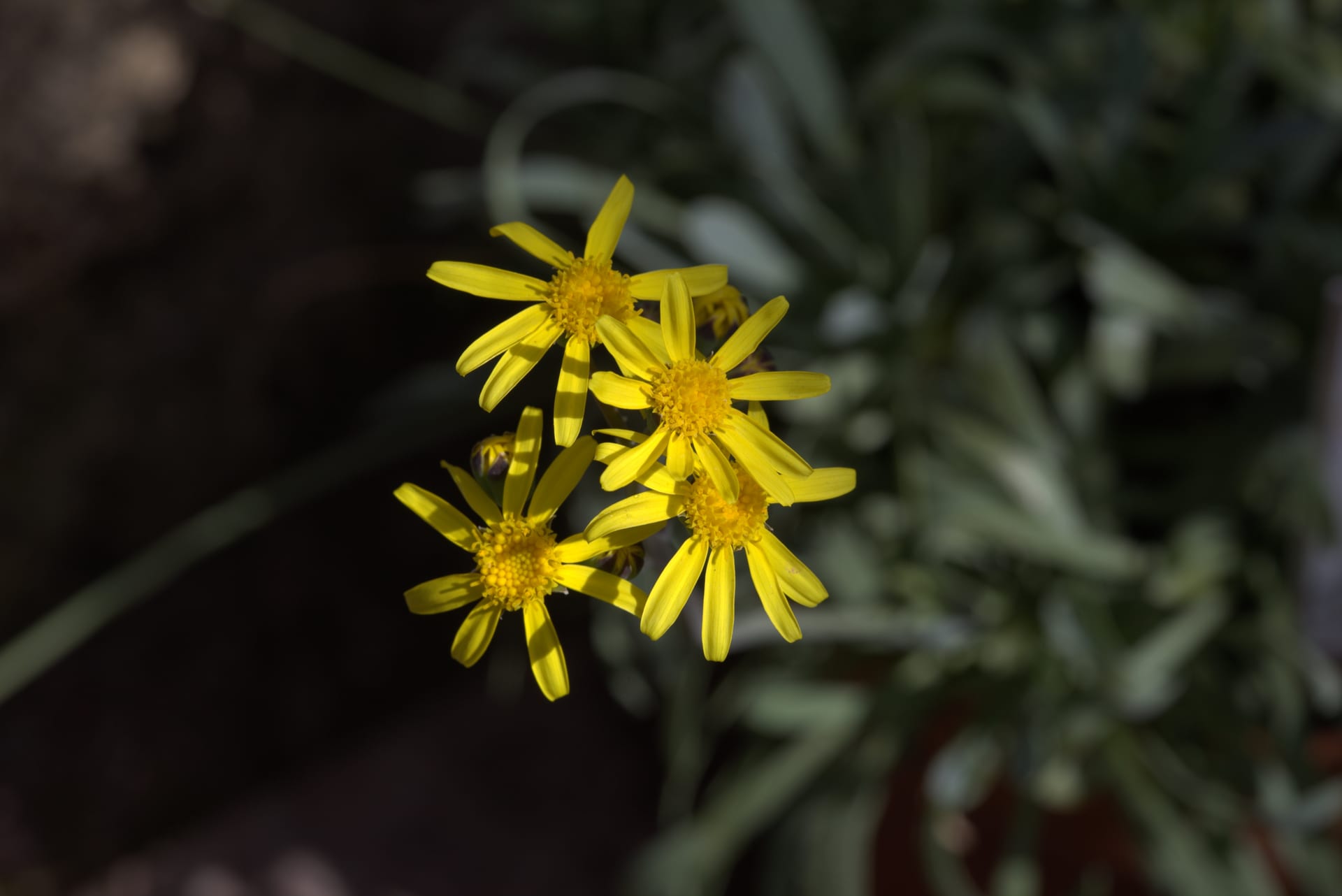
A small shrub from the Eastern Cape of South Africa with short, fleshy stems swollen at the base, thin net-veined obovate leaves clustered at the tips and bright yellow daisies on long stalks. Unusually for Othonna, it tends to stay evergreen.
About
Othonna triplinervia is a small fleshy-stemmed shrub in the daisy family from the Eastern Cape of South Africa. It grows at about 400–800 m in crevices and on ledges of sheer, east-facing cliffs of mineral-poor quartzitic sandstone, alongside cliff plants such as Haworthia, Gasteria and Crassula. Unlike the many Othonna that drop their leaves in summer, it is an evergreen pachycaul shrublet with short branches and leaves crowded at the tips. The stem swells at the base, reaching 4 cm or more thick and about 40 cm tall, its lower part bare and scarred. The obovate leaves, about 6–7 cm long including the stalk and 2.5 cm wide, are three-nerved from the middle and net-veined; slightly fleshy when young, they become thin, almost membranous. A few heads with about five conspicuous bright-yellow rays are held on stalks 7–10 cm long. In English it is called baboon's cabbage bush. It is well established in cultivation and grown by succulent enthusiasts worldwide; in Japan seed-grown plants are sold online.
Size of the Othonna triplinervia
The Othonna triplinervia grows to About 40 cm tall; stem 4 cm or more thick.
Temperature & humidity for the Othonna triplinervia
Its habitat receives rain from both winter cold fronts and summer thunderstorms, about 500–600 mm a year, with average daily maxima around 26°C and minima around 11°C, and frost is rare or absent.
Basic Info
Origin
Eastern Cape, South Africa
Lifespan
Long-lived shrublet (little published data)
Size
About 40 cm tall; stem 4 cm or more thick
Temperature
10〜35℃
Watering & Fertilizer
Light feeding in the growing season
Growing Tips
Light & Placement
Give it bright light; fairly hard conditions keep it compact.
Watering
Growers either treat it as a winter grower, watering from autumn to spring, or water it moderately all year since it stays evergreen when water is available. Reduce water if the leaves start to fall.
Dormancy Care
If grown as a winter grower, cut back water when the leaves yellow in spring and keep it on the dry side through summer.
Temperature & Overwintering
Its cliff habitat is mild and almost frost-free; protect it from frost in winter.
Soil & Repotting
It grows in cliff crevices, so use a very free-draining mix.
Othonna triplinervia FAQ
QWhat is the growing difficulty level for Othonna triplinervia?
Beginner. A variety suitable for beginners. No special equipment or experience is required—you can grow it without problems by setting up a basic cultivation environment.
QHow large does Othonna triplinervia get?
The mature size of Othonna triplinervia is About 40 cm tall; stem 4 cm or more thick. This may vary slightly depending on cultivation environment and individual differences.
QHow should I water and fertilize Othonna triplinervia?
Othonna triplinervia: watering & fertilizer — Light feeding in the growing season. Aim for appropriate frequency and amount.
QWhat is the typical price for Othonna triplinervia?
The price of Othonna triplinervia varies significantly by variety, characteristics, size, and lineage. Please check GrowerDirect's price guide for the latest market information.
Last updated: September 23, 2026
References & Sources
Edited & verified by: GrowerDirect Editorial Team
The classifications, regulations, and growing data on this page are created and verified based on the primary information database below.
Taxonomy & Authority
Regulations & Conservation Status
Not listed in CITES (checked on Species+). No special procedure is needed for transfers within Japan.
Sources: Species+ (CITES): Othonna triplinervia
Regulations may change. Always verify the latest information with the relevant authorities.
Related Species
Find listings for this species
Related Articles
How to Grow Uncarina | Differences Between the Madagascar Endemic Species Grandidieri and Roeoesliana
An explanation of the appeal and cultivation methods of the Madagascar endemic caudex plant Uncarina genus. We introduce the differences between Uncarina grandidieri and roeoesliana, seedling cultivation, and repotting timing.
Complete Guide to Choosing Caudex Plants as Gifts | Recommended Varieties by Occasion and How to Include Care Notes
A guide to choosing caudex plants as gifts organized by occasion. We introduce how to select varieties based on the recipient's cultivation experience and how to include care notes for long-term enjoyment.
Diagnosing and Treating Poor Root Development in Caudex Plants | Causes and Solutions for Roots That Won't Emerge or Won't Grow
A detailed guide to root emergence problems in caudex plants. From diagnosis methods to solutions, practical techniques for promoting healthy root development are introduced.
Complete Guide to Growing Jatropha podagrica (Buddha's Navel) | Cultivation Management to Enjoy Its Distinctive Caudex and Coral-Red Flowers
Characteristics and cultivation methods of the caudex plant Jatropha podagrica. Detailed explanation of watering management during dormancy, soil, and propagation methods.
🩺 Common diseases
Can't find the plant you're looking for?
Post your wishes for free and growers with matching plants will contact you with introductions.