Source: Wikimedia Commons
Pachycormus Discolor
AdvancedPachycormus discolor
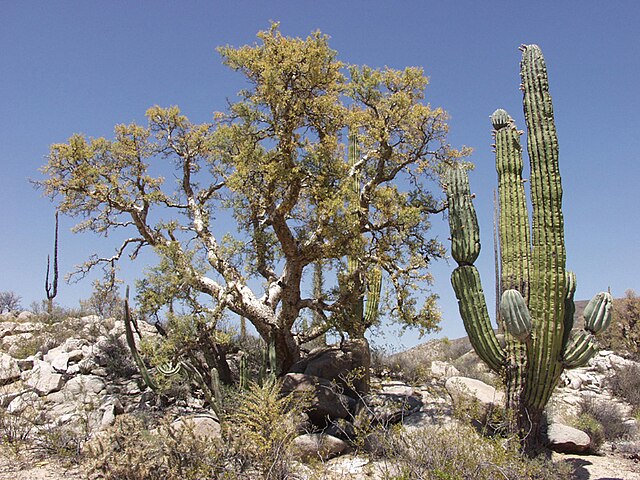
Called Elephant Tree from Baja California, with white trunk and pink flowers.
About
Pachycormus discolor is endemic to the Baja California Peninsula of Mexico, known as the Elephant Tree. Its most dramatic feature is the exceptionally thick white to ivory trunk, which can be wider than the plant is tall in old specimens. Deciduous in dry seasons, it produces pinnate leaves during the growing period and clusters of small pink flowers. In its natural habitat, it inhabits fog-shrouded coastal desert zones, drawing moisture from coastal fog. Growth is extremely slow. Full sun and excellent air circulation with highly porous soil are appropriate. Moderate watering during growth and drought in winter suit it well. It has reasonable cold tolerance. The uniquely pale, massive trunk of this Baja California endemic makes it a distinctive and sought-after Mexican caudex plant.
Lifespan of the Pachycormus Discolor
The Pachycormus Discolor lives 50+ years.
Size of the Pachycormus Discolor
The Pachycormus Discolor grows to 30-150cm.
Basic Info
Origin
Baja California Peninsula, Mexico
Lifespan
50+ years
Size
30-150cm
Temperature
5〜35℃
Growing Tips
Light & Placement
Prefers full sun and good air movement. Its habitat is a foggy desert, so place it where air circulates and humidity does not build up.
Watering
In the growing season, water moderately after the soil dries. In the wild it survives on moisture from fog, so it is very drought-tolerant; do not overwater.
Temperature & Overwintering
It has some cold tolerance. It naturally drops its leaves in the dry season, so withhold water in winter and overwinter it dry.
Soil & Repotting
Use an ultra-fast-draining mix rich in pumice and hyuga pumice. Growth is very slow, so repotting only when the roots fill the pot is enough.
Pests & Cautions
Excess moisture and stagnant humidity are its greatest enemies. To keep the thick white trunk healthy, avoid watering during dormancy and exposure to prolonged rain.
Pachycormus Discolor FAQ
QWhat is the growing difficulty level for Pachycormus Discolor?
Advanced. A variety suitable for advanced growers. Requires advanced cultivation techniques and specialized equipment, with careful environmental adjustments needed.
QWhat is the lifespan of Pachycormus Discolor?
The average lifespan of Pachycormus Discolor is 50+ years. With proper cultivation environment and nutrient management, you can keep it healthy for a long time.
QHow large does Pachycormus Discolor get?
The mature size of Pachycormus Discolor is 30-150cm. This may vary slightly depending on cultivation environment and individual differences.
QWhat is the typical price for Pachycormus Discolor?
The price of Pachycormus Discolor varies significantly by variety, characteristics, size, and lineage. Please check GrowerDirect's price guide for the latest market information.
Last updated: July 5, 2026
References & Sources
Edited & verified by: GrowerDirect Editorial Team
The classifications, regulations, and growing data on this page are created and verified based on the primary information database below.
Taxonomy & Authority
Accepted name: Pachycormus discolor (Benth.) Coville ex Standl.
Synonyms: Veatchia cedrosensis A.Gray, Rhus veatchiana Kellogg, Veatchia discolor (Benth.) Brandegee, Veatchia discolor var. pubescens (S.Watson) I.M.Johnst., Bursera pubescens S.Watson, Veatchia discolor var. veatchiana (Kellogg) I.M.Johnst., Pachycormus discolor var. pubescens (S.Watson) Gentry, Schinus discolor Benth., Pachycormus discolor var. veatchianus (Kellogg) Gentry
Authority databases: GBIF · POWO
Nomenclature follows global taxonomic authority databases.
Regulations & Conservation Status
Not listed in either CITES Appendix I or II. Also not subject to Japan's designated invasive species or specified animals regulations (being a plant).
Sources: CITES Appendix I species list / CITES Appendix II species list / Ministry of the Environment List of Specified Invasive Alien Species
Regulations may change. Always verify the latest information with the relevant authorities.
Related Species
Find listings for this species
Related Articles
How to Grow Uncarina | Differences Between the Madagascar Endemic Species Grandidieri and Roeoesliana
An explanation of the appeal and cultivation methods of the Madagascar endemic caudex plant Uncarina genus. We introduce the differences between Uncarina grandidieri and roeoesliana, seedling cultivation, and repotting timing.
Complete Guide to Choosing Caudex Plants as Gifts | Recommended Varieties by Occasion and How to Include Care Notes
A guide to choosing caudex plants as gifts organized by occasion. We introduce how to select varieties based on the recipient's cultivation experience and how to include care notes for long-term enjoyment.
Diagnosing and Treating Poor Root Development in Caudex Plants | Causes and Solutions for Roots That Won't Emerge or Won't Grow
A detailed guide to root emergence problems in caudex plants. From diagnosis methods to solutions, practical techniques for promoting healthy root development are introduced.
Complete Guide to Growing Jatropha podagrica (Buddha's Navel) | Cultivation Management to Enjoy Its Distinctive Caudex and Coral-Red Flowers
Characteristics and cultivation methods of the caudex plant Jatropha podagrica. Detailed explanation of watering management during dormancy, soil, and propagation methods.
🩺 Common diseases
Can't find the plant you're looking for?
Post your wishes for free and growers with matching plants will contact you with introductions.