Source: Wikimedia Commons
Pelargonium Triste
IntermediatePelargonium triste
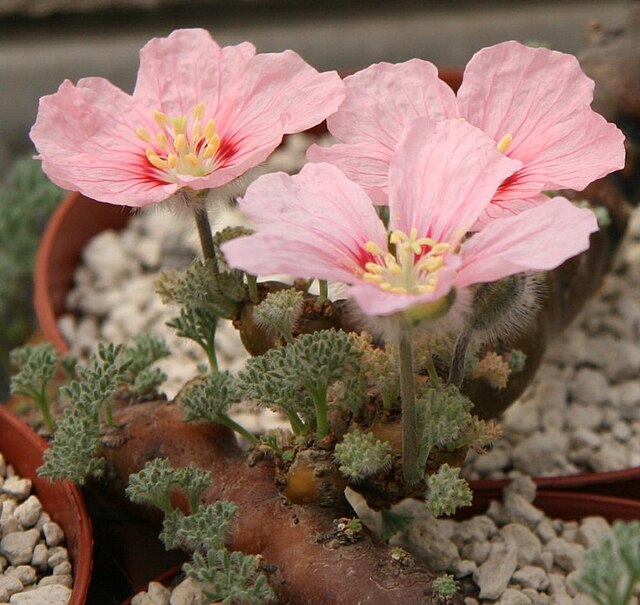
A tuberous Pelargonium with sweet night fragrance, gnarly tuber and carrot-like leaves.
About
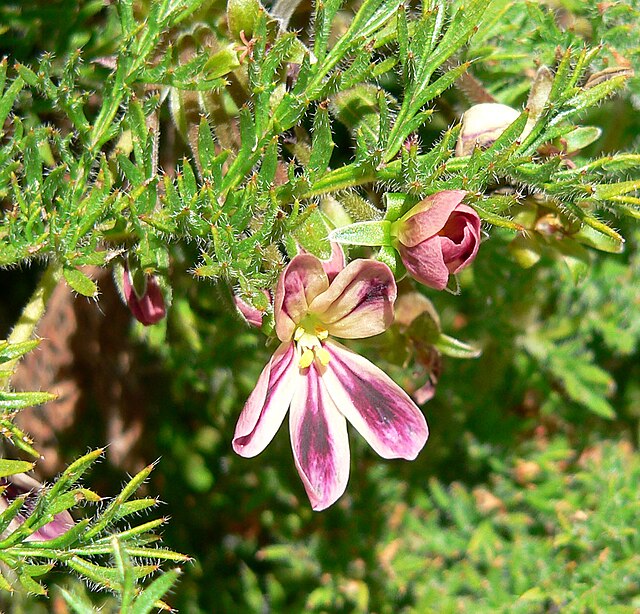
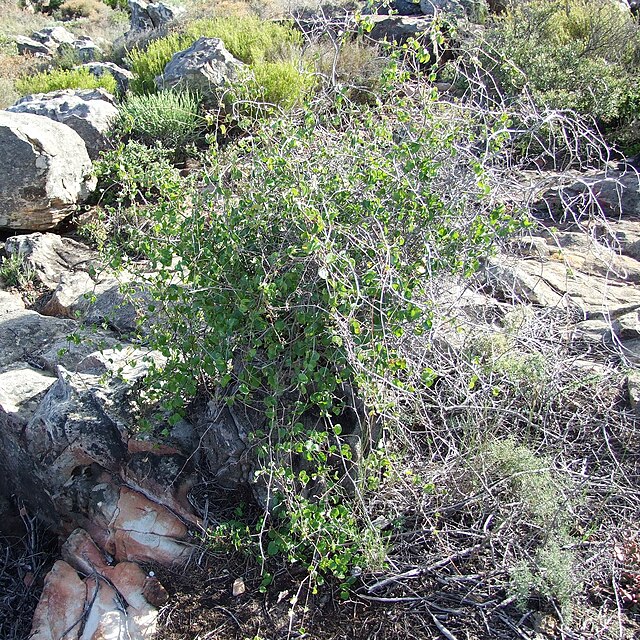
Pelargonium triste grows on rocky outcrops in Namaqualand, South Africa. Its name (triste = sad) alludes to its dull-colored flowers and near-absence of daytime scent, but at night it releases a sweet fragrance to attract nocturnal pollinators. The tuber is gnarly and irregularly shaped, from which finely divided, carrot-like leaves emerge. It is a winter grower, active from autumn through spring and dormant in summer. During the growing season, bright indirect to direct light and moderate watering are appropriate. Summer dormancy should be dry. It has moderate cold tolerance but should be protected from hard frost. The nocturnal fragrance and characterful tuber make it an appealing entry into tuberous Pelargonium collecting.
Lifespan of the Pelargonium Triste
The Pelargonium Triste lives 10+ years.
Size of the Pelargonium Triste
The Pelargonium Triste grows to 10-25cm.
Basic Info
Origin
Namaqualand, South Africa
Lifespan
10+ years
Size
10-25cm
Temperature
5〜30℃
Growing Tips
Light & Placement
A winter grower, so during the autumn-to-spring growing season keep it in bright indirect light to direct sun.
Watering
In the autumn-to-spring growing season, water moderately once the soil dries. While the carrot-like leaves are open, the plant wants water.
Dormancy Care
During summer dormancy withhold water and keep it dry. Keep the bare tuber in well-ventilated shade, and resume watering when leaves move in autumn.
Temperature & Overwintering
It has some cold tolerance, but keep it away from frost. Winter is its growing season, so grow it in a sunny spot under the eaves or indoors.
Soil & Repotting
Native to rocky terrain, it needs a well-draining mix based on pumice and akadama. Repot in autumn as growth begins.
Pelargonium Triste FAQ
QWhat is the growing difficulty level for Pelargonium Triste?
Intermediate. A variety suitable for intermediate growers. Requires some cultivation experience and knowledge of environment management. Pay careful attention to temperature and humidity control.
QWhat is the lifespan of Pelargonium Triste?
The average lifespan of Pelargonium Triste is 10+ years. With proper cultivation environment and nutrient management, you can keep it healthy for a long time.
QHow large does Pelargonium Triste get?
The mature size of Pelargonium Triste is 10-25cm. This may vary slightly depending on cultivation environment and individual differences.
QWhat is the typical price for Pelargonium Triste?
The price of Pelargonium Triste varies significantly by variety, characteristics, size, and lineage. Please check GrowerDirect's price guide for the latest market information.
Last updated: July 5, 2026
References & Sources
Edited & verified by: GrowerDirect Editorial Team
The classifications, regulations, and growing data on this page are created and verified based on the primary information database below.
Taxonomy & Authority
Accepted name: Pelargonium triste (L.) L'Hér.
Synonyms: Geraniospermum flavum (L.) Kuntze, Polyactium flavum (L.) Eckl. & Zeyh., Pelargonium flavum (L.) L'Hér., Pelargonium filipendulifolium Sweet, Pelargonium triste var. filipendulifolium Sims, Polyactium daucifolium (Murray) Eckl. & Zeyh., Pelargonium millefoliatum Sweet, Polyactium filipendulifolium (Sweet) Eckl. & Zeyh., Polyactium coniophyllum Eckl. & Zeyh., Pelargonium daucifolium (Murray) Salisb., Pelargonium tuberosum Steud., Pelargonium laxatum Harv., Polyactium triste (L.) Eckl. & Zeyh., Pelargonium papaverifolium (Eckl. & Zeyh.) Steud., Polyactium papaverifolium Eckl. & Zeyh., Geranium flavum L., Pelargonium moestum Hoffmanns., Geraniospermum triste (L.) Kuntze, Geranium decumbens Balb., Pelargonium coniophyllum (Eckl. & Zeyh.) Steud., Geranium triste L., Geranium daucifolium Murray, Pelargonium carotifolium Hoffmanns., Geranium villosum Mill., Geranium pastinacifolium Mill., Pelargonium daucoides Jacq.
Authority databases: GBIF · POWO
Nomenclature follows global taxonomic authority databases.
Regulations & Conservation Status
South Africa has listed its population in CITES Appendix III (not in Appendix I or II). Appendix III does not restrict growing or trading plants within Japan, but imports from South Africa need a South African export permit.
Sources: CITES Appendix I species list / CITES Appendix II species list / Ministry of the Environment List of Specified Invasive Alien Species / CITES Checklist (Pelargonium triste)
Regulations may change. Always verify the latest information with the relevant authorities.
Related Species
Find listings for this species
Related Articles
Pelargonium (Caudex) Care Guide | Inverted Growing Cycle, Summer Drought Management & Propagation Methods
Comprehensive guide to cultivating caudex Pelargonium. Covers adapting to the inverted growth cycle of summer dormancy and fall-winter-spring growth, displaying techniques to enhance the ornamental value of the swollen caudex, drought management in summer, fertilization schedules, and practical propagation methods via seed and cuttings.
How to Grow Uncarina | Differences Between the Madagascar Endemic Species Grandidieri and Roeoesliana
An explanation of the appeal and cultivation methods of the Madagascar endemic caudex plant Uncarina genus. We introduce the differences between Uncarina grandidieri and roeoesliana, seedling cultivation, and repotting timing.
Complete Guide to Choosing Caudex Plants as Gifts | Recommended Varieties by Occasion and How to Include Care Notes
A guide to choosing caudex plants as gifts organized by occasion. We introduce how to select varieties based on the recipient's cultivation experience and how to include care notes for long-term enjoyment.
Diagnosing and Treating Poor Root Development in Caudex Plants | Causes and Solutions for Roots That Won't Emerge or Won't Grow
A detailed guide to root emergence problems in caudex plants. From diagnosis methods to solutions, practical techniques for promoting healthy root development are introduced.
🩺 Common diseases
Can't find the plant you're looking for?
Post your wishes for free and growers with matching plants will contact you with introductions.