Source: Wikimedia Commons
Mother of Thousands
BeginnerKalanchoe daigremontiana
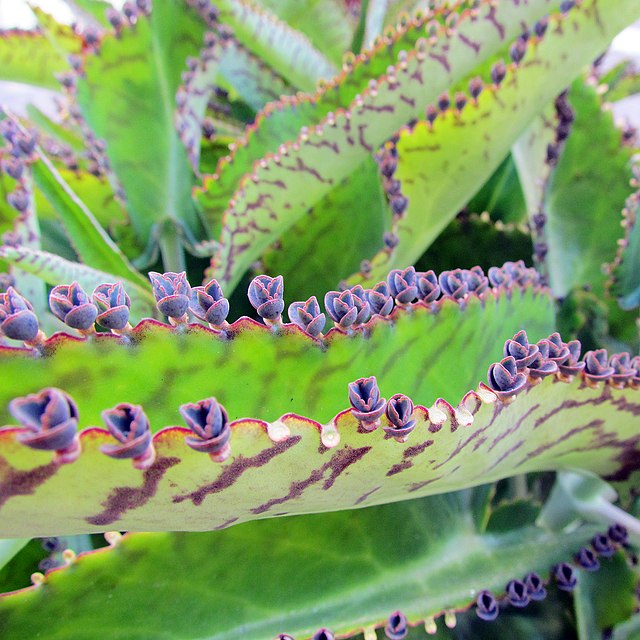
A unique succulent producing masses of plantlets (adventitious buds) on leaf edges. Amazing reproduction.
Overview
Kalanchoe daigremontiana (Mother of Thousands, Alligator Plant), formerly classified as Bryophyllum daigremontianum, is a succulent native to the Fiherenana River valley in Madagascar. It is widely known for its prolific vegetative reproduction: hundreds of tiny plantlets (bulbils) develop spontaneously along the leaf margins and readily fall and root wherever they land, making the plant an effective colonizer and an invasive weed in warm regions outside its native range. All parts of the plant contain potent toxic steroids known as bufadienolides (including daigremontianin), which cause cardiac toxicity in animals; particular caution is advised where pets or livestock are present. Mature plants reach 30–100 cm in height.
Source: Wikipedia (CC BY-SA 4.0)
Lifespan of the Mother of Thousands
The Mother of Thousands lives 5-10 years.
Size of the Mother of Thousands
The Mother of Thousands grows to 30-100cm.
Temperature & humidity for the Mother of Thousands
Cultivation is undemanding: bright light, standard succulent watering, and protection from frost below 5°C.
Basic Info
Origin
Madagascar
Lifespan
5-10 years
Size
30-100cm
Temperature
5〜35℃
Humidity
30〜50%
Growing Tips
Light & Placement
Prefers a sunny position. If kept outdoors, set a tray under the pot so the dropped plantlets do not spread into the surroundings.
Watering
Water after the soil dries. Like other succulents it handles drought well, so do not let the pot stay damp.
Temperature & Overwintering
Overwinters at minimum temperatures of 5°C or above. In cold regions bring it to a bright indoor windowsill for winter.
Propagation
The plantlets that form on the leaf margins root and grow simply when set on soil. Picking up fallen plantlets and planting them is all it takes.
Notes
Plantlets drop and spread, management needed
Pests & Cautions
The whole plant contains potent toxins that affect the heart if pets or livestock eat it. Keep it out of their reach and wash your hands after handling.
Mother of Thousands FAQ
QWhat is the growing difficulty level for Mother of Thousands?
Beginner. A variety suitable for beginners. No special equipment or experience is required—you can grow it without problems by setting up a basic cultivation environment.
QWhat is the lifespan of Mother of Thousands?
The average lifespan of Mother of Thousands is 5-10 years. With proper cultivation environment and nutrient management, you can keep it healthy for a long time.
QHow large does Mother of Thousands get?
The mature size of Mother of Thousands is 30-100cm. This may vary slightly depending on cultivation environment and individual differences.
QWhat is the typical price for Mother of Thousands?
The price of Mother of Thousands varies significantly by variety, characteristics, size, and lineage. Please check GrowerDirect's price guide for the latest market information.
Last updated: July 5, 2026
Growing Specifications
- Hardiness (RHS)
- H1b
Sources: RHS Find a Plant
References & Sources
Edited & verified by: GrowerDirect Editorial Team
The classifications, regulations, and growing data on this page are created and verified based on the primary information database below.
Taxonomy & Authority
Regulations & Conservation Status
Sources: CITES Appendices — taxon not listed
Regulations may change. Always verify the latest information with the relevant authorities.
Related Species
Find listings for this species
Related Articles
Complete Guide to Growing Kalanchoe tomentosa (Panda Plant) | Tips for Keeping Fuzzy Leaves and Edge Markings Beautiful
Kalanchoe tomentosa (Panda Plant), popular for its leaves covered with fuzzy hairs that resemble rabbit ears. This guide explains how to care for it, including placement, watering, soil, and propagation methods, while keeping its fuzzy leaves and leaf-tip markings beautiful.
Autumn Preparation Management for Summer-Type Succulents
A guide to autumn care for summer-type succulents, covering plant changes from September to November, timing for gradual watering reduction, placement and temperature management for transitioning plants indoors, autumn fertilizing and pest control, variety-specific care checkpoints, and preparation for winter dormancy.
Mealybug Control on Succulents | Complete Guide to Early Detection, Removal, and Prevention
Mealybugs hide easily at the base of succulent leaves and on new growth. This guide covers their characteristics, the environments where they thrive, tips for early detection, removal methods using cotton swabs and alcohol, and daily care practices to prevent recurrence.
Summer and Winter Type Succulents: Growth Cycles and Watering Management Strategy
This article explains the differences in growth types of succulent plants, their annual growth cycles, seasonal watering management strategies, common failures, and countermeasures.
🩺 Common diseases
Can't find the plant you're looking for?
Post your wishes for free and growers with matching plants will contact you with introductions.