Source: Wikimedia Commons
Split Rock
IntermediatePleiospilos nelii
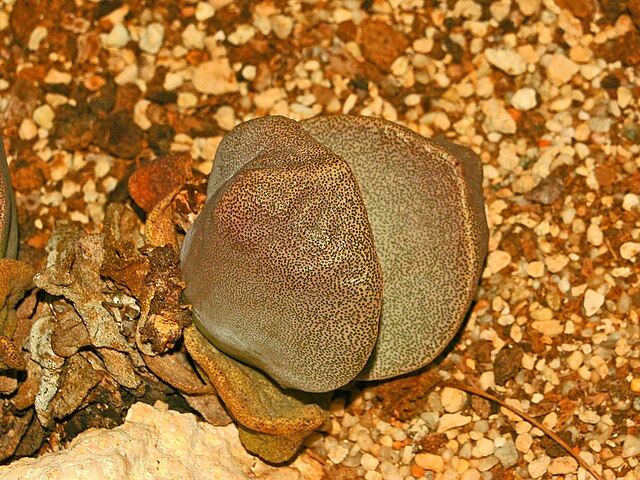
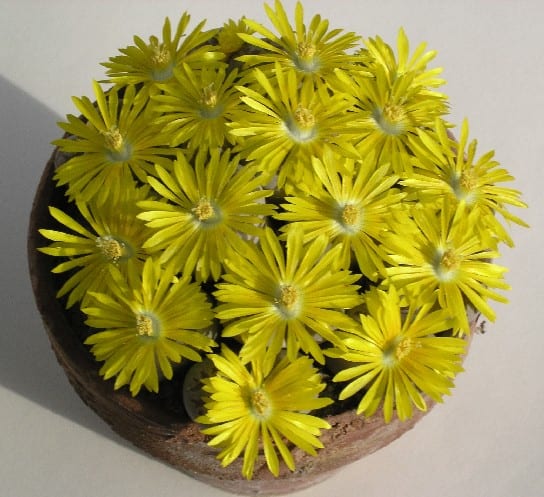
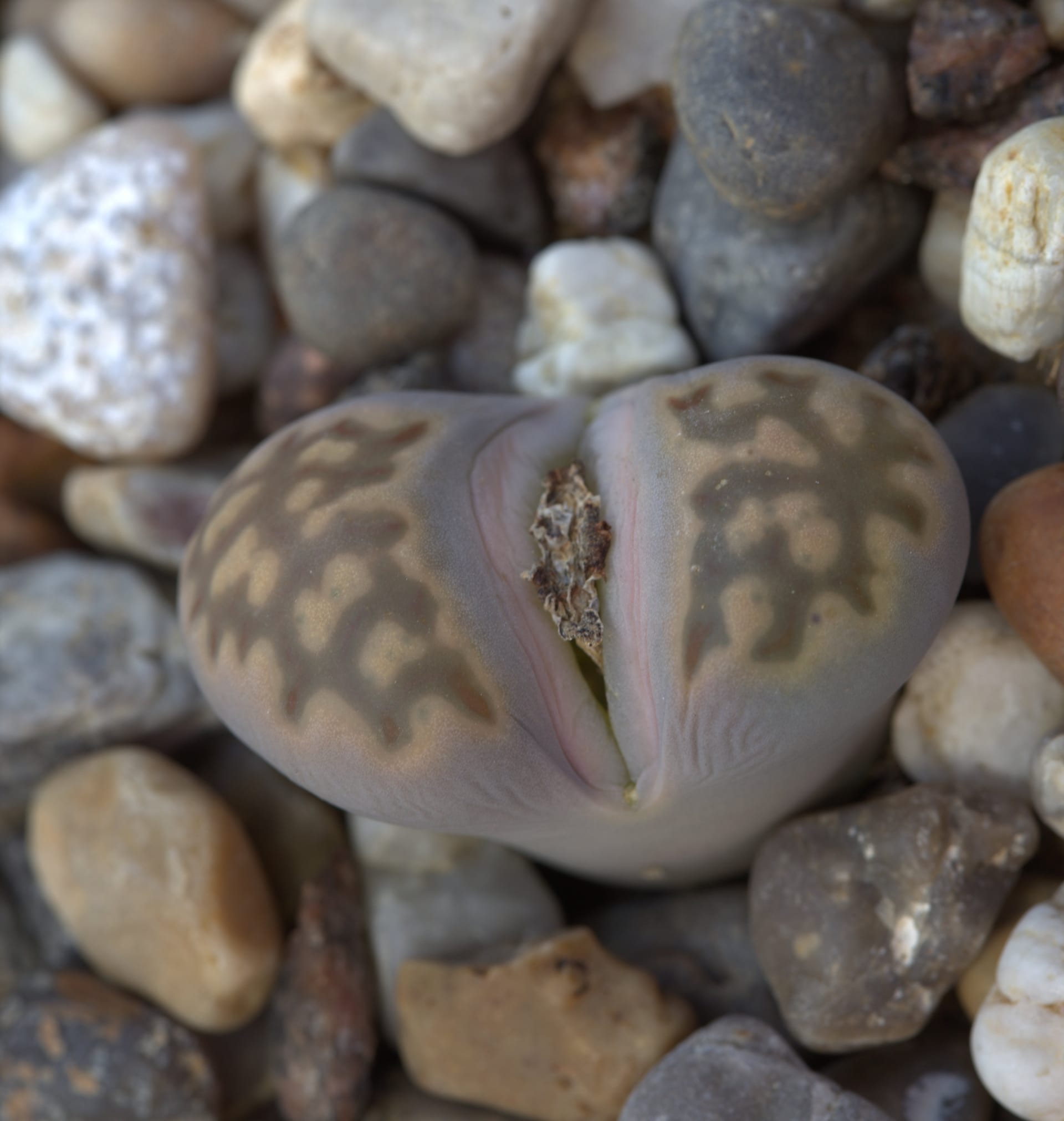
A unique succulent looking like a split rock. Beautiful when flowers bloom from the center.
About
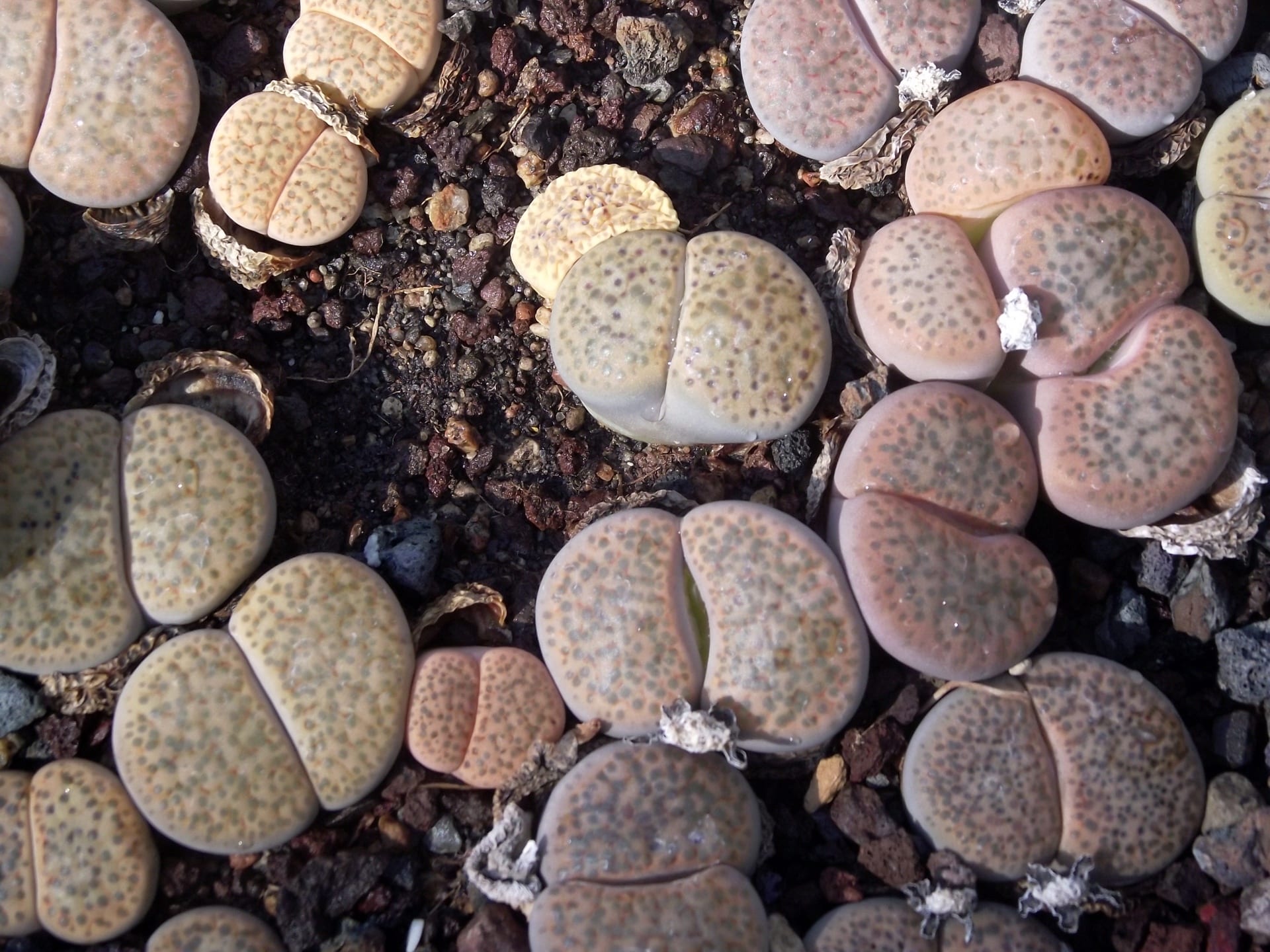
Pleiospilos nelii (Split Rock) is a dwarf succulent in the family Aizoaceae, native to the Cape Province of South Africa. Its two to four stacked, hemispherical leaves are patterned with dark spots on a grey-green or brownish surface, providing near-perfect mimicry of the granite boulders in its habitat. Showy orange to yellow flowers, often as wide as or wider than the plant body, emerge from the central fissure in autumn and winter. Mature plants are 3–8 cm across. Like Lithops, Pleiospilos undergoes an annual leaf renewal cycle in which old leaves shrivel as they transfer their stored water to the emerging new pair. Supplying water during this transition period leads to double shedding or rot. Watering should be restricted to a few times per year, with complete drought in summer. Maximum sunlight and extremely fast-draining substrate are essential for success.
Size of the Split Rock
The Split Rock grows to 3-8cm.
Basic Info
Origin
South Africa (Cape Province)
Lifespan
Perennial
Size
3-8cm
Temperature
5〜35℃
Humidity
30〜50%
Watering & Fertilizer
Minimal
Growing Tips
Light & Placement
Needs strong light, so keep it in a sunny, well-ventilated spot. With too little light the leaves stretch and the rock-like form is lost.
Watering
Water extremely sparingly, only a few times a year. In summer withholding water completely is essential; when in doubt, do not water.
Soil & Repotting
Use a very fast-draining, airy mix. Repot during a dry period after shedding is complete, and hold off watering for a while afterward.
Pests & Cautions
Extra water during the spring shedding period causes double shedding or rot. Leave the old leaves, which feed water to the new ones, and manage it like Lithops.
Split Rock FAQ
QWhat is the growing difficulty level for Split Rock?
Intermediate. A variety suitable for intermediate growers. Requires some cultivation experience and knowledge of environment management. Pay careful attention to temperature and humidity control.
QHow large does Split Rock get?
The mature size of Split Rock is 3-8cm. This may vary slightly depending on cultivation environment and individual differences.
QHow should I water and fertilize Split Rock?
Split Rock: watering & fertilizer — Minimal. Aim for appropriate frequency and amount.
QWhat is the typical price for Split Rock?
The price of Split Rock varies significantly by variety, characteristics, size, and lineage. Please check GrowerDirect's price guide for the latest market information.
Last updated: August 31, 2026
References & Sources
Taxonomy & Authority
Related Species
Find listings for this species
Related Articles
Autumn Preparation Management for Summer-Type Succulents
A guide to autumn care for summer-type succulents, covering plant changes from September to November, timing for gradual watering reduction, placement and temperature management for transitioning plants indoors, autumn fertilizing and pest control, variety-specific care checkpoints, and preparation for winter dormancy.
Mealybug Control on Succulents | Complete Guide to Early Detection, Removal, and Prevention
Mealybugs hide easily at the base of succulent leaves and on new growth. This guide covers their characteristics, the environments where they thrive, tips for early detection, removal methods using cotton swabs and alcohol, and daily care practices to prevent recurrence.
Summer and Winter Type Succulents: Growth Cycles and Watering Management Strategy
This article explains the differences in growth types of succulent plants, their annual growth cycles, seasonal watering management strategies, common failures, and countermeasures.
Selecting Pots for Succulents: The Relationship Between Root Development and Pot Choice | A Complete Guide to Pot Size, Material, and Drainage
Essential guide to pot selection for succulent growth. From choosing the right size to comparing terracotta vs. plastic, and optimizing drainage—practical tips for developing healthy root systems.
🩺 Common diseases
Can't find the plant you're looking for?
Post your wishes for free and growers with matching plants will contact you with introductions.