Source: Wikimedia Commons
Coppertone stonecrop
BeginnerSedum nussbaumerianum
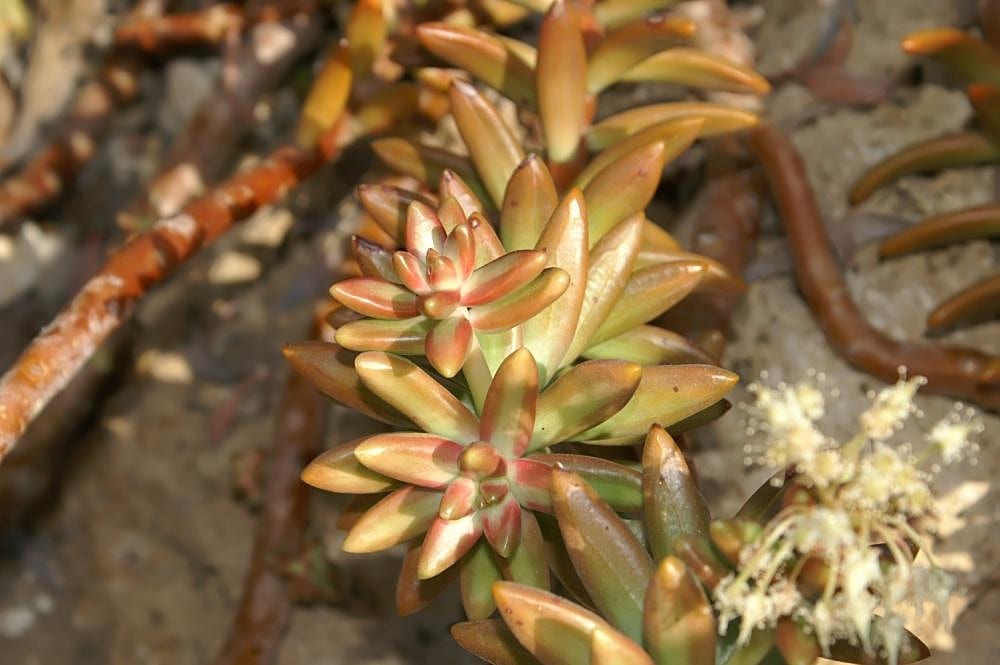
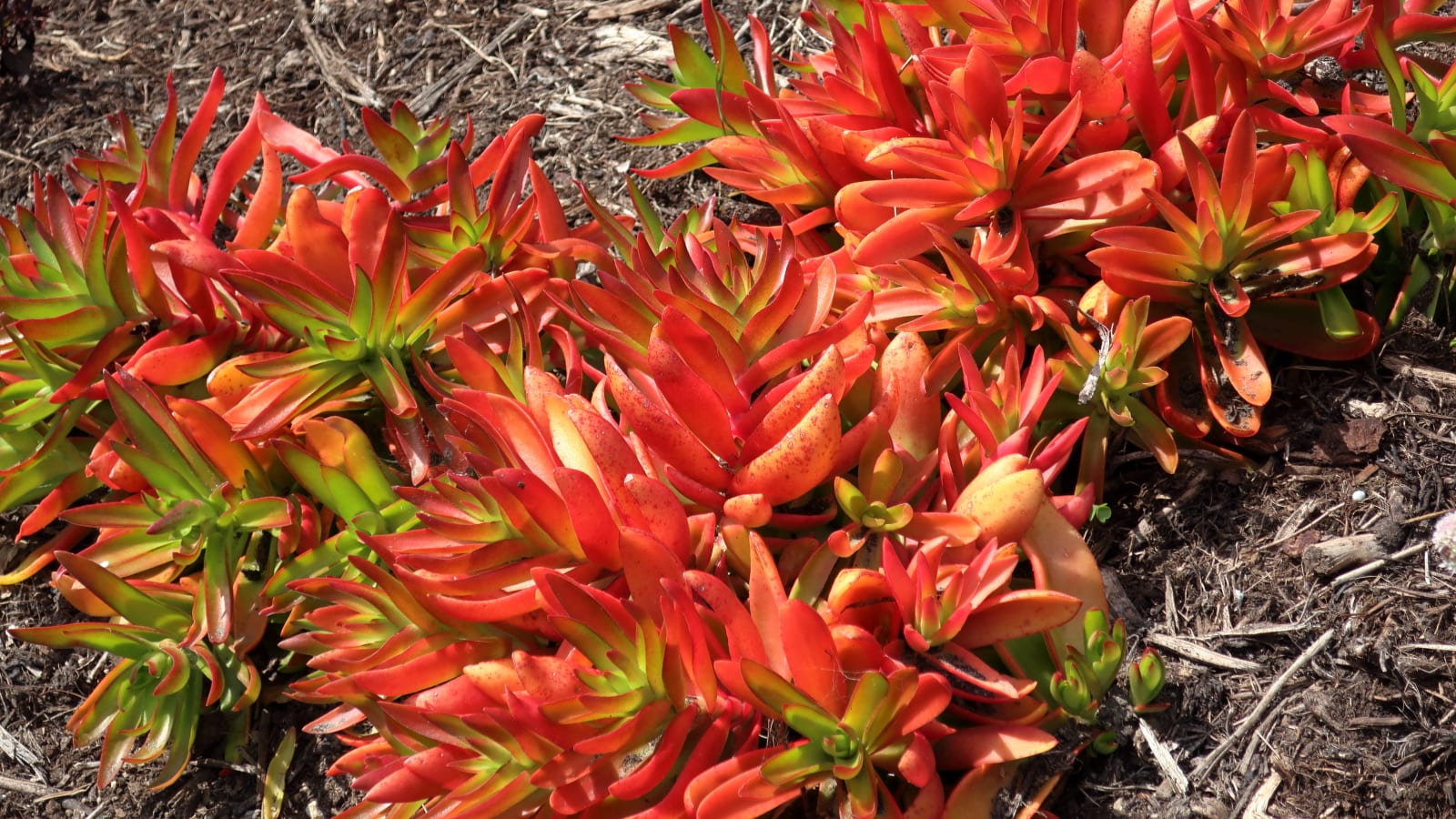
A Sedum with pointed, fleshy leaves crowded at the stem tips that glow yellow-orange to copper in full sun. Fragrant white starry flowers appear in spring.
About
Coppertone stonecrop is a succulent in the Crassulaceae native to volcanic rock walls in Veracruz, eastern Mexico, and naturalised in Sicily, Fuerteventura in the Canary Islands and northern New Zealand. The name Sedum nussbaumerianum is now treated by both GBIF and LLIFLE as a synonym of S. adolphi, so taxonomically it is the same species as 'Ourei' (S. adolphi). In Japan 'Meigetsu' and 'Ourei' are sold under different names, but the difference lies only in trade names and is not recognised taxonomically. It forms a low shrublet about 20 cm tall and 50-60 cm wide, with reddish-brown stems that sprawl and turn up at the tips, carrying rosettes of leaves. The almond-shaped, pointed leaves are 22-39 mm long, 10-16 mm wide and 5-8 mm thick, olive green turning yellow-green to bright yellow-orange in full sun. From late winter to spring it bears slightly fragrant white starry flowers in flat clusters. In Japan it is a staple Sedum for mixed plantings.
Size of the Coppertone stonecrop
The Coppertone stonecrop grows to About 20 cm tall and 50-60 cm wide; leaves 22-39 mm long.
Basic Info
Origin
Eastern Mexico (Veracruz)
Lifespan
Perennial (little published data on lifespan)
Size
About 20 cm tall and 50-60 cm wide; leaves 22-39 mm long
Temperature
5〜35℃
Humidity
30〜50%
Watering & Fertilizer
A little slow-release or liquid fertiliser in spring and autumn
Growing Tips
Light & Placement
Grow it outdoors in full sun in spring and autumn. It dislikes heat and humidity, so from the rainy season through summer keep it in airy partial shade out of the rain. Without enough sun the yellow-orange colour does not develop.
Watering
It is a spring-autumn grower (March-June and September-November). Water thoroughly when the surface dries in these periods; from the end of the rainy season through the summer rest hold back and keep it out of the rain. Colour is best with plenty of sun and little water.
Temperature & Overwintering
In dry conditions it reportedly survives to about -2°C, but protect it from winter wet and hard frost.
Soil & Repotting
Use a free-draining mix and repot every 1-2 years just before or early in a growing season, cutting back leggy stems at the same time.
Propagation
It roots easily from cuttings, and even a single leaf can start a new plant. Cut back leggy stems and re-root the pieces.
Pests & Cautions
Scale insects and aphids may attack stems and leaves, and root mealybugs the roots.
Coppertone stonecrop FAQ
QWhat is the growing difficulty level for Coppertone stonecrop?
Beginner. A variety suitable for beginners. No special equipment or experience is required—you can grow it without problems by setting up a basic cultivation environment.
QHow large does Coppertone stonecrop get?
The mature size of Coppertone stonecrop is About 20 cm tall and 50-60 cm wide; leaves 22-39 mm long. This may vary slightly depending on cultivation environment and individual differences.
QHow should I water and fertilize Coppertone stonecrop?
Coppertone stonecrop: watering & fertilizer — A little slow-release or liquid fertiliser in spring and autumn. Aim for appropriate frequency and amount.
QWhat is the typical price for Coppertone stonecrop?
The price of Coppertone stonecrop varies significantly by variety, characteristics, size, and lineage. Please check GrowerDirect's price guide for the latest market information.
Last updated: September 23, 2026
References & Sources
Edited & verified by: GrowerDirect Editorial Team
The classifications, regulations, and growing data on this page are created and verified based on the primary information database below.
Taxonomy & Authority
Accepted name: Sedum nussbaumerianum Bitter
Authority databases: GBIF · GBIF: Sedum nussbaumerianum · GBIF: Sedum adolphi
Nomenclature follows global taxonomic authority databases.
Regulations & Conservation Status
Sedum nussbaumerianum is not listed in CITES (checked on Species+). No special procedure is needed for transfers within Japan.
Sources: Species+ (CITES): Sedum nussbaumerianum
Regulations may change. Always verify the latest information with the relevant authorities.
Related Species
Find listings for this species
Related Articles
Autumn Preparation Management for Summer-Type Succulents
A guide to autumn care for summer-type succulents, covering plant changes from September to November, timing for gradual watering reduction, placement and temperature management for transitioning plants indoors, autumn fertilizing and pest control, variety-specific care checkpoints, and preparation for winter dormancy.
Mealybug Control on Succulents | Complete Guide to Early Detection, Removal, and Prevention
Mealybugs hide easily at the base of succulent leaves and on new growth. This guide covers their characteristics, the environments where they thrive, tips for early detection, removal methods using cotton swabs and alcohol, and daily care practices to prevent recurrence.
Summer and Winter Type Succulents: Growth Cycles and Watering Management Strategy
This article explains the differences in growth types of succulent plants, their annual growth cycles, seasonal watering management strategies, common failures, and countermeasures.
Selecting Pots for Succulents: The Relationship Between Root Development and Pot Choice | A Complete Guide to Pot Size, Material, and Drainage
Essential guide to pot selection for succulent growth. From choosing the right size to comparing terracotta vs. plastic, and optimizing drainage—practical tips for developing healthy root systems.
🩺 Common diseases
Can't find the plant you're looking for?
Post your wishes for free and growers with matching plants will contact you with introductions.