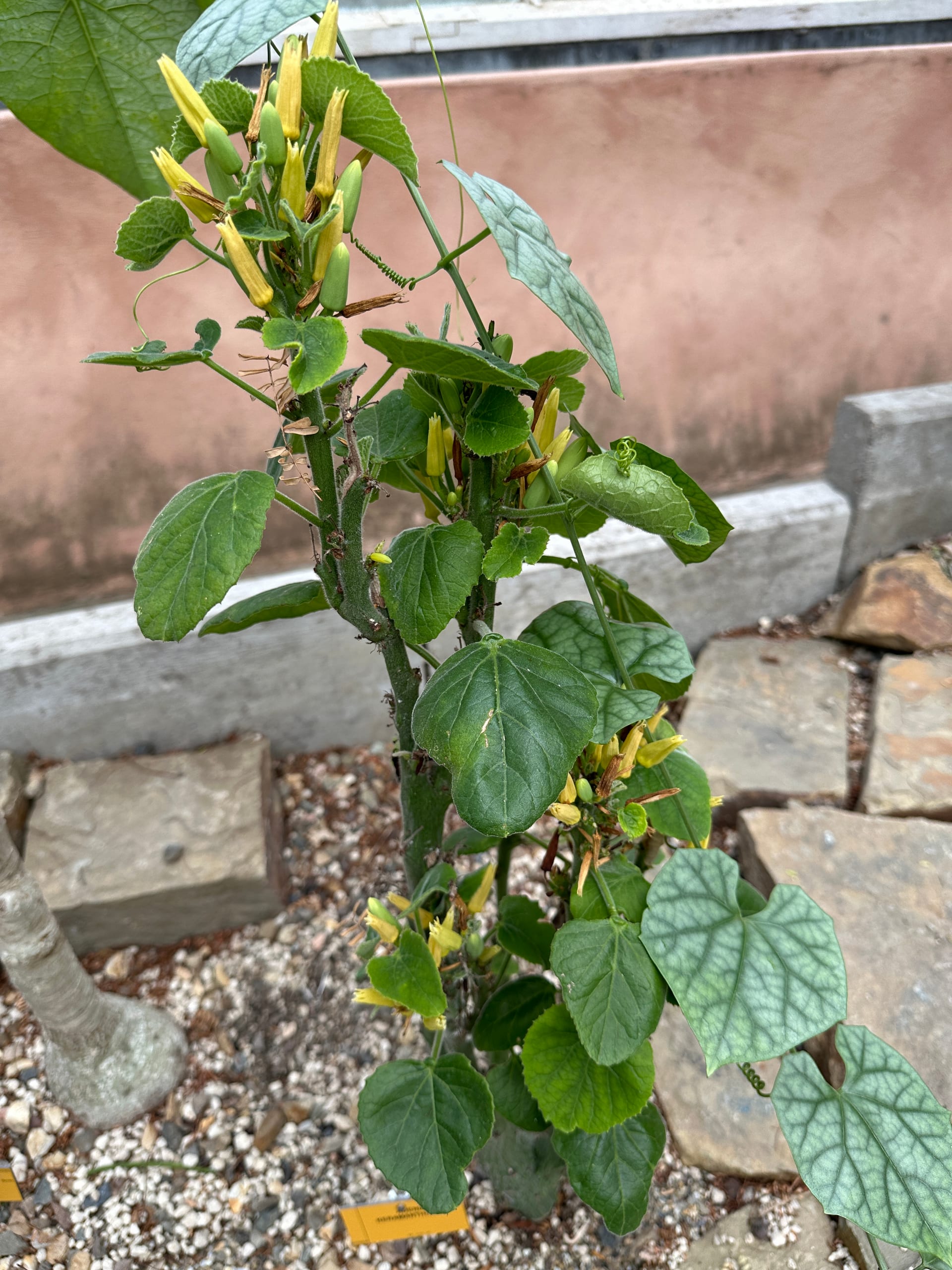
 © Michael Wolf (Webseite) / CC BY-SA 3.0
克拉蛮莎斯(Adenia keramanthus)
Adenia keramanthus is a caudex-forming succulent native to Kenya and Tanzania, instantly recognizable by the fine gray-to-reddish-brown hairs that cover both its stem and leaves — a trait shared by almost no other species in the Adenia genus, most of which are smooth and hairless. As it matures, it can produce downward-facing, urn-shaped cream flowers followed by egg-sized red fruit. Considered a good match for growers with some prior succulent experience, it rewards patient care with a thickening caudex and a distinctive, textured presence that develops slowly over many years.
View 克拉蛮莎斯(Adenia keramanthus) encyclopedia →成交手续费0%!2026年9月30日前注册,前 2 株免佣金!
生产者 招募中!
在GrowerDirect上销售,直接面向全国客户销售吗?
GrowerDirect的 6 项透明性承诺
生产者在块根植物上架时会明示以下信息。确保品种、产地、光照需求、栽培难度的透明性。
- 品种明示
- 实物照片
- 色泽
- 产地明示
- 光照需求
- 难度明示
查看全部146个品种
已注册的生产者(抢先看)
克拉蛮莎斯(Adenia keramanthus)的基本数据
- 养护难度
- 适合中级者
- 寿命
- 长寿命(缺乏寿命资料)
- 体型
- 高度50至100厘米。块根粗度约10厘米
- 浇水
- 生长期适量施用缓释肥料
- 光照和放置位置
- 在阳光充足至明亮的半阴处栽培。避免盛夏过强的直射光,室内放在明亮处。
- 浇水
- 由于叶片和茎都能进行光合作用,生长期应均匀浇水以促进良好生长。但要注意过湿易腐烂。
- 休眠期管理
- 冬季枝条枯死、叶片脱落后要停止浇水,保持干燥。叶片脱落期间过多浇水会导致腐烂。
- 温度和越冬
- 冬季温度不低于10℃,最好保持在15℃左右。在寒冷潮湿的环境中极易腐烂。
- 培养土和换盆
- 用混有大量轻石或珍珠岩、排水性极好的培养土种植,每2年换盆一次。逐年提高株元,块根会逐渐露出土面并增粗。
- 繁殖方法
- 可用种子和扦插繁殖。扦插易生根,但欲观赏块根的植株宜用播种繁殖。
- 病害虫和注意事项
- 阿德尼亚属植物整株有强毒性。修剪或换盆时应戴手套,放在儿童和宠物无法接触的地方。
关于克拉蛮莎斯(Adenia keramanthus)
Adenia keramanthus is a rare hairy-stemmed caudex succulent from Kenya and Tanzania, known for urn-shaped flowers and red fruit. See its care basics and FAQs.
开始养护克拉蛮莎斯(Adenia keramanthus)前需要了解的7件事
1Light & Placement
Adenia keramanthus prefers bright light, so place it outdoors or near a sunny window whenever possible. Young plants or those moved into stronger sun should be acclimated gradually to avoid leaf scorch. Good airflow around the plant also helps keep it healthy.
2Watering Rhythm
During the growing season, water generously once the soil surface has dried out, giving the plant a clear wet-dry cycle. In dormancy, water uptake slows dramatically, so cut back both frequency and volume. Keeping the caudex constantly damp risks root rot, so drainage should always take priority.
3Well-Draining Soil
A fast-draining mix sold for caudiciform or succulent plants works well. Blending in a generous portion of hard mineral aggregates such as baked clay granules or pumice helps prevent excess moisture from lingering. Choose a mix with good aeration so the caudex doesn't sit in damp conditions underground.
4When to Repot
Repotting is best done as the plant comes out of dormancy and growth resumes. The caudex and roots are delicate, so handle them gently when removing the plant from its pot or loosening old soil. Move up to a slightly larger pot with fresh, well-draining mix.
5Winter Dormancy Care
As temperatures drop, the plant may shed its leaves and enter dormancy. During this period, cut back watering significantly and keep it somewhere warm, away from cold drafts and sudden temperature swings. Fewer leaves don't necessarily mean the plant is struggling, so resist the urge to overwater out of concern.
6Choosing a Healthy Plant
Look for a plant with a plump, firm caudex and an even covering of hair across its surface. Avoid specimens with patchy bald spots or a caudex that looks dented or wrinkled. Also check the leaves and branches for discoloration or wilting before buying.
7The Hairy Surface
While most Adenia species are hairless, this one stands out for the gray-to-reddish-brown fuzz covering everything from stem to leaves — its signature ornamental feature. Because trapped moisture in that fuzz can encourage dampness-related issues, keeping airflow good and avoiding excessive misting helps the plant stay in good condition.
克拉蛮莎斯(Adenia keramanthus)的常见问题
- Q.Is this suitable for beginners?
- A.Adenia keramanthus is generally considered better suited to growers with some experience, rather than absolute beginners. Getting the light exposure and dormant-season watering right takes a bit of practice, so prior experience with succulents or caudex plants is a real advantage.
- Q.How big does it grow?
- A.It typically reaches a height of about 50 to 100 cm, with a caudex that thickens to roughly 10 cm across. Growth is slow, so part of the appeal is watching the caudex gradually swell over many years.
- Q.Will it flower or fruit?
- A.The plant can produce downward-facing, urn-shaped cream flowers, followed by egg-sized red fruit. Whether it flowers or fruits depends on the individual plant and its growing conditions, so this isn't guaranteed every time.
- Q.How should I care for it in winter?
- A.As temperatures fall, the plant may drop its leaves and go dormant. During this period, watering should be cut back significantly, and the plant should be kept somewhere warm and protected from cold.
- Q.How is it different from other Adenia species?
- A.Most Adenia species have smooth, hairless surfaces, but this one is a notable exception, with fine gray-to-reddish-brown hairs covering its stem and leaves. That hairiness is what gives Adenia keramanthus its distinctive character.
克拉蛮莎斯(Adenia keramanthus)种植的实用工具
在图鉴中详细了解克拉蛮莎斯(Adenia keramanthus)
查看克拉蛮莎斯(Adenia keramanthus)的图鉴条目 →
收录栽培难度、尺寸、原产地、日照等基础数据。