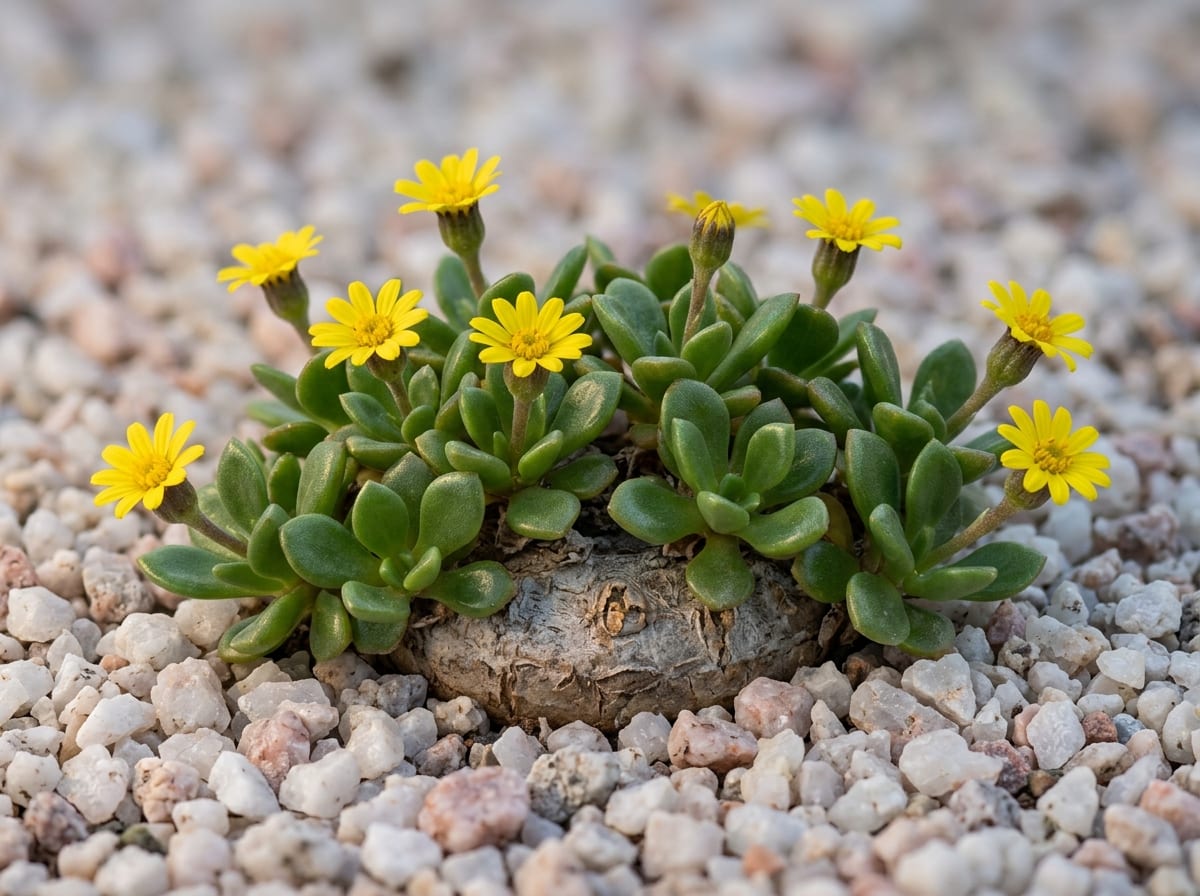
奥通纳卡卡里欧伊德斯(Othonna cacalioides)
Othonna cacalioides is a strikingly compact succulent from South Africa's daisy family, one of the smallest of its kind. Below the soil it forms a flat, potato-like caudex, from which more than twenty short heads emerge almost flush with the ground, giving it a unique, low-slung silhouette. As a winter grower, it produces glossy little leaves during the growing season and bears small yellow flowers as the leaves die back. Growth is extremely slow, and the plant takes many years to develop its characteristic form, making it best suited to experienced succulent growers.
View 奥通纳卡卡里欧伊德斯(Othonna cacalioides) encyclopedia →成交手续费0%!2026年9月30日前注册,前 2 株免佣金!
生产者 招募中!
在GrowerDirect上销售,直接面向全国客户销售吗?
GrowerDirect的 6 项透明性承诺
生产者在块根植物上架时会明示以下信息。确保品种、产地、光照需求、栽培难度的透明性。
- 品种明示
- 实物照片
- 色泽
- 产地明示
- 光照需求
- 难度明示
查看全部146个品种
已注册的生产者(抢先看)
奥通纳卡卡里欧伊德斯(Othonna cacalioides)的基本数据
- 养护难度
- 适合高级者
- 寿命
- 生长非常缓慢,寿命长(寿命资料稀少)
- 体型
- 小型种,紧贴地表。块根直径9厘米以上
- 浇水
- 生长期适度浇水
- 光照和摆放位置
- 生长期(秋至春)应在阳光充足的地方培养。在接近自生地的严苛环境中培养能使株形紧凑。
- 浇水
- 为冬生型。秋季新叶萌动时开始浇水,生长期在土壤干燥后再浇。
- 休眠期管理
- 春季叶片开始泛黄脱落时减少浇水,夏季保持干燥使其休眠。休眠期过湿容易导致块根腐烂。
- 土壤和换盆
- 该种生长于浅砂地岩石凹陷处,应使用粗砂和浮石含量高的排水性极强的土壤。
- 病虫害和注意事项
- 自生地极狭小的易危种,国际贸易需要许可。由于生长缓慢、栽培困难,选择国内栽培的根系发达的实生苗可减少失败风险,同时减轻对野生种群的压力。
关于奥通纳卡卡里欧伊德斯(Othonna cacalioides)
Othonna cacalioides is a tiny South African caudex succulent, forming a flat underground tuber with clusters of small heads at soil level. A slow-growing, winter-flowering species for experienced growers.
开始养护奥通纳卡卡里欧伊德斯(Othonna cacalioides)前需要了解的7件事
1Sun and airflow
During the autumn-to-spring growing season, keep the plant somewhere bright and well-ventilated, such as a rain-sheltered outdoor shelf. In midsummer, move it out of direct sun into bright shade while it rests.
2Water on a winter-grower schedule
Begin watering once new growth appears in autumn, and water regularly through winter and into spring. In summer, withhold water almost entirely to let the plant rest in dormancy.
3Use fast-draining soil
Use a mineral-heavy, fast-draining mix with plenty of akadama or pumice to keep the caudex from staying damp. Avoid soil rich in organic matter, which raises the risk of root rot.
4Repot only every few years
Because growth is so slow, frequent repotting isn't needed. Repot only once roots fill the pot, timing it to the start of the growing season and using a shallow container.
5Winter cold protection
Despite growing in winter, it isn't very cold-hardy, so bring it indoors to a sunny window during sharp cold spells. Never let it be exposed to frost or freezing.
6Summer is dormancy
As temperatures rise, the plant stops growing and enters dormancy. The leaves may look wilted, but this is a natural response — simply keep it in a cool, airy spot and let it rest.
7Choose plants by caudex condition
Look for a caudex that feels firm, with little scarring or wrinkling. Specimens that have reached 9cm or more in diameter have real presence, and since the number and arrangement of heads varies plant to plant, choosing one whose form you love is part of the fun.
奥通纳卡卡里欧伊德斯(Othonna cacalioides)的常见问题
- Q.Can beginners grow this plant?
- A.It's considered a species for experienced growers, since it grows very slowly and requires judgment about when to water. It's best attempted once you're already comfortable with succulent care.
- Q.If it's a "winter grower," why is it cold-sensitive?
- A."Winter grower" describes a cycle of summer dormancy and autumn-to-spring growth, not high cold tolerance. Even during the growing season, bring it indoors when temperatures drop sharply.
- Q.How large does the caudex get?
- A.The underground caudex is said to reach 9cm or more in diameter, with several short heads arranged almost flush with the soil surface. Since growth is extremely slow, reaching that size takes many years.
- Q.The leaves wilted in summer — is it dying?
- A.Wilting leaves in summer are usually a sign of dormancy, not a problem. Cut back on water and let it rest quietly in a cool, well-ventilated spot.
- Q.What do the flowers look like?
- A.It bears small yellow flowers toward the end of the growing season, as the leaves die back. The blooms are modest, but combined with its low, ground-hugging form they give the plant a distinctive appeal.
奥通纳卡卡里欧伊德斯(Othonna cacalioides)种植的实用工具
在图鉴中详细了解奥通纳卡卡里欧伊德斯(Othonna cacalioides)
查看奥通纳卡卡里欧伊德斯(Othonna cacalioides)的图鉴条目 →
收录栽培难度、尺寸、原产地、日照等基础数据。