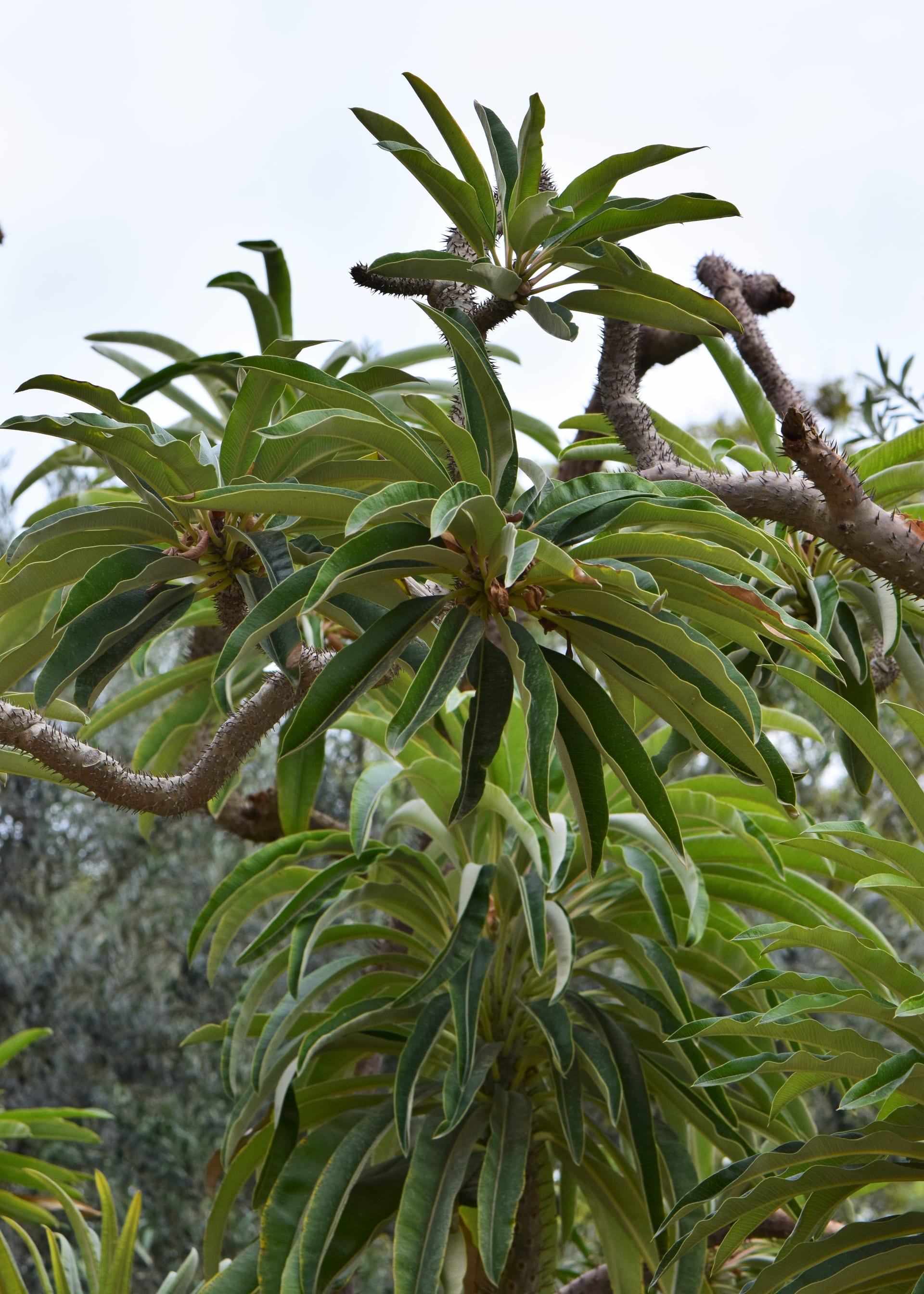
 © Krzysztof Ziarnek, Kenraiz / CC BY-SA 4.0
象牙宫吉亚
Known in Japan as "Aa-sokai," Pachypodium geayi is a large-growing species native to southwestern Madagascar. Its thick, silvery-gray trunk bristles with sharp spines and rises straight up like a column, giving it real presence among caudex-forming plants. At the crown, narrow leaves fan out with a striking pink midrib that adds a splash of color to an otherwise simple silhouette. It's generally considered beginner-friendly, tolerating dry conditions well and requiring relatively little fuss, which makes it approachable even for those new to caudex plants. In a pot it grows slowly, gaining roughly 10cm a year, rewarding patient growers with a distinctive form that develops over many years.
View 象牙宫吉亚 encyclopedia →成交手续费0%!2026年9月30日前注册,前 2 株免佣金!
生产者 招募中!
在GrowerDirect上销售,直接面向全国客户销售吗?
GrowerDirect的 6 项透明性承诺
生产者在块根植物上架时会明示以下信息。确保品种、产地、光照需求、栽培难度的透明性。
- 品种明示
- 实物照片
- 色泽
- 产地明示
- 光照需求
- 难度明示
查看全部146个品种
已注册的生产者(抢先看)
象牙宫吉亚的基本数据
- 养护难度
- 适合新手
- 寿命
- 长寿命的木本植物(寿命数据较少)
- 体型
- 自生地中高度为4~7米(偶尔达8米)。盆栽条件下每年生长约10厘米
- 浇水
- 生长期定期施肥
- 光照和摆放位置
- 在光照充足至明亮半阴的温暖环境中栽培。室内和屋外都相对容易栽培的种类。
- 浇水
- 有叶期定期浇水,若用土排水良好,炎热夏季即使浇水多也能生长。室内栽培易腐烂,应保持相对干燥。
- 休眠期管理
- 冬季落叶进入休眠。落叶后减少浇水,春季新叶萌发后恢复浇水。
- 配土和换盆
- 使用仙人掌专用那样排水良好的配土。换盆周期约为3年一次,由于刺多,用报纸包裹主干进行操作。
- 修剪和造型
- 每年生长约10厘米,约10年后可能会超出室内空间。截顶可促进分枝,该种具有较强的再生能力。
- 病虫害和注意事项
- 象牙宫属树液有毒性,刺也很锐利。换盆或移动时应戴厚手套,或用多层报纸包裹主干后操作。
关于象牙宫吉亚
Pachypodium geayi is a large caudex plant from southwestern Madagascar, with a spiny silvery-gray trunk and narrow leaves marked by a vivid pink midrib. It's considered beginner-friendly to grow.
开始养护象牙宫吉亚前需要了解的7件事
1Light & Placement
Being native to Madagascar, Pachypodium geayi thrives with as much sunlight as possible year-round. It can be placed outdoors in direct sun from spring through autumn, though it's best to acclimate it gradually to avoid leaf scorch during the height of summer.
2Watering Basics
During the active growing season from spring to autumn, water thoroughly until it drains from the pot once the soil has fully dried out. Because this species tolerates drought well, overwatering and the resulting root rot pose a greater risk than underwatering.
3Choosing Soil
Good drainage is the top priority. Start with a commercial succulent or caudex-plant soil mix, and blend in akadama or pumice to improve aeration so the roots can develop healthily.
4When to Repot
Spring, when growth resumes, is the best time to repot. Move it into a slightly larger pot once roots start emerging from the drainage holes or the soil no longer drains as freely as before.
5Winter Care
This species is sensitive to cold, so bring it indoors to a sunny windowsill once temperatures start to drop. Cutting back significantly on watering once it enters dormancy, and keeping the soil on the dry side, helps reduce stress on the plant.
6Choosing a Plant
Look for a plant with a firm, well-thickened stem, which makes it easier to judge its condition. Fresh green leaves at the crown with a clearly visible pink midrib are one sign that the plant is growing in good health.
7Handling the Spines
The stem is densely covered in sharp spines, so wearing thick gloves when moving or repotting the plant is a good safety measure. It's also worth placing it somewhere children and pets are unlikely to touch it.
象牙宫吉亚的常见问题
- Q.Is this a good choice for beginners?
- A.Yes, this species is generally considered beginner-friendly. Its drought tolerance means it doesn't need frequent watering, making it approachable even for those new to succulents or caudex plants.
- Q.How large does it eventually grow?
- A.In its native habitat it can reach 4 to 7 meters, occasionally up to 8 meters, making it one of the larger species in the genus. Grown in a pot, it develops much more slowly, adding around 10cm per year, so you can enjoy watching its gradual change over many years.
- Q.How long can it live?
- A.It's considered a long-lived woody plant, though detailed data on its exact lifespan is limited. With consistent care, it can be grown and enjoyed for many years.
- Q.Is it normal for it to drop leaves in winter?
- A.It's natural for the plant to shed leaves once it enters dormancy. New leaves will emerge from the crown again once growth resumes in spring.
- Q.Can it be grown outdoors in the ground?
- A.Because it's sensitive to cold, keeping it planted outdoors year-round isn't practical in most parts of Japan. Growing it in a pot and bringing it indoors when temperatures drop is the more realistic approach.
象牙宫吉亚种植的实用工具
在图鉴中详细了解象牙宫吉亚
查看象牙宫吉亚的图鉴条目 →
收录栽培难度、尺寸、原产地、日照等基础数据。