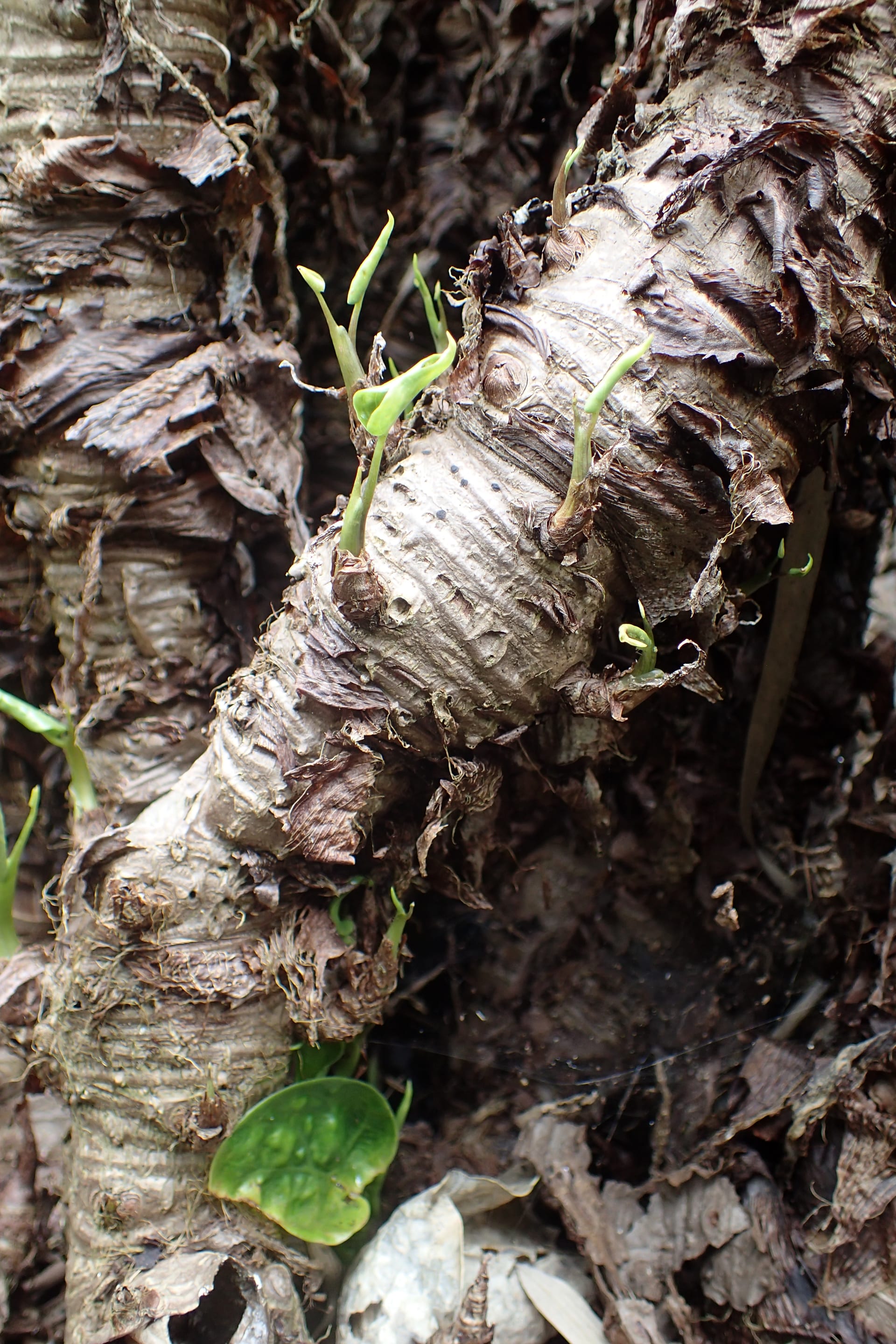
 © Krzysztof Ziarnek, Kenraiz / CC BY-SA 4.0
姬芋
Chinese Taro is a compact Alocasia prized for its glossy, heart-shaped leaves that form a lush clump right at the base of the plant. It branches readily from the base, sending up new offsets that gradually fill out the pot into a fuller clump over time. Noticeably smaller than its larger cousin, it fits comfortably indoors without dominating a room, making it a popular choice for tabletop or shelf displays. Because it tends to be forgiving and easy to manage, it's a great pick for anyone just starting out with houseplants, offering glossy, eye-catching foliage all year round.
View 姬芋 encyclopedia →成交手续费0%!2026年9月30日前注册,前 2 株免佣金!
生产者 招募中!
在GrowerDirect上销售,直接面向全国客户销售吗?
GrowerDirect的 6 项透明性承诺
观叶植物出品中,生产者说明以下信息。确保品种、产地、光照需求、栽培难度的透明性。
- 品种说明
- 实物照片
- 色泽
- 产地说明
- 光照需求
- 难度说明
查看全部139个品种
已注册的生产者(抢先看)
姬芋的基本数据
- 养护难度
- 适合新手
- 寿命
- 多年生草本
- 体型
- 株高约1m以下。叶片长度可达40cm、宽度可达28cm
- 适宜温度
- 20〜25℃
- 浇水
- 生长期定期施肥
- 光照与摆放位置
- 喜半阴至散射光。室内可放在明亮窗边,隔蕾丝窗帘。
- 浇水
- 生长期保持土壤不干,表土干后充分浇水。冬季减少浇水。
- 温度与越冬
- 冬季应在湿度较高、温度略低的室内(16~18℃左右)越冬,避免霜冻。
- 培养土与换盆
- 选用有机质丰富、保湿性好的培养土。春季至初夏,当子株长满盆后进行换盆。
- 繁殖方法
- 分离子株植入土中即可轻松繁殖。茎和根碎片落入土中也能发芽,繁殖力强。
- 病虫害与注意事项
- 注意红蜘蛛和蚜虫;过湿易引起叶斑和根腐。含草酸钙,防止宠物和孩子啃咬。
关于姬芋
Chinese Taro is a compact Alocasia with glossy, heart-shaped leaves that cluster and multiply from the base. Smaller than giant taro, it's easy to grow and well suited to indoor spaces.
开始养护姬芋前需要了解的7件事
1Bright, Indirect Light
Strong direct sun can scorch the leaves, so keep the plant in bright, filtered light, such as behind a sheer curtain. Too little light can cause the stems to stretch and become leggy, so a bright window spot works best.
2Water When Soil Dries
Water thoroughly once the surface of the soil has dried out, and empty any water left in the saucer right away. Constantly soggy soil can lead to root rot, so adjust your watering frequency with the seasons.
3Use Moisture-Retentive Soil
An organic-rich mix that holds moisture suits it well. Don't let it dry out during the growing season; water thoroughly once the surface dries. Prolonged sogginess, however, can cause leaf spots or root rot.
4Repot Every 1-2 Years
As offsets multiply, the pot can quickly become root-bound, so repot into a slightly larger container roughly every one to two years. Doing this during the warmer growing season puts less stress on the plant.
5Overwinter in a Cool, Humid Room
It is said to overwinter best in a somewhat cool, humid room at around 16 to 18°C. Keep it away from frost, and water more sparingly in winter.
6Choose Glossy, Firm Leaves
Look for a plant with thick, glossy leaves free of discoloration or dark spots. One already producing multiple offsets from its base is a sign it's off to a healthy, clustering start.
7Propagate via Offsets
Offsets that have developed their own roots can be separated from the parent plant and potted individually. Thanks to its naturally clustering habit, you can also simply let offsets fill out the same pot for a fuller look.
姬芋的常见问题
- Q.Is this a good plant for beginners?
- A.Yes, it's considered beginner-friendly. As long as you get the basics of light and watering right, it's an easy plant to manage, and its glossy foliage is easy to enjoy without a lot of extra effort.
- Q.How is it different from giant taro?
- A.Chinese Taro is smaller than giant taro and tends to branch from the base into a clustering clump. Its height tops out at around 1m, making it an easier size to manage indoors.
- Q.How large does it eventually grow?
- A.It can grow to around 1m in height, with individual leaves reaching up to about 40cm long and 28cm wide. Actual growth varies depending on pot size and growing conditions.
- Q.Can I trim it if it gets too full?
- A.It's fine to trim off old or damaged leaves at the base as needed. Since new leaves and offsets keep emerging from the base, it holds its shape well even after trimming.
- Q.How quickly do offsets appear?
- A.Given good growing conditions, offsets naturally appear from the base over time. The pace varies from plant to plant, but forming a clustering clump is a hallmark trait of this variety.
姬芋种植的实用工具
在图鉴中详细了解姬芋
查看姬芋的图鉴条目 →
收录栽培难度、尺寸、原产地、日照等基础数据。