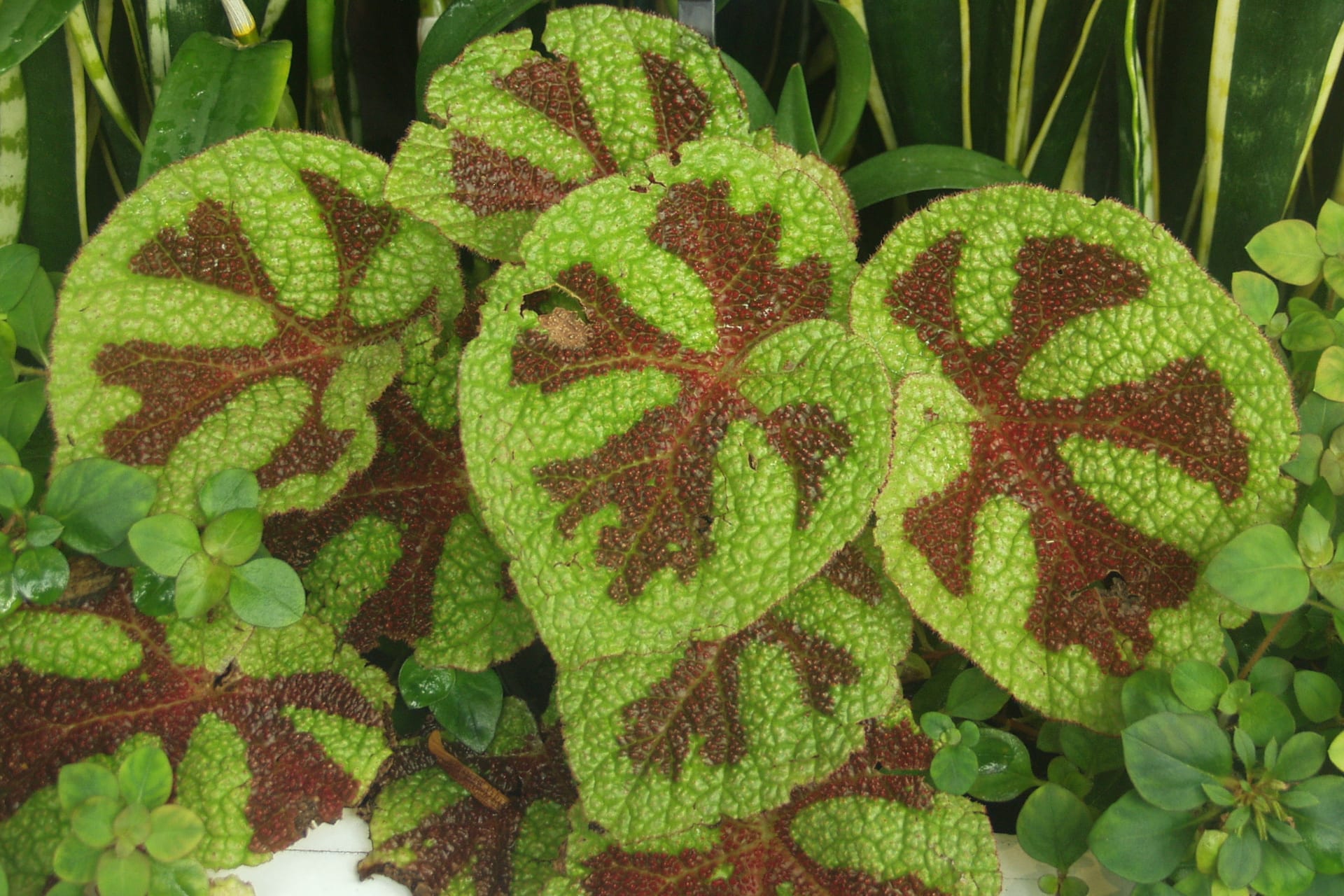
 © Cbaile19 / CC0
铁十字秋海棠
Begonia masoniana is a rhizomatous begonia named for the dark brown, cross-shaped marking that sits at the center of each wrinkled green leaf — the pattern behind its English name, Iron Cross Begonia. The leaf surface is covered in fine texture and reddish hairs, so its look shifts subtly with the light. Native to southern China and northern Vietnam, it's a perennial that grows to about 30–50cm tall. Grown mainly for the sculptural beauty of its foliage rather than flowers, it suits anyone looking for a distinctive houseplant with real character. It's generally considered a variety for intermediate growers, which makes the process of raising it part of the appeal.
View 铁十字秋海棠 encyclopedia →成交手续费0%!2026年9月30日前注册,前 2 株免佣金!
生产者 招募中!
在GrowerDirect上销售,直接面向全国客户销售吗?
GrowerDirect的 6 项透明性承诺
观叶植物出品中,生产者说明以下信息。确保品种、产地、光照需求、栽培难度的透明性。
- 品种说明
- 实物照片
- 色泽
- 产地说明
- 光照需求
- 难度说明
查看全部139个品种
已注册的生产者(抢先看)
铁十字秋海棠的基本数据
- 养护难度
- 适合中级者
- 寿命
- 多年生草本
- 体型
- 植株高度30~50厘米
- 适宜温度
- 21〜23℃
- 浇水
- 生长期施用稀释液肥
- 光照和放置位置
- 明亮的间接光或透过蕾丝窗帘的光线。东、南、西向窗边为目标位置。
- 浇水
- 生长期间保持土壤均匀湿润。生长缓慢时期,待土壤表面几乎干燥后再浇水。不要将水淋到叶片上。
- 温度和越冬
- 喜欢21~23℃左右的温度,不能耐受13℃以下的环境。冬季应在温暖的室内管理。
- 土壤和换盆
- 使用保水性强的土壤,但避免过度湿润。湿度可通过将花盆放在盛有水的砾石盘上来补充。
- 繁殖方法
- 可通过茎插或叶插进行繁殖。
- 病虫害和注意事项
- 保持叶片干燥可有效防止白粉病。需注意斑点细菌病、根状茎腐烂、蚜虫、粉虱和红蜘蛛。秋海棠属植物含有水溶性草酸盐,犬猫食用会导致呕吐和流涎。
关于铁十字秋海棠
Begonia masoniana, the Iron Cross Begonia, is known for the dark cross-shaped mark on its wrinkled, hair-covered leaves. A rhizomatous perennial reaching 30–50cm, it's an intermediate-level houseplant grown for its distinctive foliage.
开始养护铁十字秋海棠前需要了解的7件事
1Bright, Indirect Light
Bright, indirect light suits this begonia best — direct sun can scorch its textured leaves. Too much sun can also dull the contrast of the cross-shaped pattern, while a spot that's too dark leaves the coloring weak. Aim for somewhere between a sheer curtain and a shaded windowsill.
2Adjust Watering by Season
Keep the mix evenly moist while it is actively growing, and when growth slows, water once the surface is nearly dry. Wet leaves invite powdery mildew, so water at the base rather than over the foliage.
3Moisture-Retentive Soil
Use a moisture-retentive mix, but avoid waterlogging. If humidity is low, set the pot on a tray of wet gravel.
4Plant the Rhizome Shallow
The rhizome of Begonia masoniana spreads horizontally along the soil surface, so it does best in a shallow pot rather than being planted deep. Once the rhizome reaches the edge of the pot, it's time to move it into a slightly larger, similarly shallow container. Handle the rhizome gently when repotting, loosening the soil rather than pulling at it.
5Warmth and Humidity in Winter
This begonia is cold-sensitive, so keep it in a warm spot indoors through winter and away from cold windowsills or drafts. Rather than misting the leaves directly, raising humidity around the plant — with a humidifier or a pebble tray — helps it through dry spells. Growth slows in the cooler months, so ease off on watering frequency as well.
6Choosing a Healthy Plant
When choosing a plant, look for one with plenty of leaves showing a crisp, well-defined cross pattern — that's the look this variety is known for. Check that the leaves are free of dark blotches or water-soaked patches, and that the rhizome feels firm. Even a plant with fewer leaves will fill out over time as long as the rhizome itself is healthy.
7Propagating by Leaf or Division
Propagation is usually done by leaf cuttings or rhizome division. For leaf cuttings, nick the main veins of a leaf and lay it flat on soil — new plantlets emerge from the cuts. Division involves cutting a rhizome that has grown long enough into sections, each planted in its own pot, which tends to establish as a new plant more quickly.
铁十字秋海棠的常见问题
- Q.Is this begonia suitable for beginners?
- A.Begonia masoniana is generally considered a variety for intermediate growers, since watering and placement need a bit of fine-tuning. That said, anyone with some houseplant experience should be able to manage it once they get the basics down.
- Q.Does it produce flowers?
- A.Under good growing conditions it can produce small whitish flowers, though this variety is grown mainly for its leaf pattern and texture rather than its blooms. Focusing your care on leaf health, rather than trying to encourage flowering, tends to keep it looking its best.
- Q.Does the cross-shaped pattern change as the plant grows?
- A.The intensity and contrast of the cross pattern can shift somewhat depending on the plant's condition and how much light it receives. Strong light or prolonged dryness can make the pattern look faded, so keeping placement and watering consistent helps preserve its markings.
- Q.Why are the leaves turning brown and dying back?
- A.This can happen from overwatering and root rot, from letting the soil dry out too much, or from leaf scorch caused by direct sunlight. Start by checking the soil moisture and light exposure, and remove any damaged leaves while you adjust conditions.
- Q.Can it be kept alongside other houseplants?
- A.Since it shares a preference for bright indirect light and moderate humidity with many houseplants, it can usually be grouped with others in a similar spot. It dislikes staying too wet, though, so it's safer to water it separately from plants that need more frequent watering.
铁十字秋海棠种植的实用工具
在图鉴中详细了解铁十字秋海棠
查看铁十字秋海棠的图鉴条目 →
收录栽培难度、尺寸、原产地、日照等基础数据。