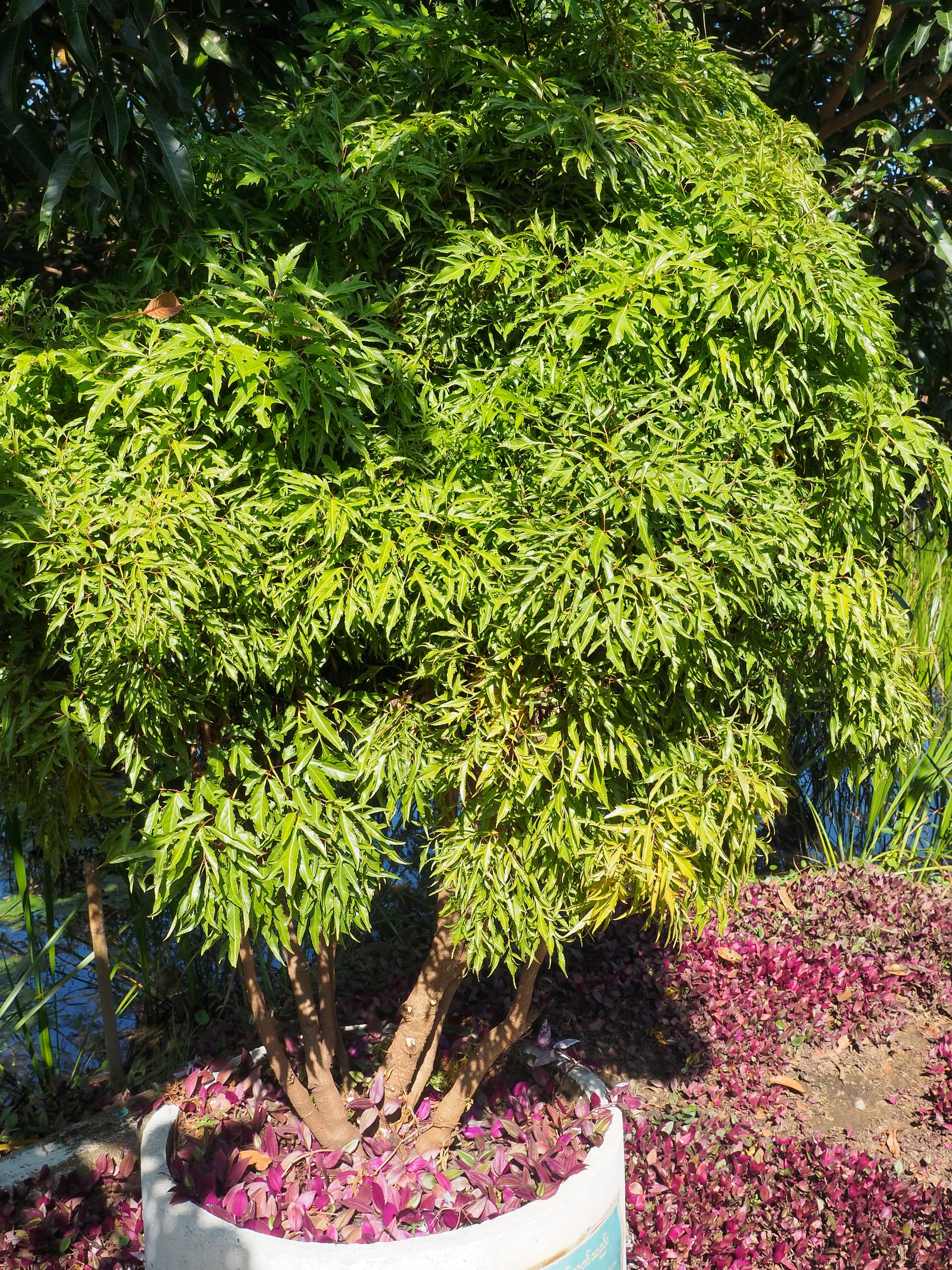
 © Myrmux / CC BY-SA 4.0
羽葉木
Polyscias fruticosa, widely known as Ming Aralia, is an evergreen shrub in the Araliaceae family prized for its delicate, fern-like foliage. Its small leaflets are finely toothed along the edges and arranged in tripinnate compound leaves, giving the plant a lacy, intricate silhouette unlike most other houseplants. That refined, distinctly Asian character has made it a favorite as a shaped specimen tree grown in a decorative pot, suited to living rooms and studies where a calm, sculptural presence is welcome. While it can grow quite large in its native habitat, indoor container specimens stay at a much more manageable height, making it a rewarding plant for growers with some houseplant experience who enjoy watching its form develop over time.
View 羽葉木 encyclopedia →成交手續費 0%!2026年9月30日前註冊,前 2 株免佣金!
生產者 招募中!
在 GrowerDirect 上架,直接銷售給全國的客戶吧!
GrowerDirect承諾的 6 項透明性重點
在觀葉植物出品時,生產者明示下列資訊。確保品種、產地、所需光量和栽培難度的透明度。
- 品種明示
- 實物照片
- 色澤
- 產地明示
- 所需光量
- 難度明示
查看全部139個品種
觀葉植物分類正在招募認證生產者
生產者正在陸續註冊,即將上架。設定上架通知,不錯過新商品。
「接收上架通知」需免費註冊會員即可設定。當有符合您儲存條件的新商品上架時,我們會以郵件和站內通知提醒您。
已註冊的生產者(搶先看)
羽葉木的基本資料
- 栽培難度
- 適合中級者
- 壽命
- 多年生常綠樹
- 體型
- 原生地高度約7.5公尺。室內盆栽約1.8〜2.4公尺
- 澆水
- 生長期間施予觀葉植物肥料,應適度減少用量
- 光照・放置位置
- 喜歡明亮的散射光。避免陽光直射強烈的地方。
- 澆水
- 土壤表面向下約5公分乾燥後再澆水。既不喜歡過濕也不喜歡過乾。
- 溫度・越冬
- 喜歡溫暖的氣溫,怕冷。冬季應在溫暖的室內養護,避免靠近寒冷的窗邊。
- 介質・換盆
- 只要排水良好的介質即可,不受土質限制。若要提高濕度,可使用加濕器,或將花盆放置在鋪有濕潤小石子的托盤上。
- 繁殖方法
- 可用扦插法繁殖。
- 病蟲害・注意事項
- 須注意蚜蟲、介殼蟲、粉介殼蟲、粉蝨、線蟲等害蟲。乾燥時易發生紅蜘蛛,過濕時易發生根腐病。「羽葉木」名下的株株有時也包含已登錄的其他品種,繁殖前應確認品種名及登錄狀態。
關於羽葉木
Ming Aralia (Polyscias fruticosa) is an evergreen shrub with delicate, fern-like foliage, popular as a sculptural potted specimen with an elegant Asian character for indoor growing.
開始照料羽葉木前需要了解的7件事
1Light and Placement
Ming Aralia prefers bright, indirect light, such as near a sheer-curtained window. Prolonged direct sun can scorch its delicate leaflets, so keep it out of intense summer sun. Too little light, on the other hand, can cause leggy growth, so a reasonably bright spot is important.
2Watering
Water thoroughly once the top of the soil has dried out. Overwatering can lead to root rot, while letting the plant dry out too much tends to trigger leaf drop, so aim for a consistent rhythm that avoids either extreme.
3Well-Draining Soil
A general houseplant potting mix amended with pumice or perlite for extra drainage works well. Because standing water in the pot can damage the roots, choosing a well-draining soil is an important part of keeping this plant healthy.
4Repotting
When roots fill the pot, repot into a slightly larger container during the active growing season in spring to early summer. Frequent repotting stresses the plant, so it's best to wait for clear signs of being root-bound before moving it.
5Overwintering
This plant has limited cold tolerance, so it should be kept in a warm spot indoors through winter. Avoid placing it where it will catch cold drafts from a window or direct blasts from a heater, as both can weaken the plant.
6Choosing a Healthy Plant
Since Ming Aralia is typically sold as a shaped specimen, each plant has its own individual trunk curve and branching character. Look for firm, evenly colored leaves without yellowing or dropped foliage as a sign of a healthy specimen.
7Pruning to Shape
Overly long branches can be trimmed back to maintain a pleasing shape. Because new growth tends to emerge readily from pruning points, shaping the plant over time into a silhouette you like is one of its particular pleasures.
羽葉木的常見問題
- Q.Can beginners grow this plant?
- A.This is better suited to growers with some prior experience, as it requires a bit of care in watering and placement. Once you get the hang of its needs, though, it's a rewarding plant whose form you can enjoy watching develop over the years.
- Q.Should it be kept indoors in winter?
- A.Yes — this plant has limited cold tolerance, so keeping it in a warm indoor spot through winter is standard practice. Avoid locations exposed to cold window drafts or direct heater airflow.
- Q.Why do the leaves sometimes drop?
- A.Common causes include under- or overwatering and sudden changes in environment, such as moving the plant to a new spot. This doesn't necessarily mean the plant is dying — it often puts out new growth and recovers once conditions stabilize.
- Q.How large does it grow?
- A.In its native habitat it can reach around 7.5 meters, but as an indoor potted plant it typically stays around 1.8 to 2.4 meters. Pot size and pruning can be used to keep its height in check.
- Q.How often does it need repotting?
- A.Repot into a slightly larger container during the spring-to-early-summer growing season once you notice signs of root-bound growth. Repotting too often stresses the plant, so judge the timing by checking the root ball's condition.
羽葉木栽培的實用工具
在圖鑑中詳細了解羽葉木
查看羽葉木的圖鑑條目 →
收錄栽培難度、尺寸、原產地、日照等基礎資料。